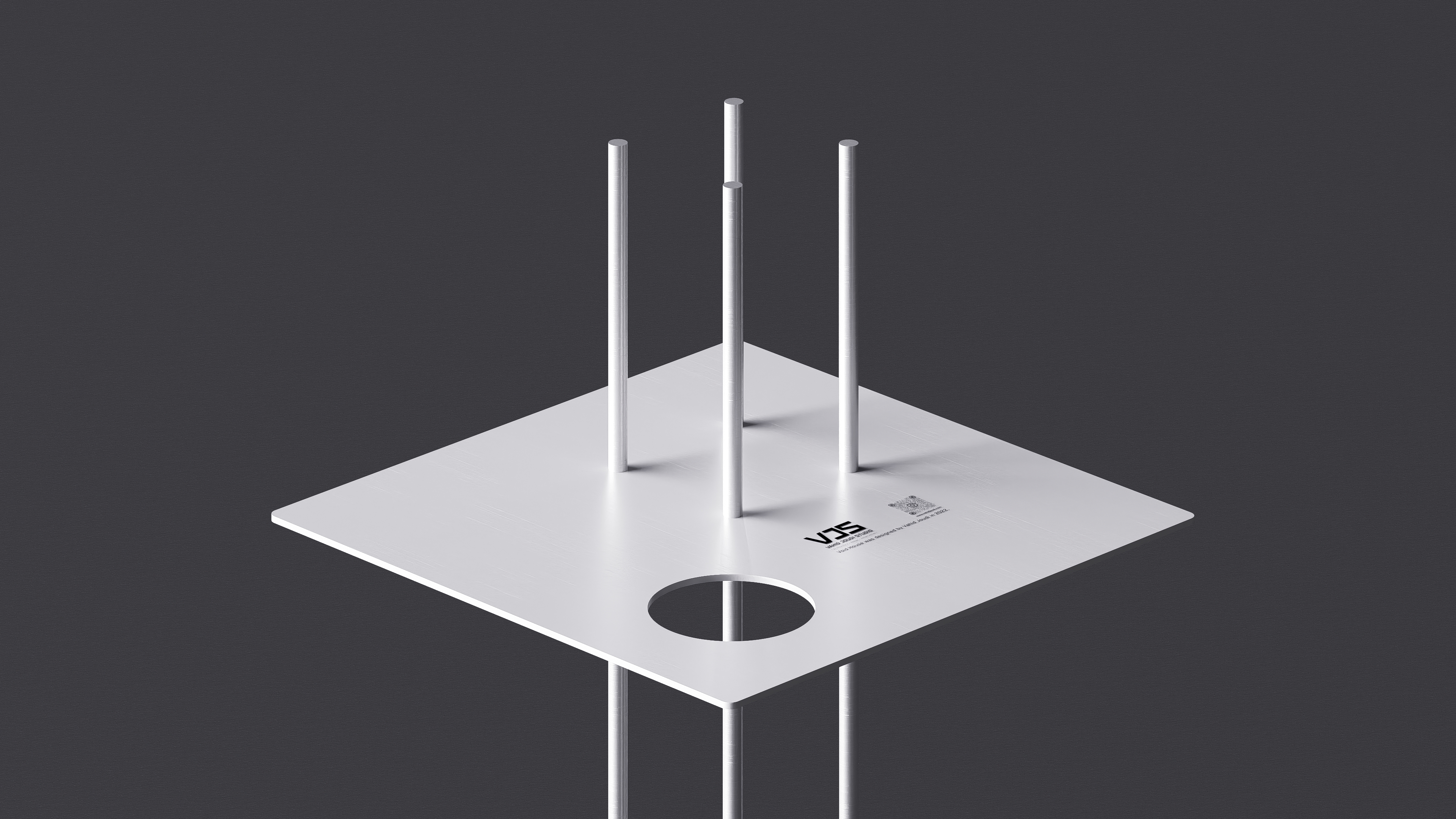

The initial objective behind designing this element was to create a statement piece capable of introducing each project and registering its identity within an architectural framework an accompanying object that could anchor the project’s presence in both time and place. As the design process evolved, a fundamental question emerged: could such an element, beyond its representational role, attain an independent architectural meaning and structure? This question redirected the design trajectory toward a deeper reflection on the foundations of anything that acquires physical presence and perceptibility foundations that are defined, prior to form, through the relationship between ground and sky, matter and perception.
The core concept of this object is rooted in the four fundamental elements of water, air, earth, and fire elements that, across philosophical, natural, and architectural traditions, constitute the framework of the material world and human perception. These elements are not interpreted as explicit symbols, but rather as forces and spatial qualities qualities that are translated directly into the geometric and structural logic of the work. In this sense, the four elements are not merely the subject of a narrative; they are the very basis from which the object’s geometry is generated.
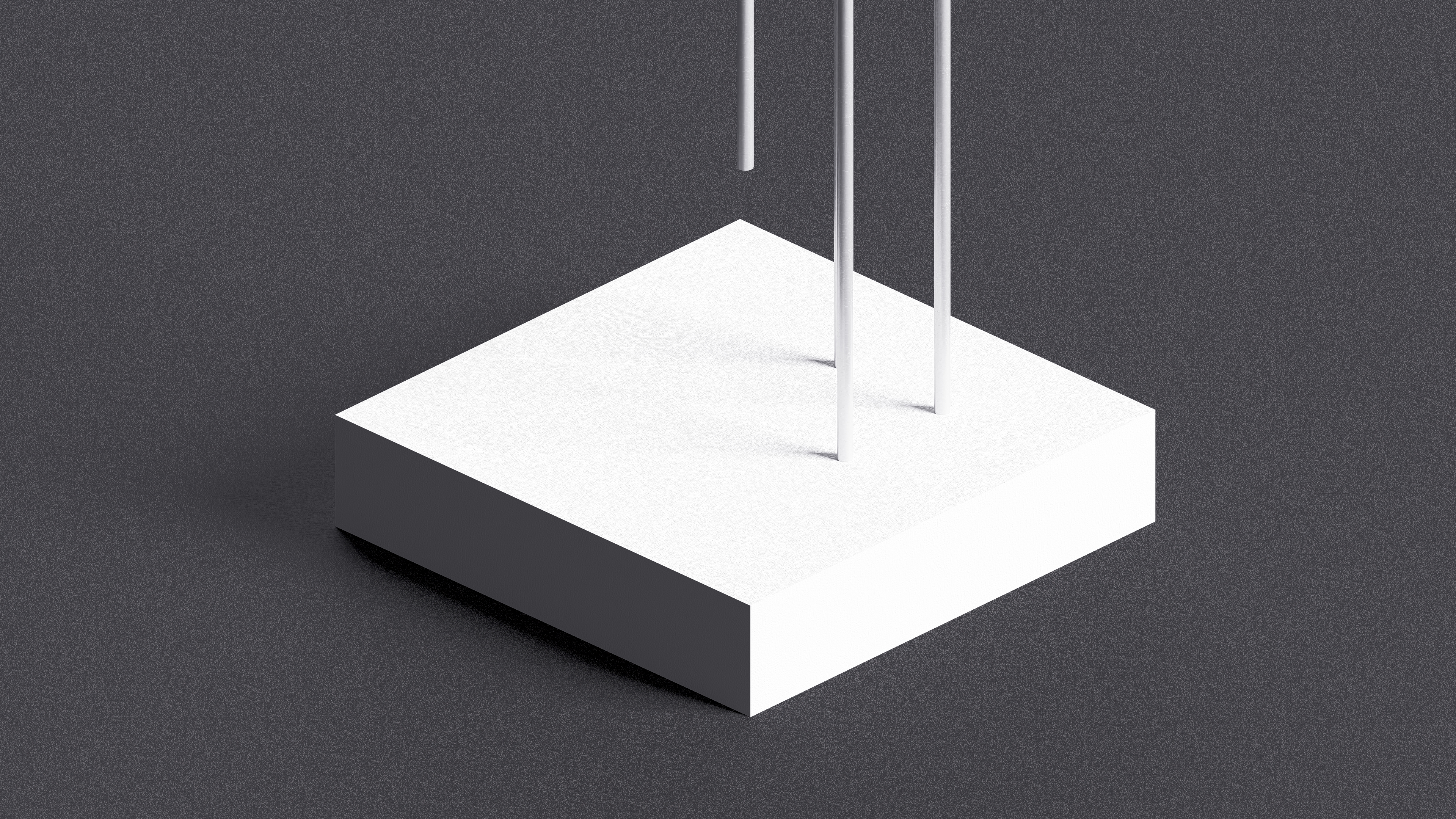
The vertical and segmented structure of the piece represents a spatial translation of these four elements. Each vertical presence exhibits an independent behavior, defined through its degree of connection to the ground, its weight, suspension, and its position within the overall composition. Among them, the element of air is deliberately detached from direct contact with the ground and takes the form of suspension a condition that alludes to instability, fluidity, and invisibility, while simultaneously introducing distance as an active architectural component. The remaining elements, through their grounding, embody qualities of stability, materiality, and permanence.
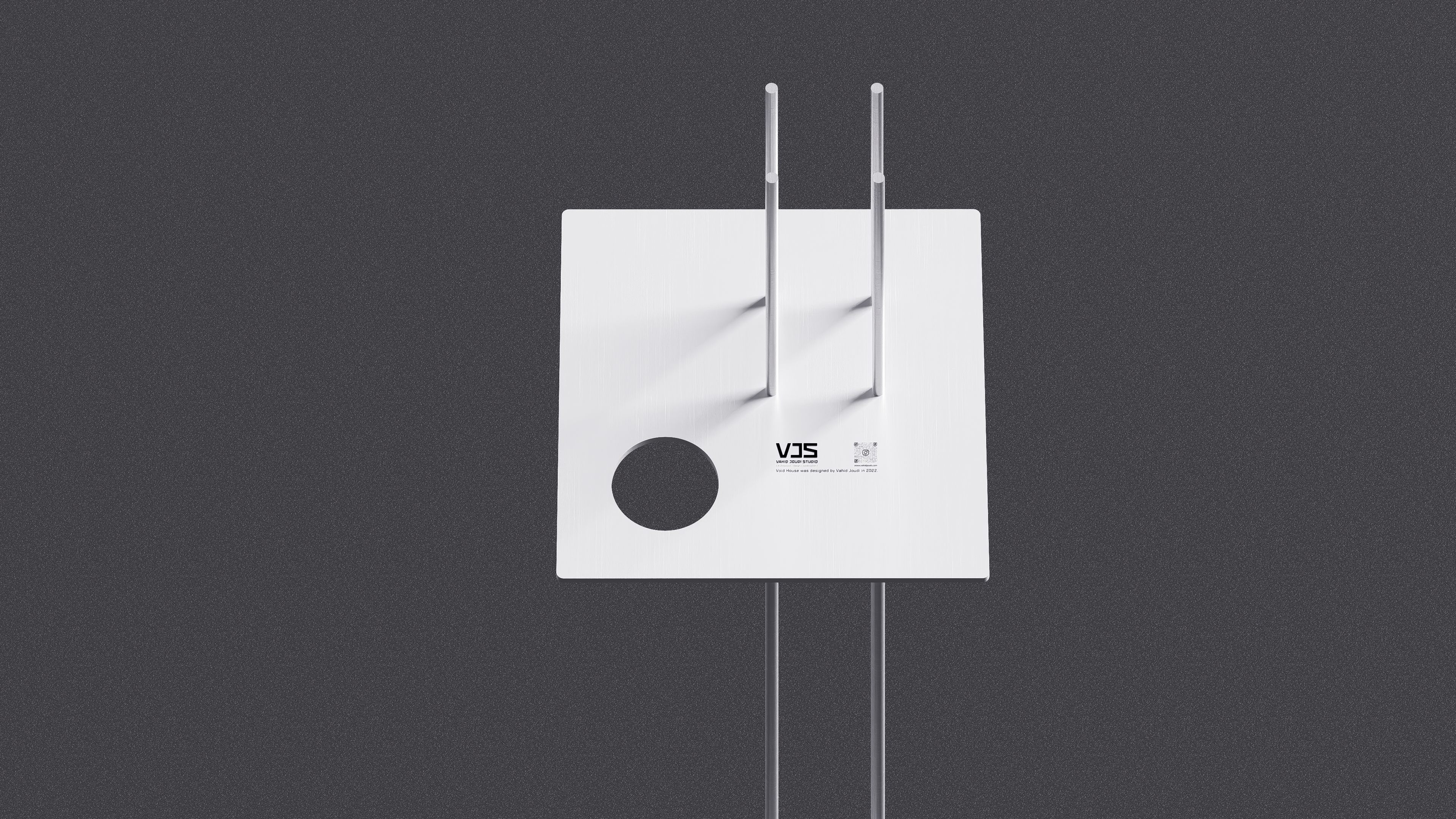
This elemental framework simultaneously carries a fundamental metaphor for the relationship between earth and sky. The square plane, acting as an intermediary surface, forms the point of intersection between these two realms not the earth as mass, nor the sky as image, but their relationship as a spatial condition structured upon the four elements. The geometric order of the square recalls a rational, measurable world; yet this order is defined not by gravity, but by the equilibrium of forces. Within this plane, a circular void emerges a void that defines the sky not through matter, but through light, movement, and continuity. As light passes through this opening and shadows are cast, time becomes perceptible, transforming the object from a static condition into a dynamic one. Light becomes the generator of space, and shadow the instrument through which architecture is read.
As the sun moves, the shadows of the circle and the square shift across the ground, continuously redefining the object at every moment. This gradual transformation turns the work into a time-based structure, where meaning is not fixed in a single instant but is formed through continuity of experience and the changing position of the observer. Architecture here does not seek to stabilize form, but rather to orchestrate the conditions of experience.
Ultimately, this element functions as the signature and statement of Vahid Joudi Architecture Studio a signature inscribed not through text, but through geometry, light, suspension, and time. A spatial manifesto that defines architecture as a dialogue between the fundamental elements of nature, between earth and sky, and between matter and human perception. A signature that affirms its presence not through proclamation, but through the continuity of experience.