
A Metabolic Intervention: From Industrial Downcycling to Tectonic Upcycling
Two metabolic trajectories can be identified for the waffle formwork. The first follows the conventional building-based design scenario, in which the module, after a limited service cycle in construction, either enters the environmental waste stream directly or is subjected to thermal and mechanical recycling. Although a large portion is nominally “recycled,” this process in practice constitutes downcycling: the industrial component is shredded, washed, pelletized, and re-melted within thermoplastic systems before being re-extruded a sequence associated with considerable energy consumption, increased carbon footprint, and partial material loss. From a Life Cycle Assessment (LCA) perspective, this trajectory perpetuates a linear metabolism of “production–consumption–disposal.”
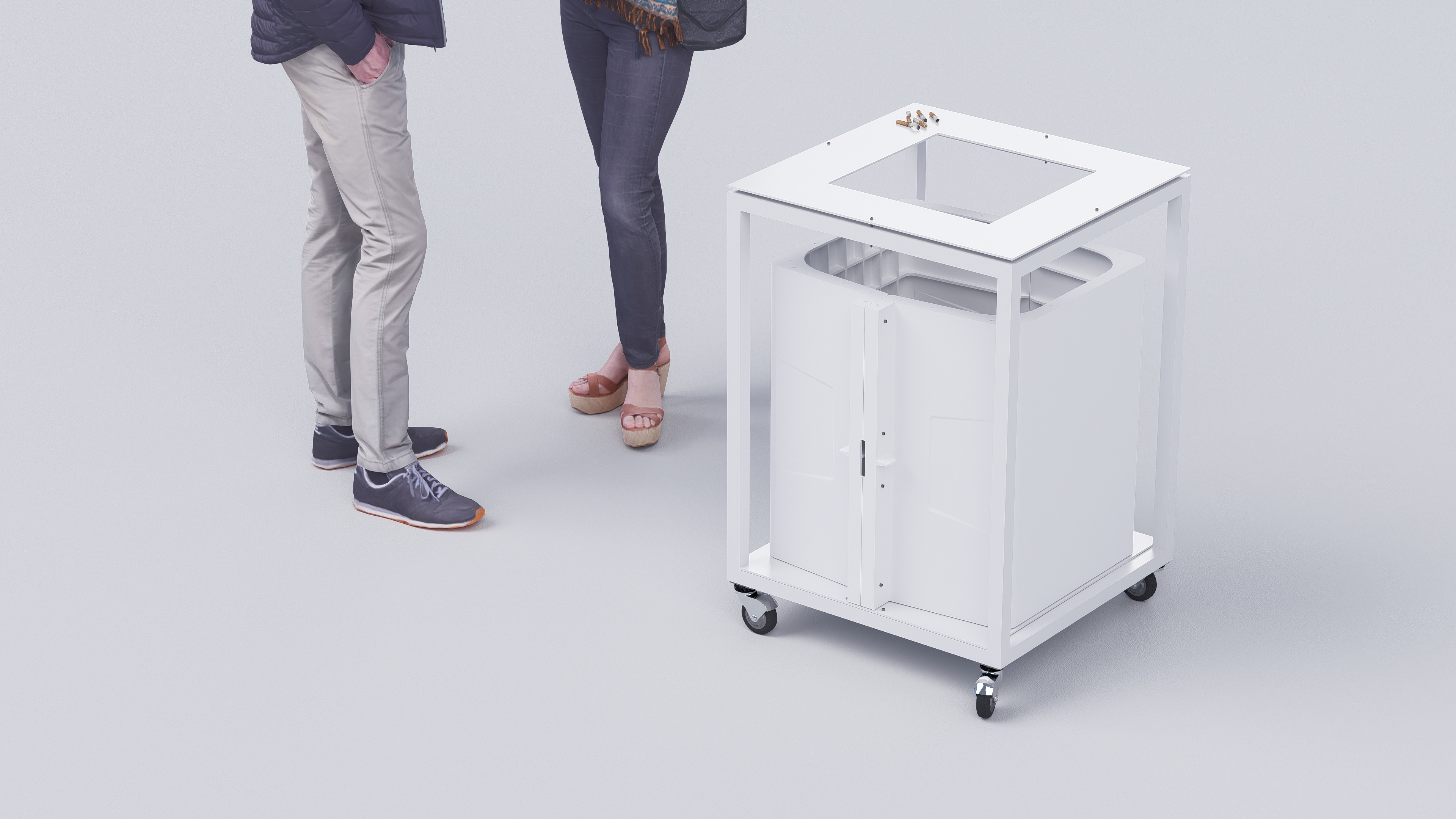
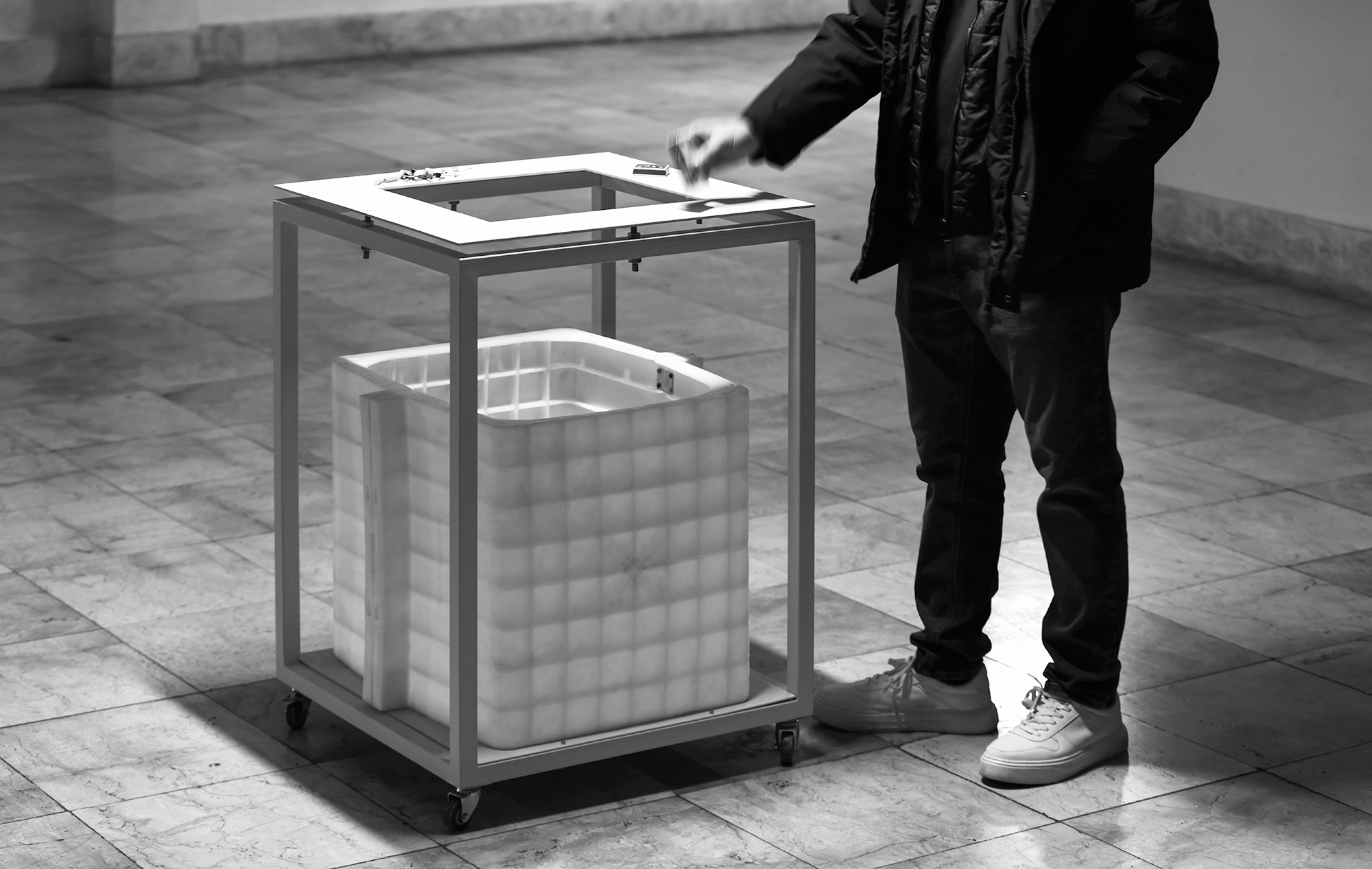
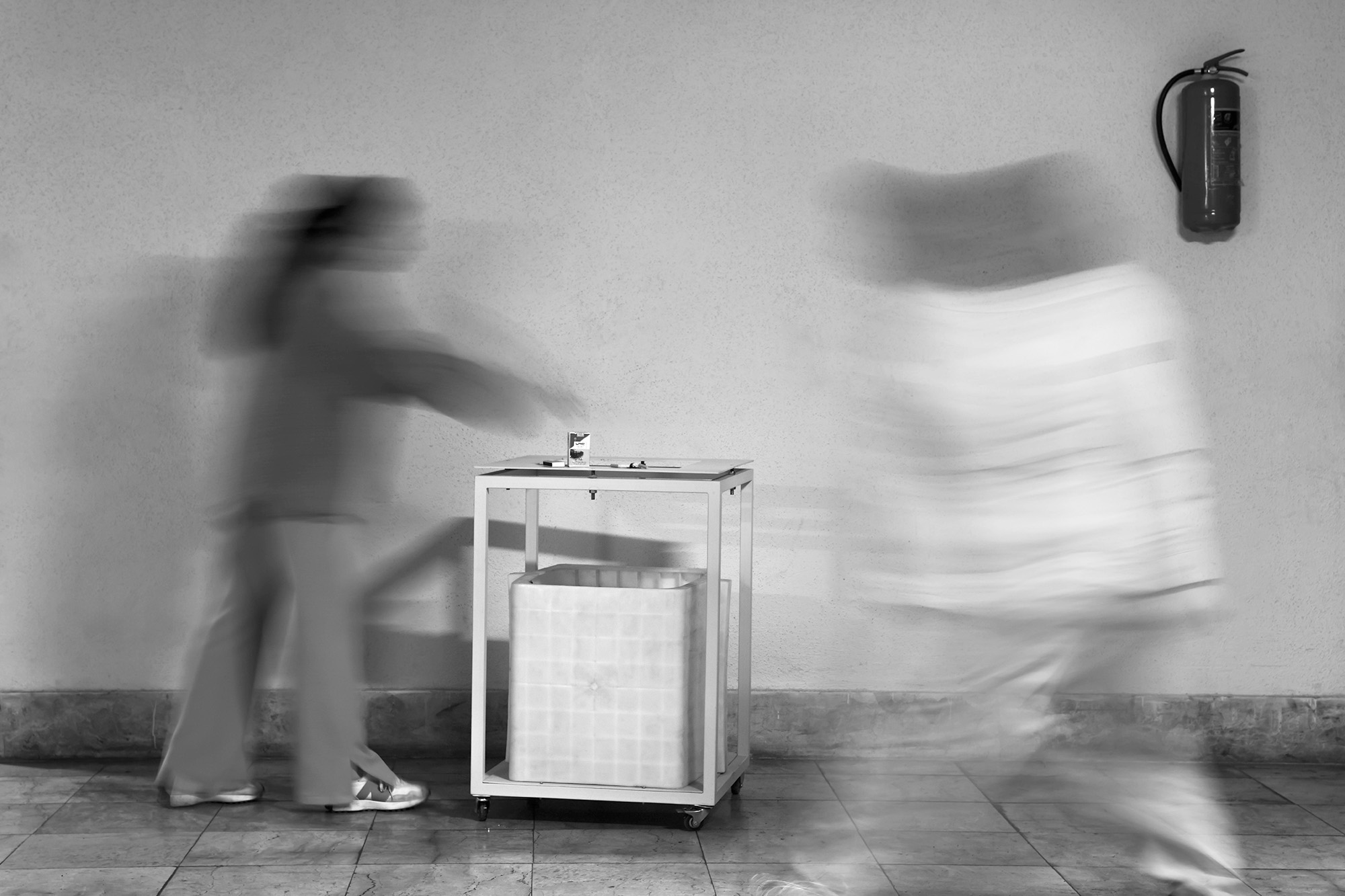
The second trajectory marks the project’s point of intervention. Here, the formwork is extracted from the industrial stream prior to entering the energy-intensive recycling phase and, through minimal mechanical transformation and without heat-based processing, is rapidly reconstituted as a functional urban artifact the Waffle Trash Bin. This intervention shifts the logic from “Recycling” to “Upcycling”: enhancing the functional, spatial, and aesthetic value of a construction component without re-melting and with minimal embodied energy. Consequently, a significant volume of industrial plastic is prevented from prematurely entering waste or high-energy recycling cycles, redirecting the material pathway from a “Cradle-to-Grave” model toward a “Cradle-to-Cradle” paradigm. In this reading, the Waffle Trash Bin operates not merely as urban equipment but as an instrument for reconfiguring material metabolism within the built environment.
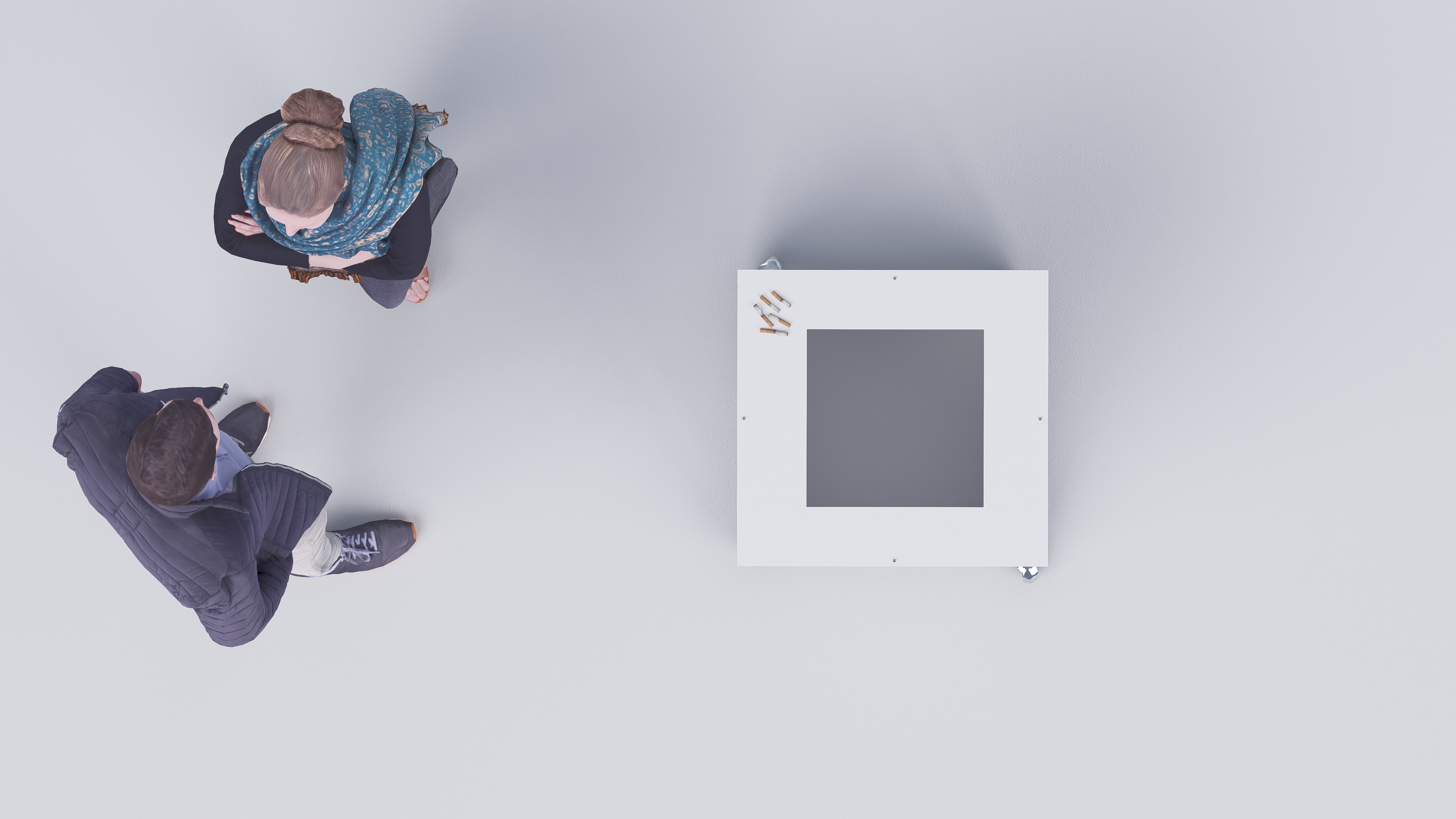
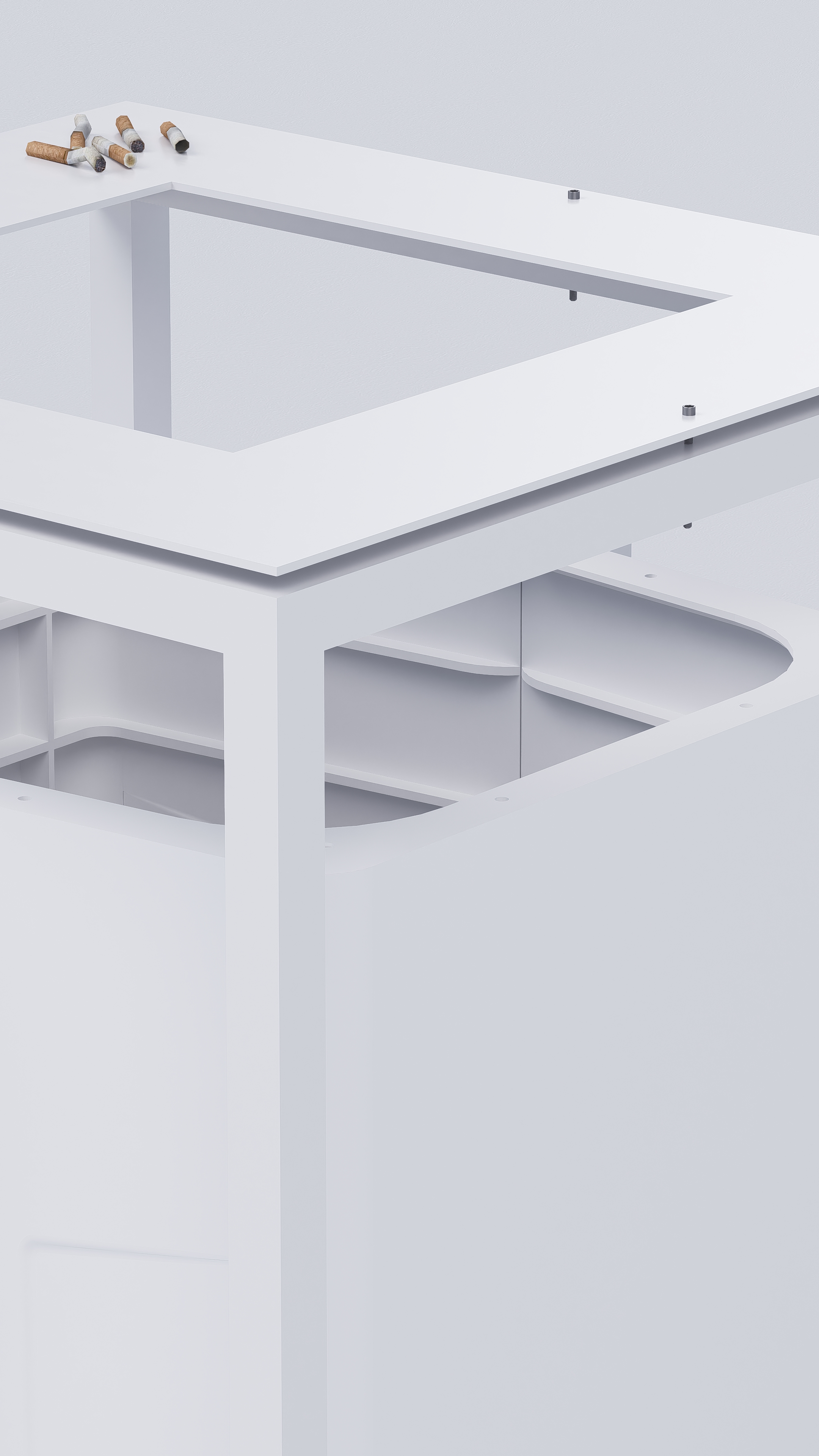
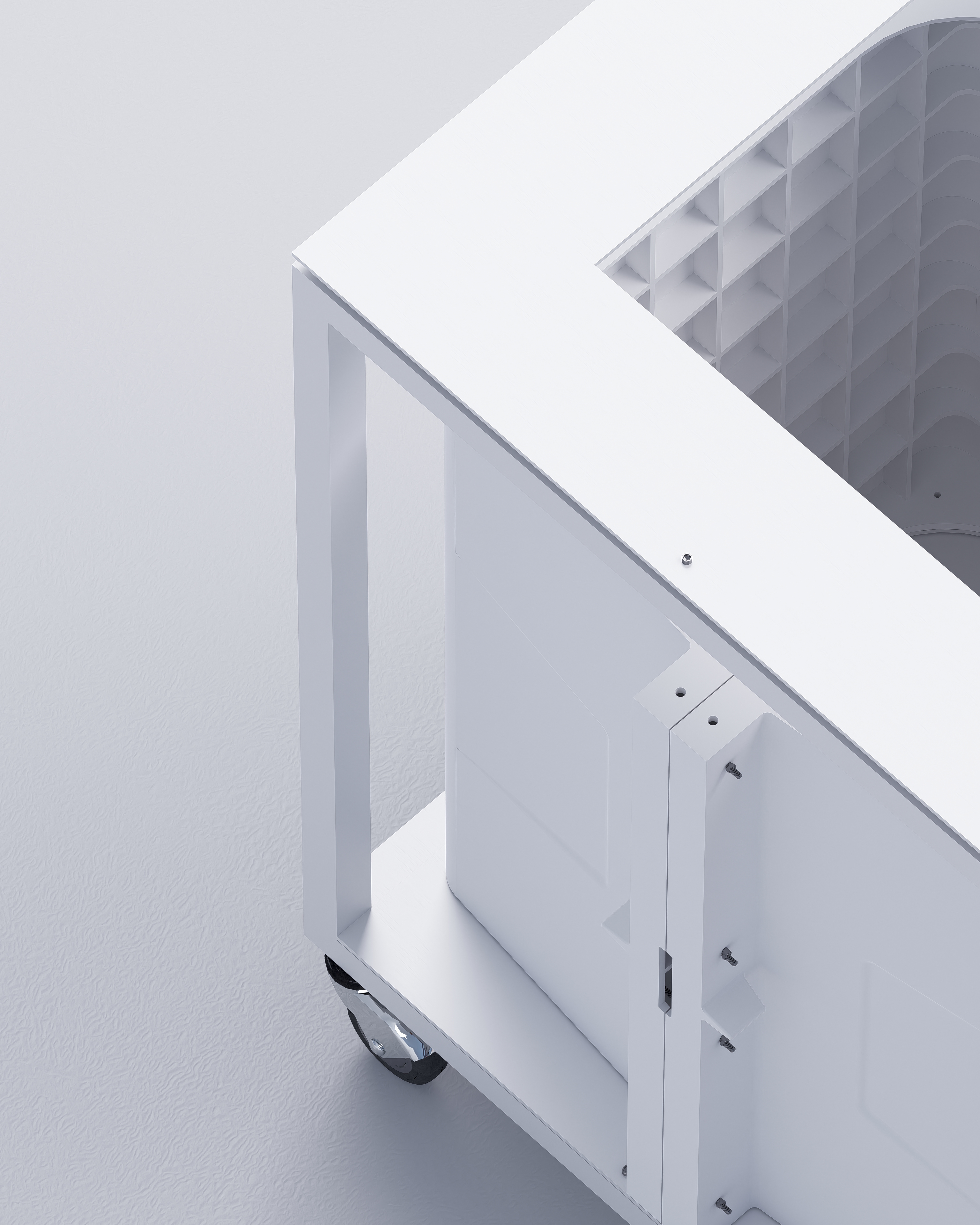
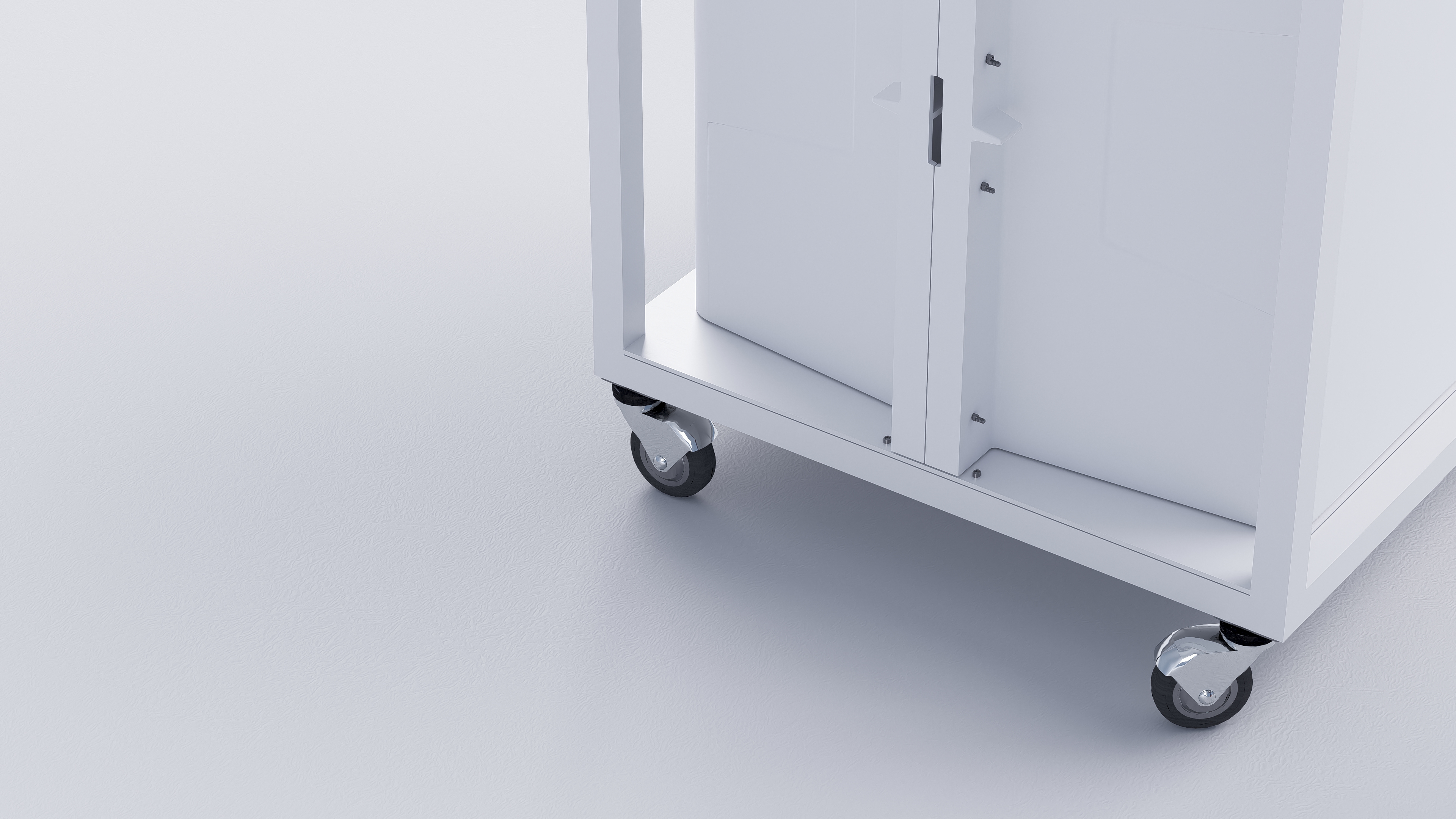
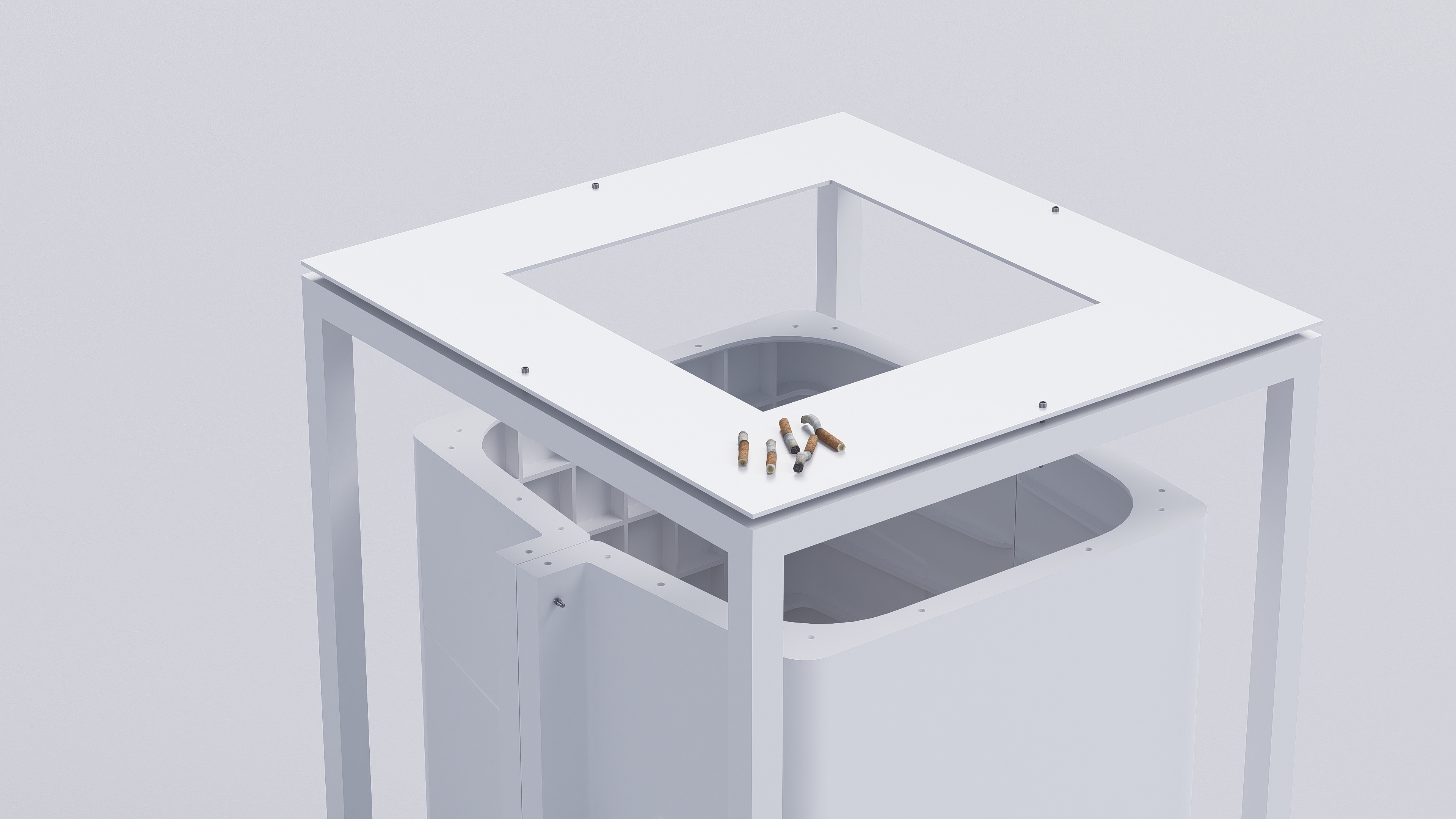
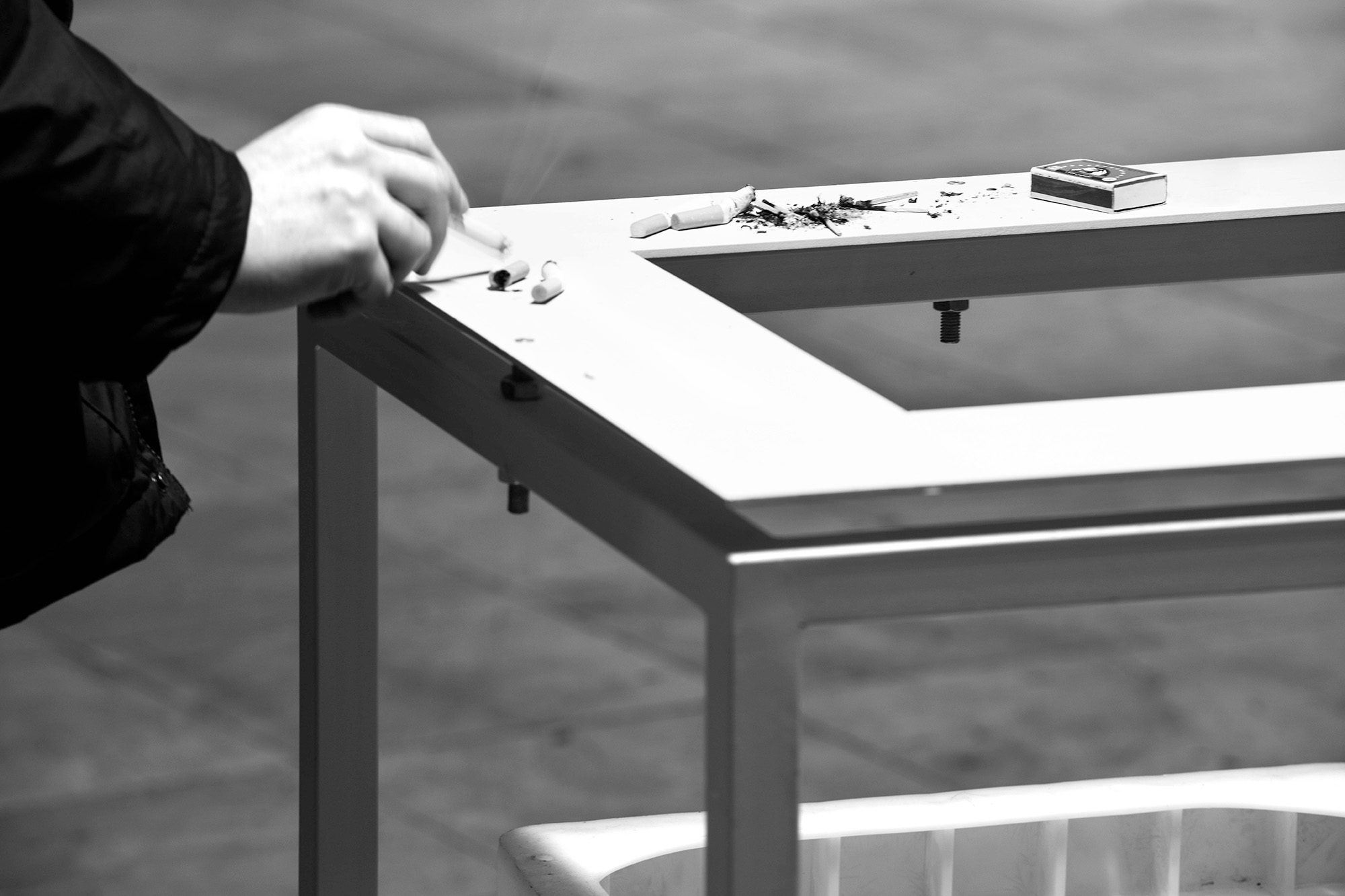
Extending this logic, the project is grounded in the notion of post-industrial reprogramming a process in which an element originally designed for structural building logic is detached from its purely technical role and redefined as a piece of service-oriented urban micro-architecture. The addition of an anodized aluminum plate and its assembly through a bolted connection system is not simply a technical detail but a conscious tectonic gesture through which the trash bin becomes a hybrid structure situated between durability and temporality, between industrial precision and the poetic agency of reclaimed matter. In this condition, the object functions as a dialogic artifact, engaging the user perceptually, behaviorally, and critically by embedding within itself a reflection on cycles of production and consumption.
From an aesthetic standpoint, the project deliberately avoids additive form-making and instead extracts the latent formal capacity of the waffle module itself. The cellular grid and modular rhythm of the formwork, juxtaposed with anodized metal and precise mechanical joints, generate a spatial graphic that produces visual tension between industrial geometry and human occupation in the urban field. The void-to-solid ratio, shadow casting within the cavities, and the refraction of light across semi-reflective surfaces transform the bin from a purely utilitarian object into a light–shadow figure one that simultaneously carries industrial memory and the immediacy of contemporary everyday use.
While the project resonates with the lineage of the Readymade, it does not remain at a purely conceptual level. The Waffle Trash Bin advances a simultaneous redefinition of context, tectonics, and function. Situated at the intersection of material, performance, and cultural reading, the work becomes a manifestation of a circular material narrative where an industrial component, typically excluded from qualitative cycles after limited use, is reactivated within a new loop through low-energy transformation and the avoidance of carbon-intensive processes. Within this framework, design is understood not as creation ex nihilo but as the conscious transformation of meaning: an ecological and cultural act that extracts performance and beauty from constraint, and translates industrial logic into a sustainable, human-centered, and intelligent spatial language.