
Redefining the Aperture as a mediator between interior and exterior, offering a multilayered experience of light and landscape.
The “Eighth Aperture House” project is situated within the climatic and cultural context of the Caspian Sea coast, along an urban axis leading to the sea in the Caspian Free Zone, located in Bandar Anzali, Gilan Province. Here, humidity, diffuse light, and the infinite horizon of the sea define the spatial and perceptual identity of the architecture. The site’s location on a street extending toward the sea, coupled with an oblique view of the blue horizon, became the starting point for an architectural concept centered on the interaction between light, landscape, and human experience. Accordingly, the design process followed an interdisciplinary approach, engaging with environmental perception, phenomenology of space, climatology, and advanced technologies, aiming to define architecture not merely as a physical form but as a multilayered, meaningful experience.
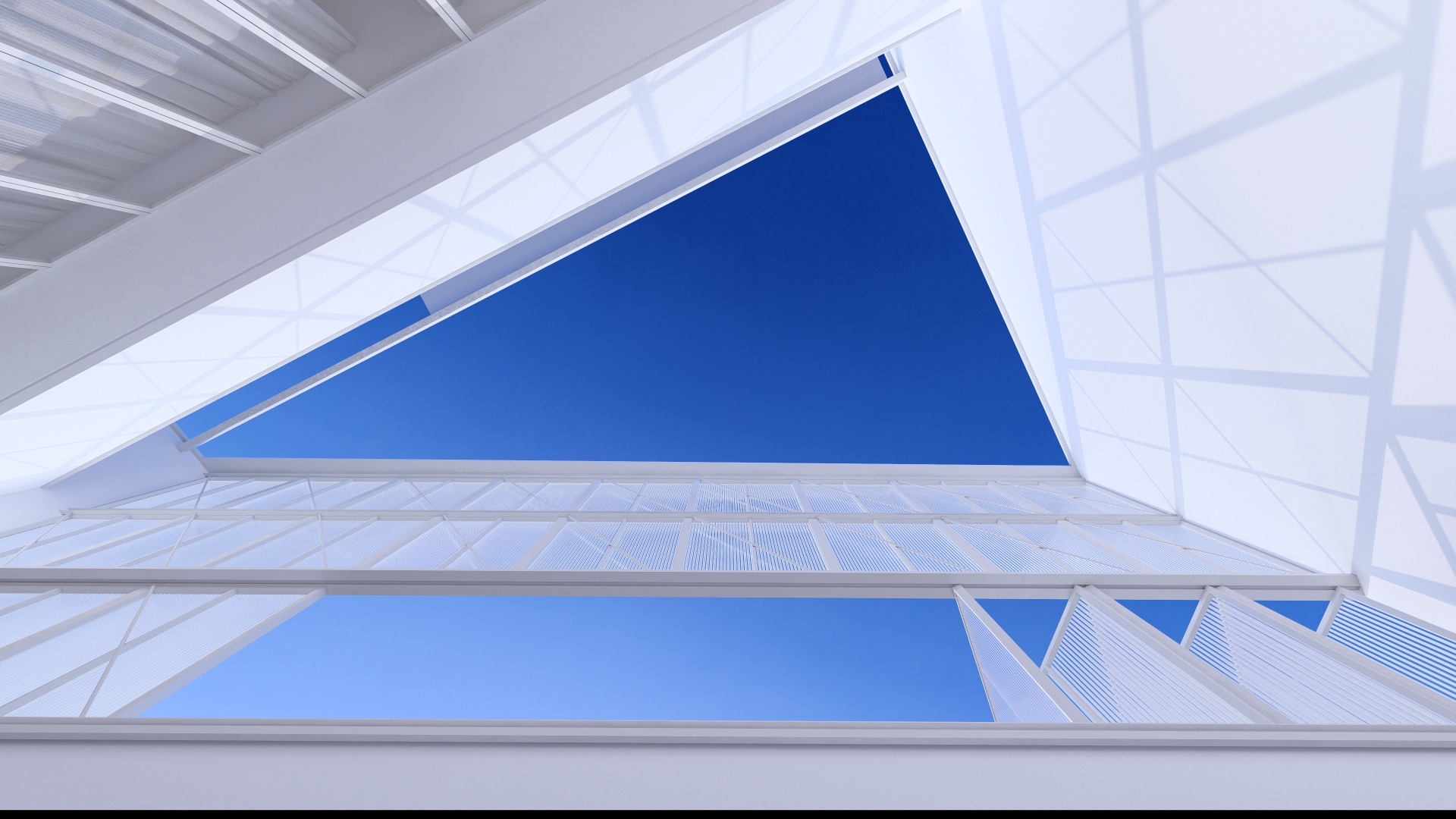
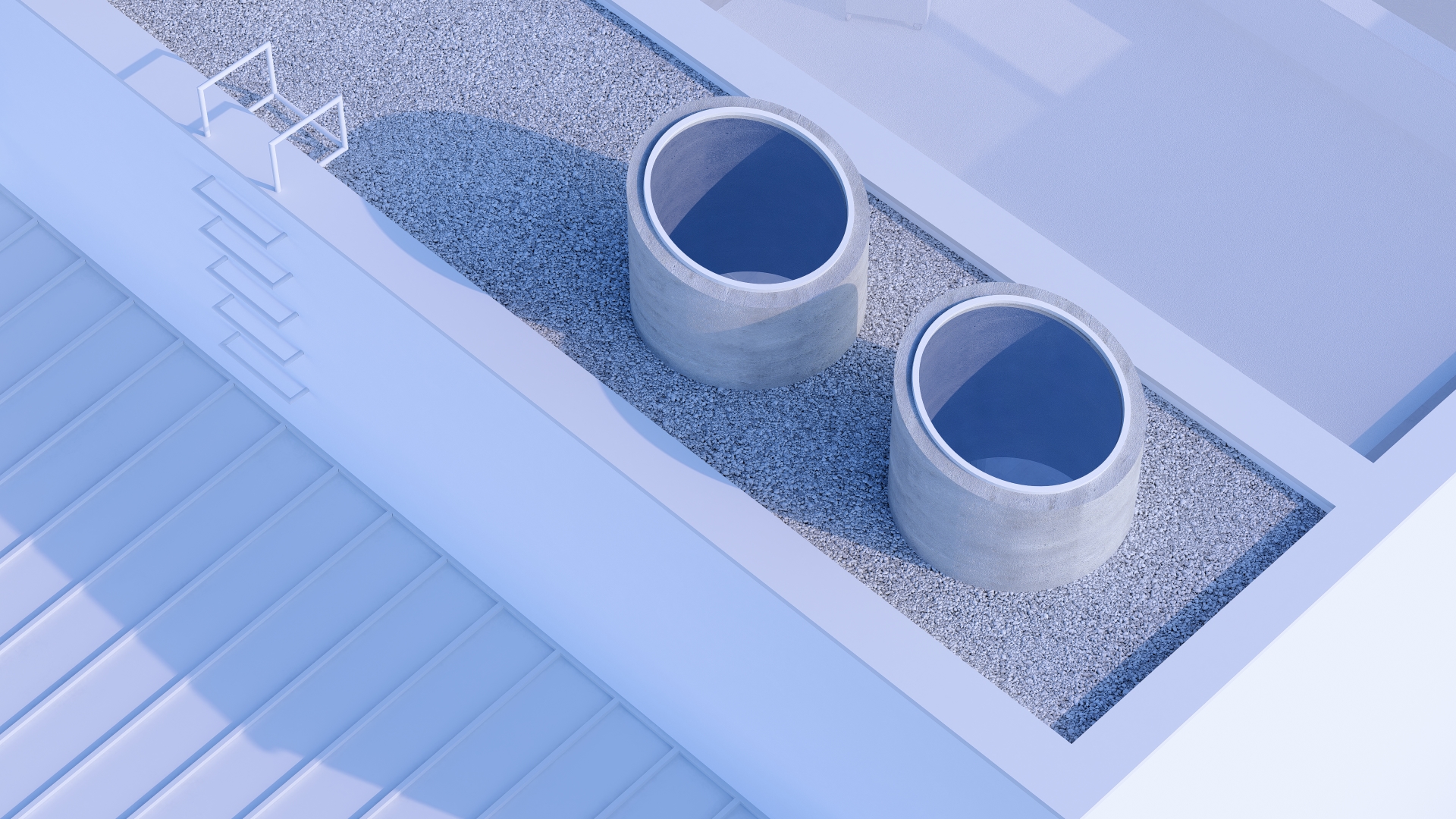
The conceptual essence of the project materializes in the redefinition of the “Aperture” as a mediator between interior and exterior. Seven circular apertures within the spatial structure act as frames for directing natural light and calibrating visual perception, each revealing a distinct sequence of sky, light, and the passage of time. Beyond their climatic function, these apertures create a rhythmic spatial experience, imparting a poetic and contemplative quality to the architecture. Among them, the “Eighth Aperture” is defined as an abstract, perceptual concept an aperture that exists not in the physical form of the building but in the mind and gaze of the observer, serving as a lens through which the entirety of the work is understood. In this way, the architecture transcends being a mere object and becomes an interactive experience between space and observer.
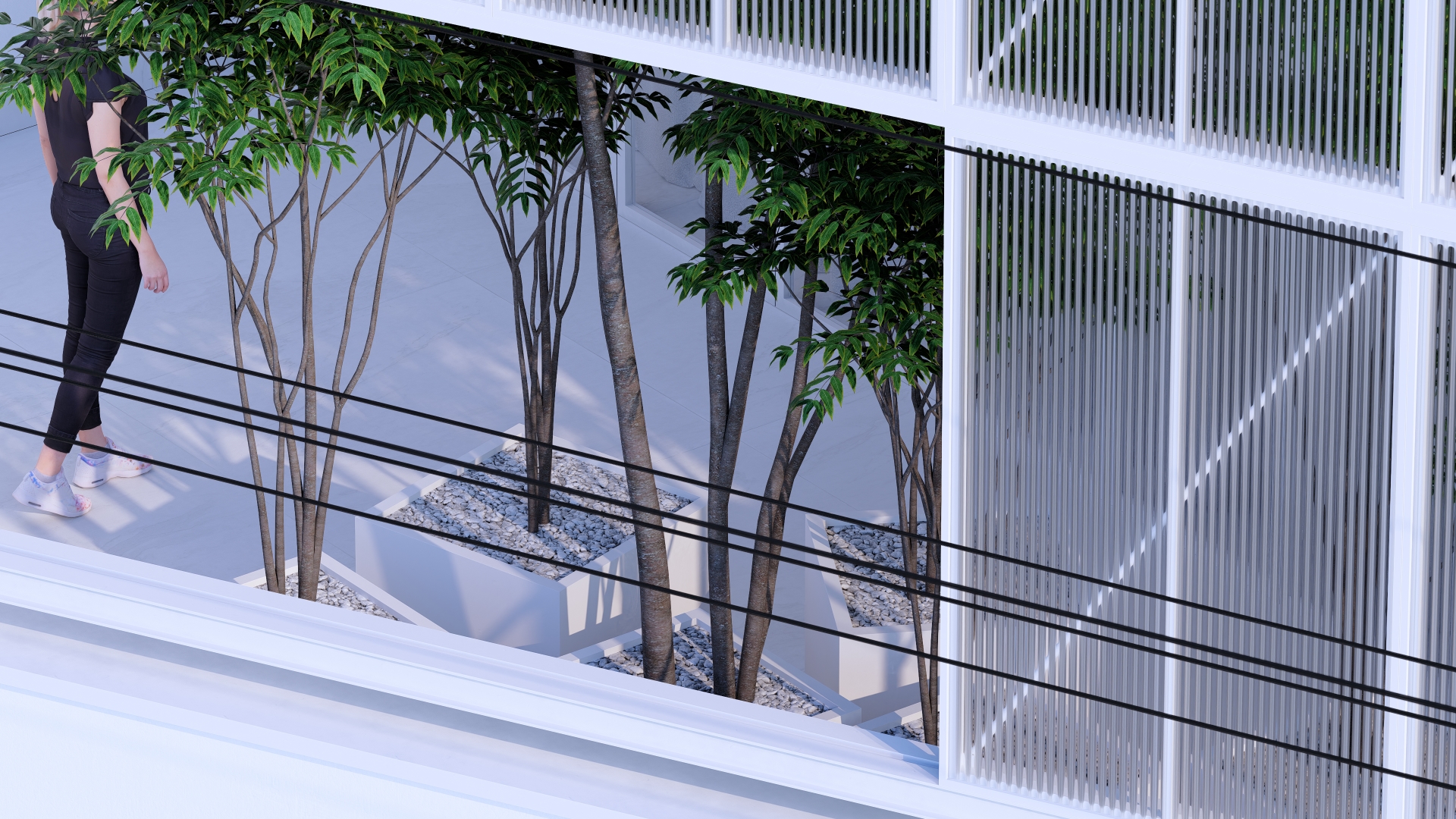
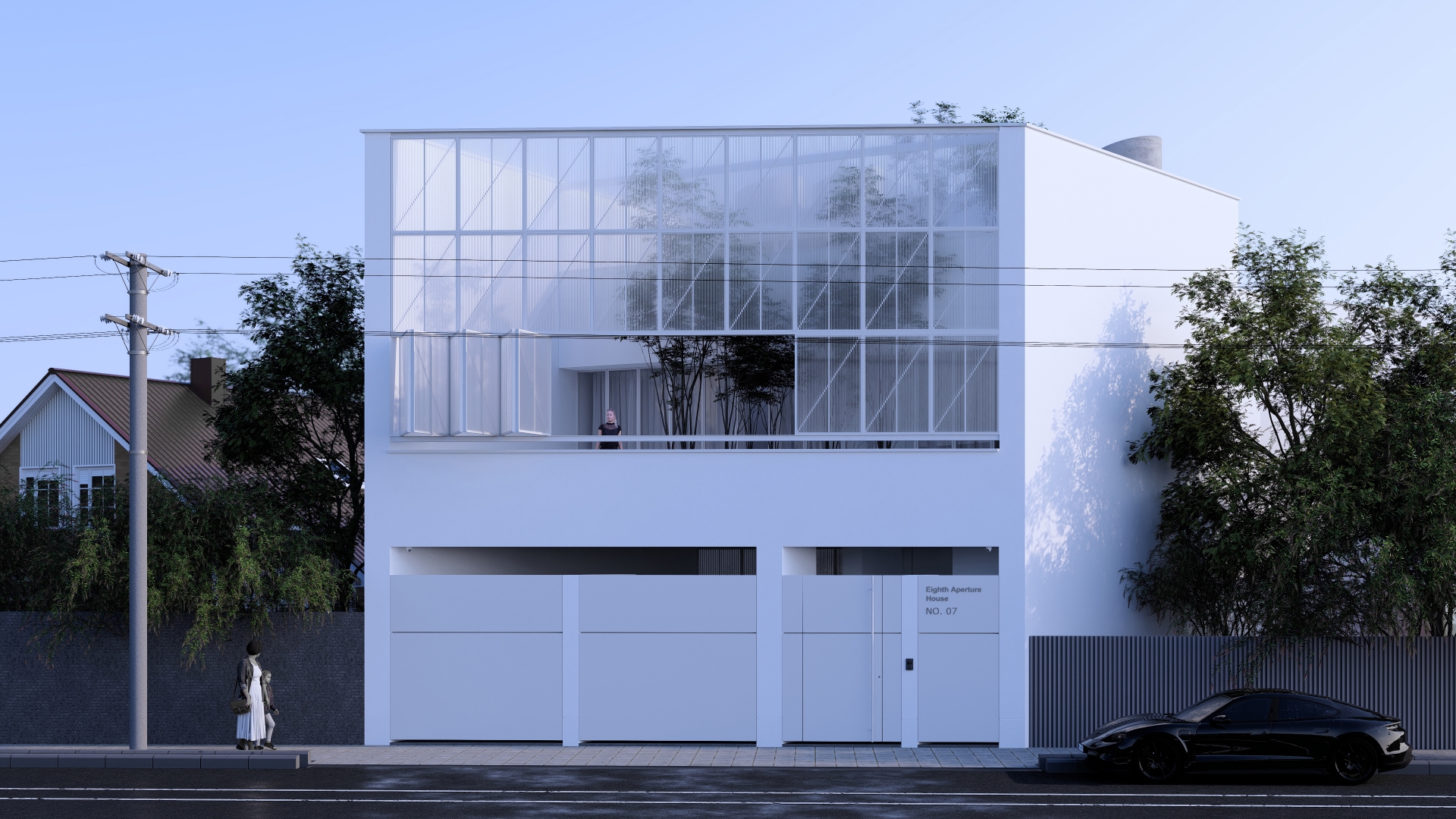
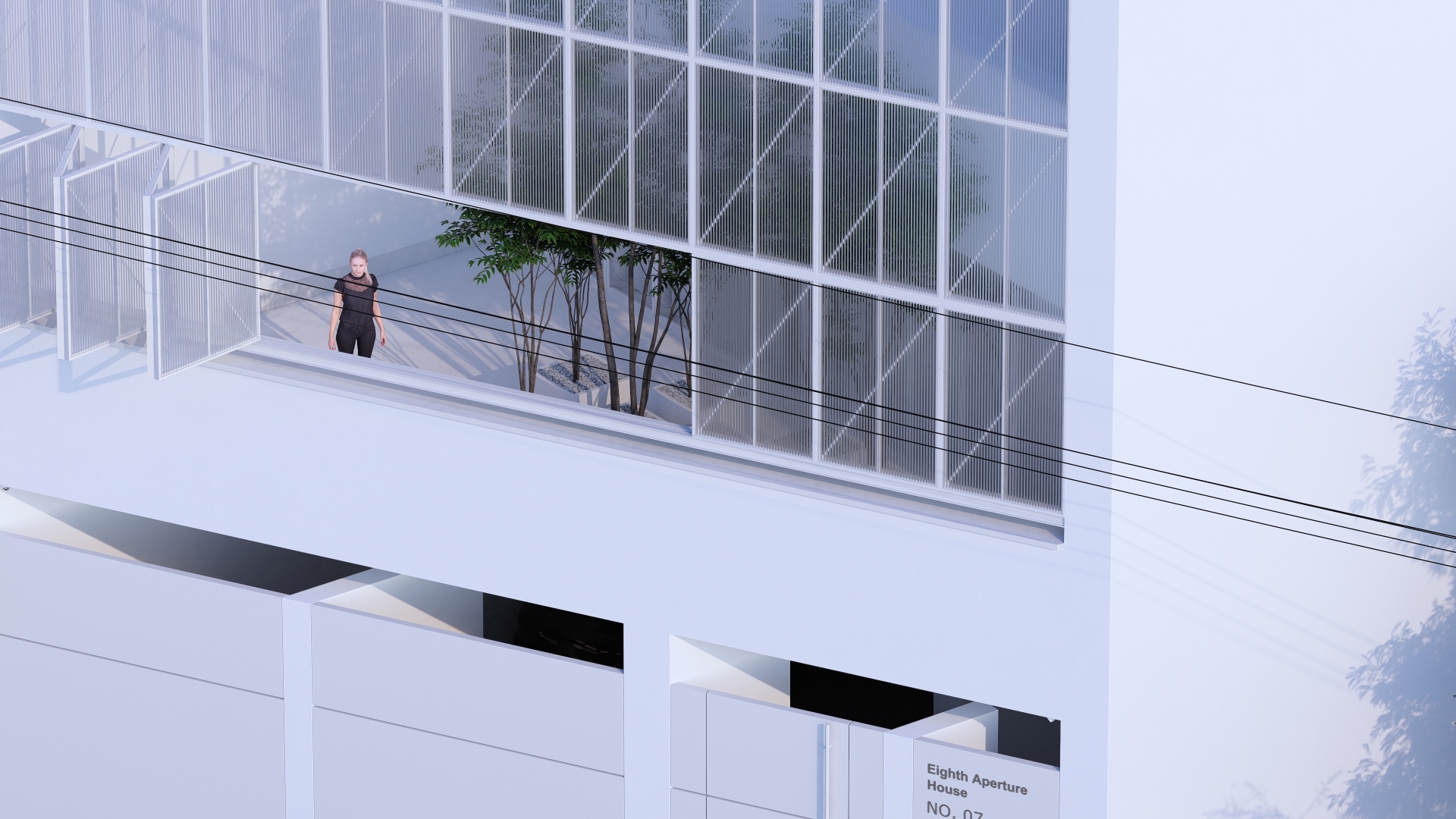
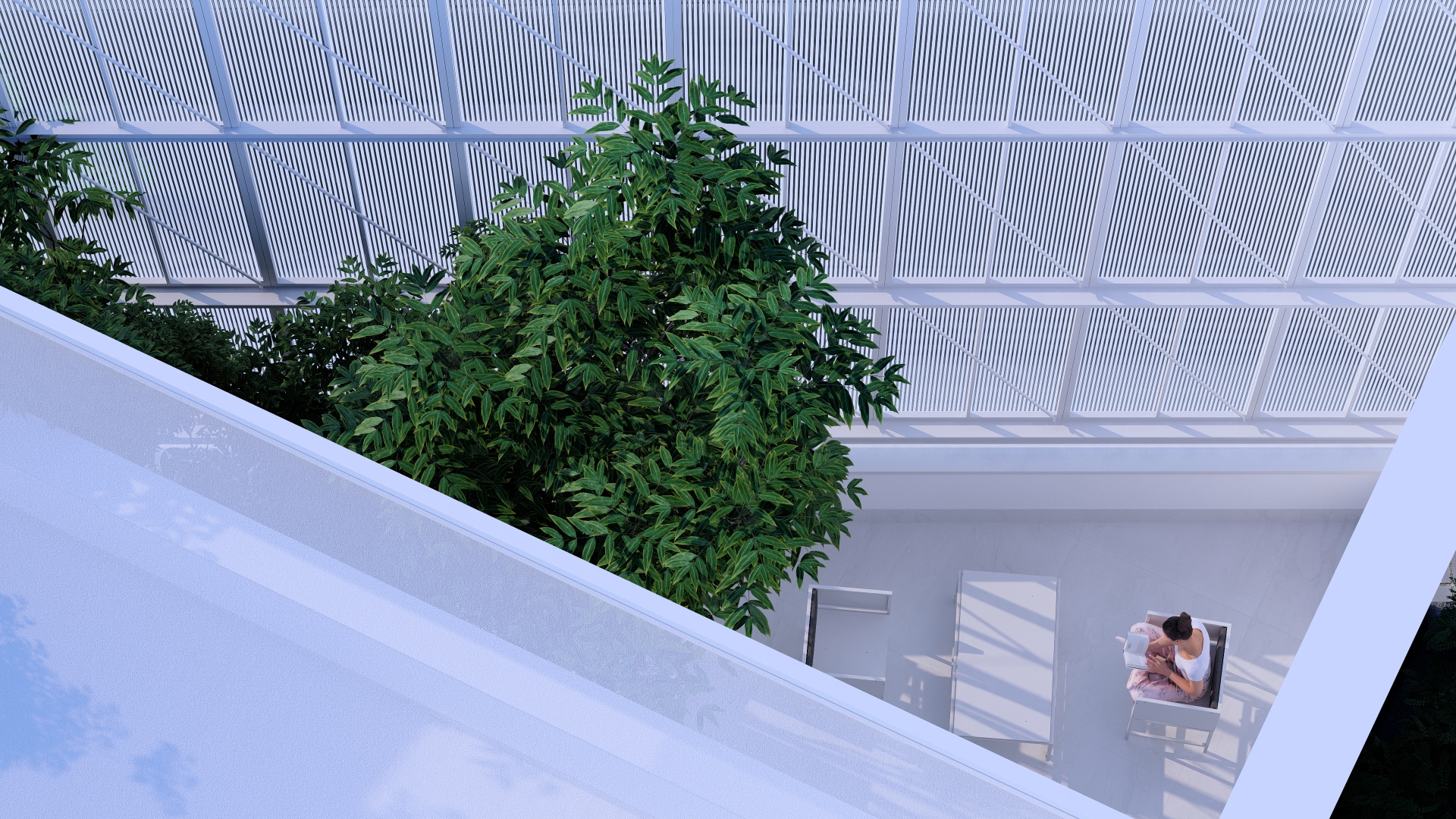
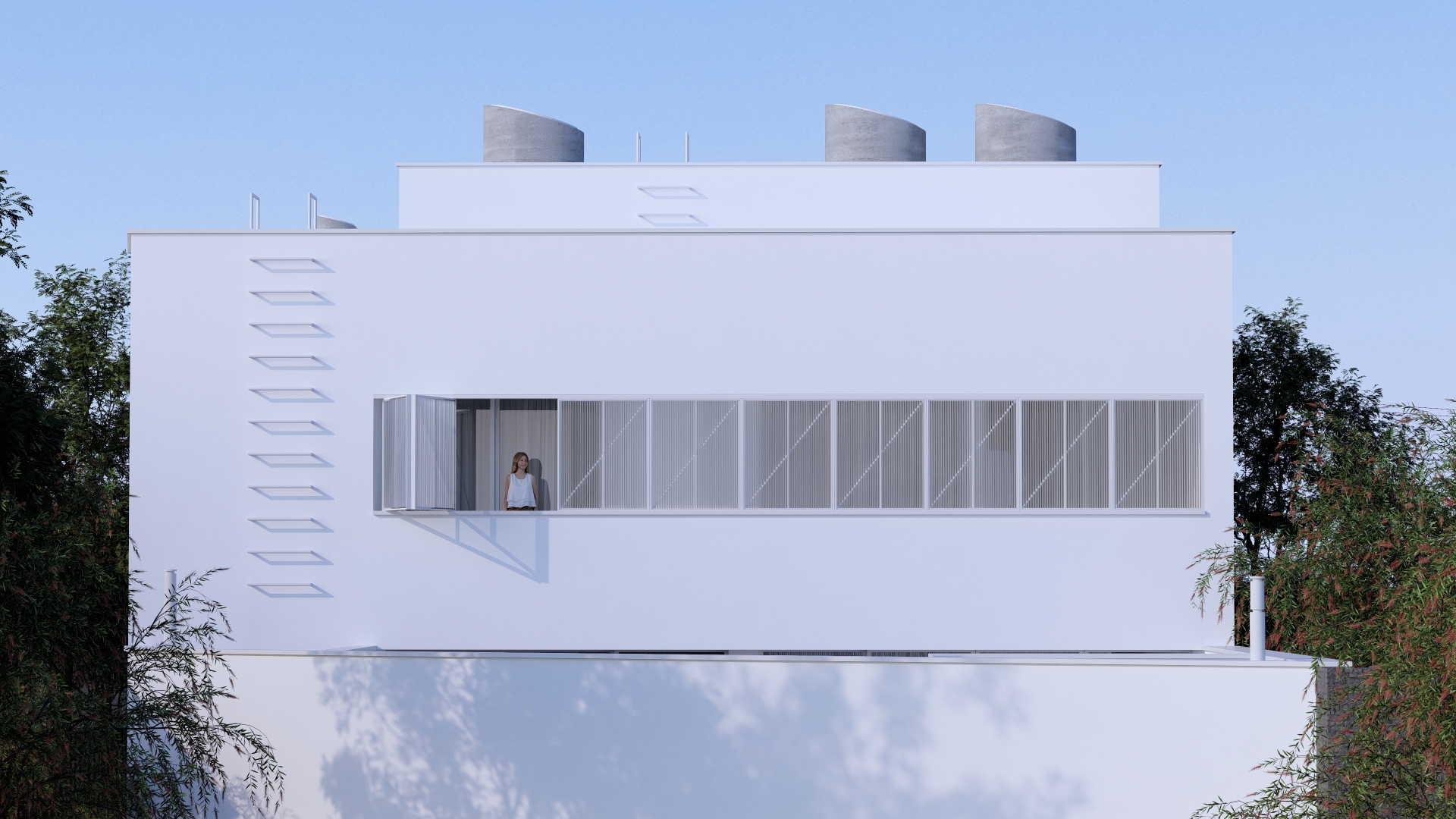
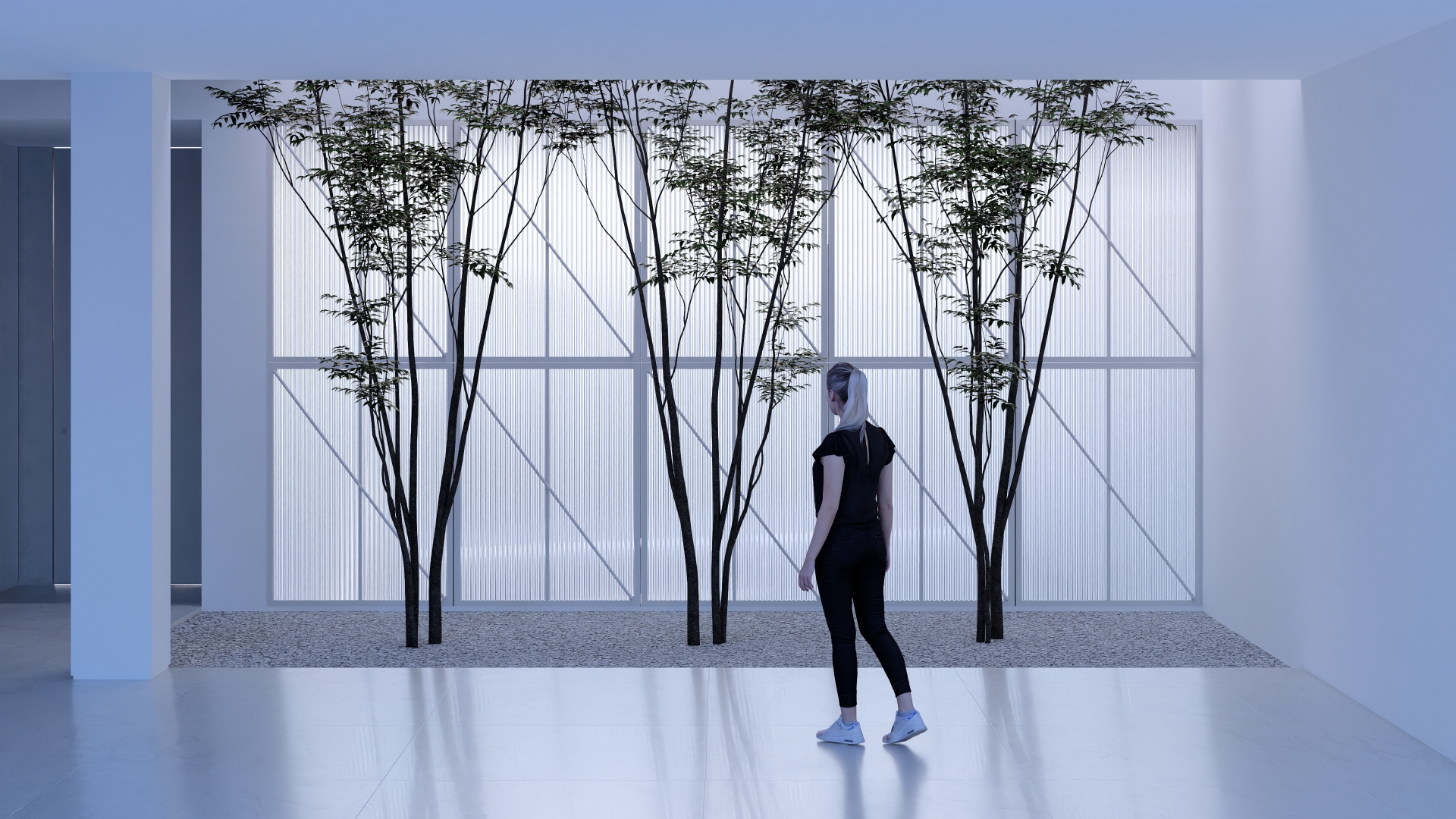
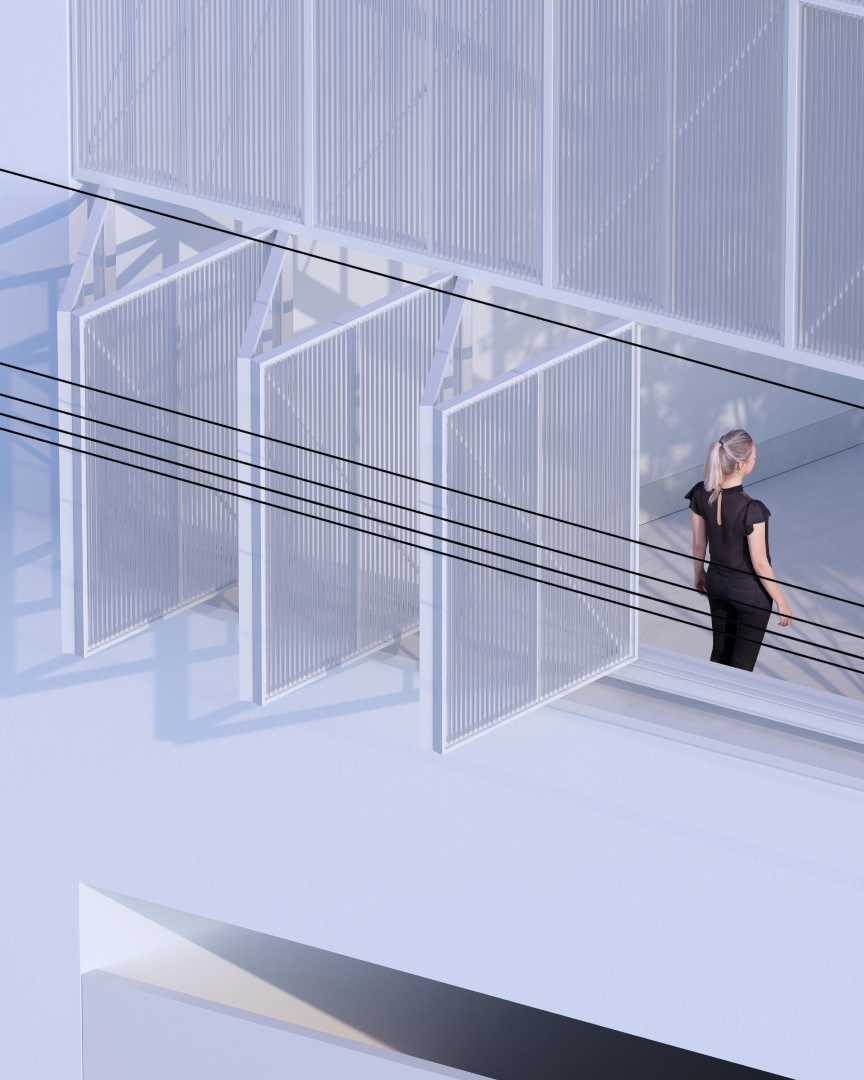
The formation of the project’s form began with a pure, minimal volume, gradually refined in response to the site, natural light, and surrounding views. This formal purity, while establishing visual calm, provides an appropriate framework to emphasize the concept of aperture and the interplay of light and shadow. On the street-facing facade, a semi-transparent plexiglass skin encloses the first-floor terrace, acting as an intermediary layer that establishes a fluid boundary between private and public space. By filtering light and softening visual edges, this skin preserves privacy while establishing a delicate connection with the surrounding context. At night, it transforms into an urban lantern, highlighting the building’s presence within its environment.
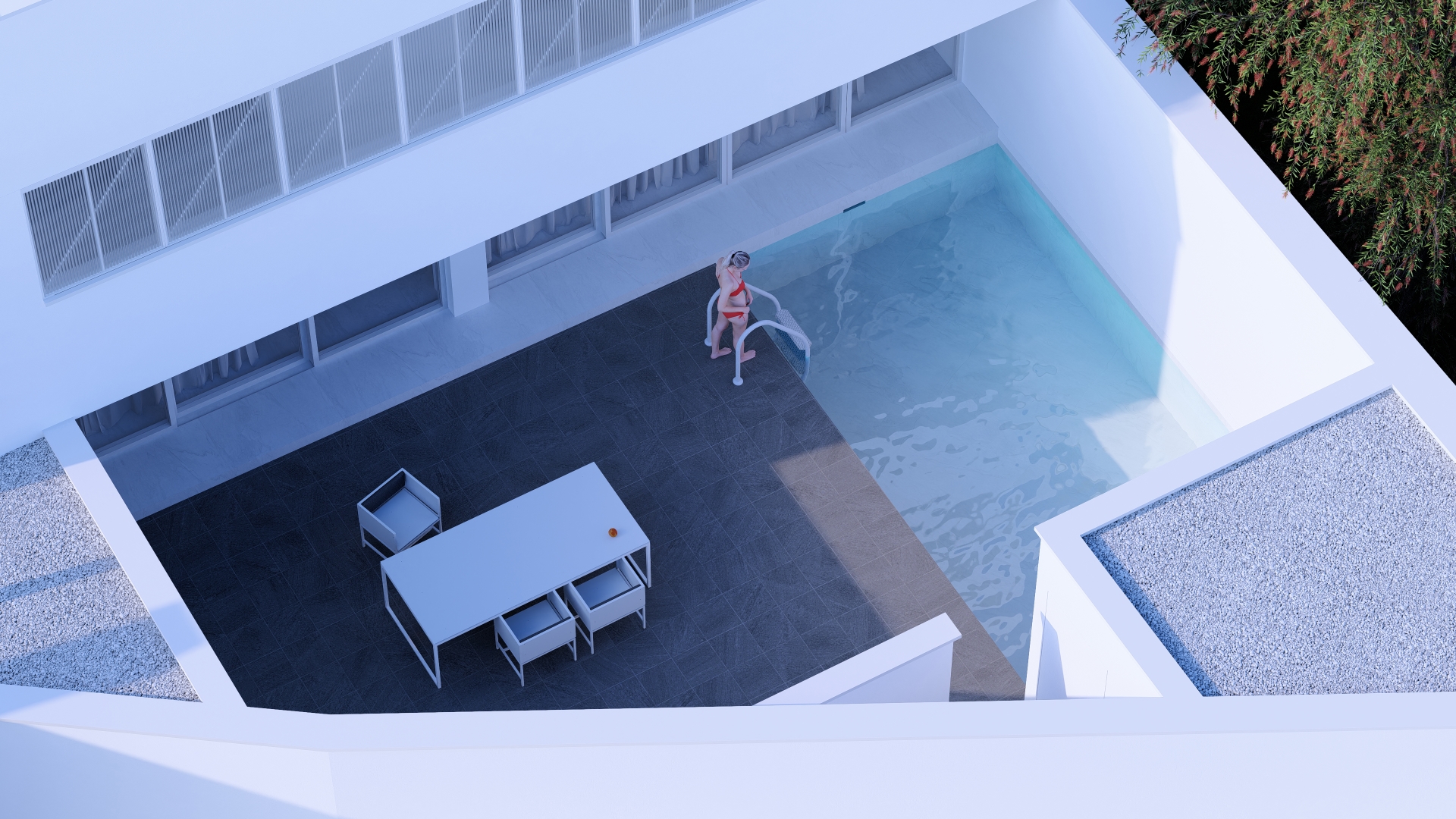
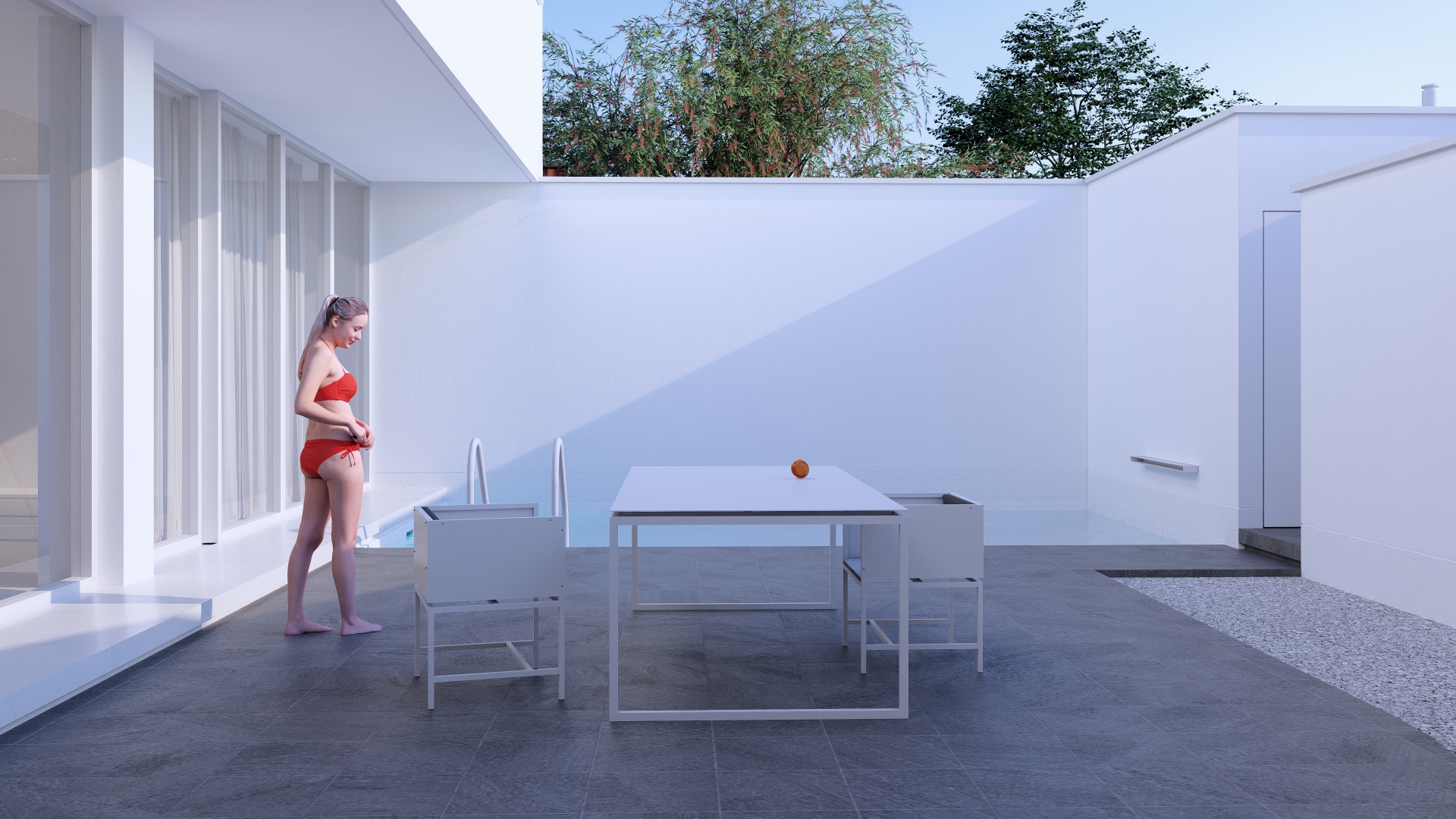
The spatial organization of the project is based on functional separation and perceptual continuity between spaces. The ground floor accommodates public areas, parking, a swimming pool, and the backyard, creating a fluid connection between interior and exterior and imparting a dynamic, lively quality. On the first floor, three master bedrooms and a study extend along a terrace overlooking the sea, allowing living to be experienced with reflection and tranquility. At the top level, a roof garden functions as a horizontal extension of the architecture and a platform for experiencing the sky and sea views, completing the connection between nature, light, and everyday life.
Responding to Gilan’s humid and temperate climate played a decisive role in shaping the design strategies. Maximizing natural light, ensuring effective ventilation, employing semi-transparent facades for solar control, and selecting moisture-resistant materials all contribute to environmental sustainability and thermal comfort for the residents. A regular structural grid and the use of contemporary materials further illustrate the convergence of technology and aesthetics in this project.
Ultimately, the “Eighth Aperture House” represents an effort to redefine the concept of light and openness in contemporary architecture, where geometry, climate, and human perception interact in harmony. Beyond a mere dwelling, it narrates a spatial story of living by the sea and offers an experience of the interplay between human, nature, and light, where the Eighth Aperture, as a mental aperture, invites the observer to discover and understand the hidden layers of architecture.