
Horizontal Aperture House
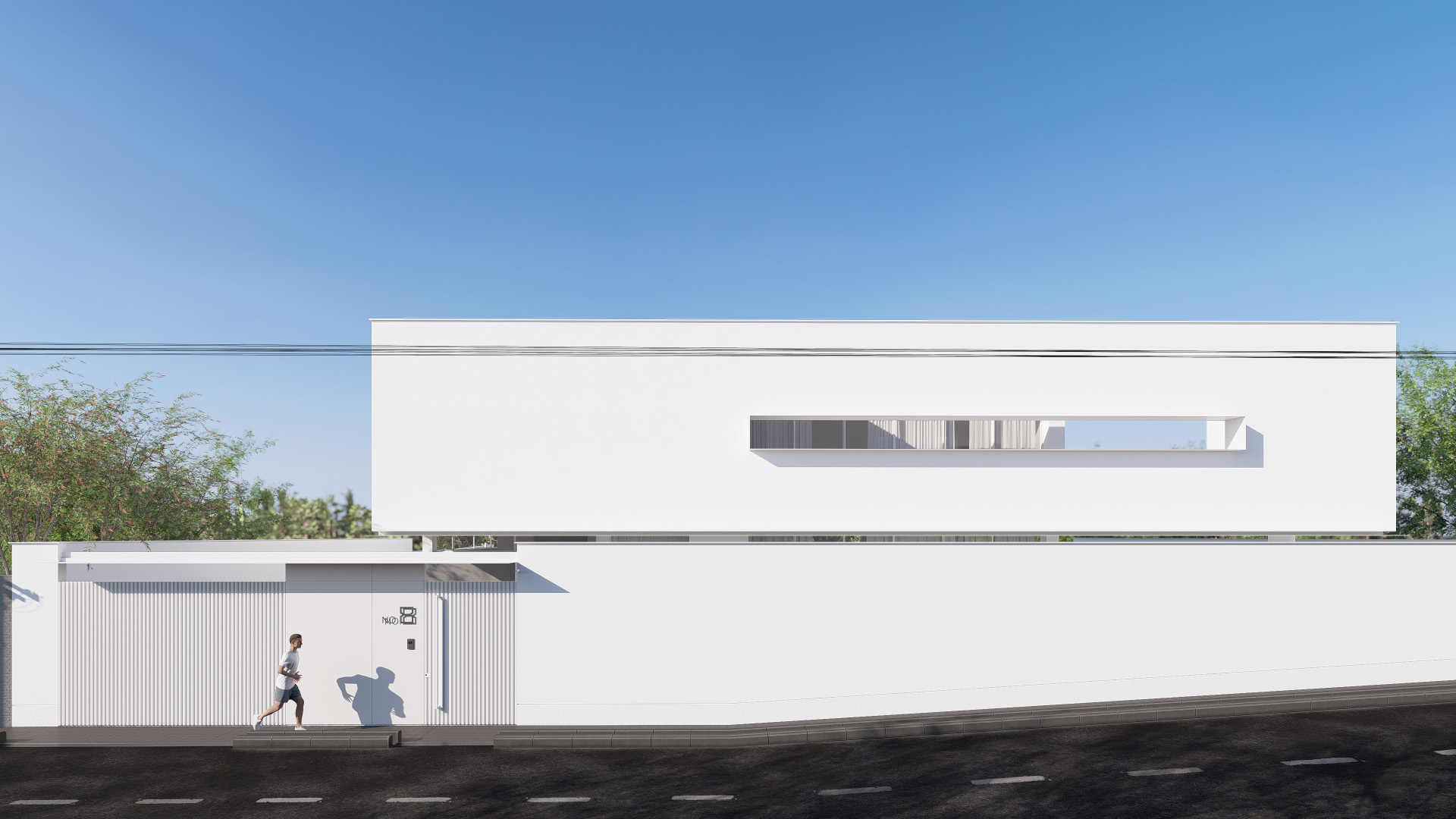
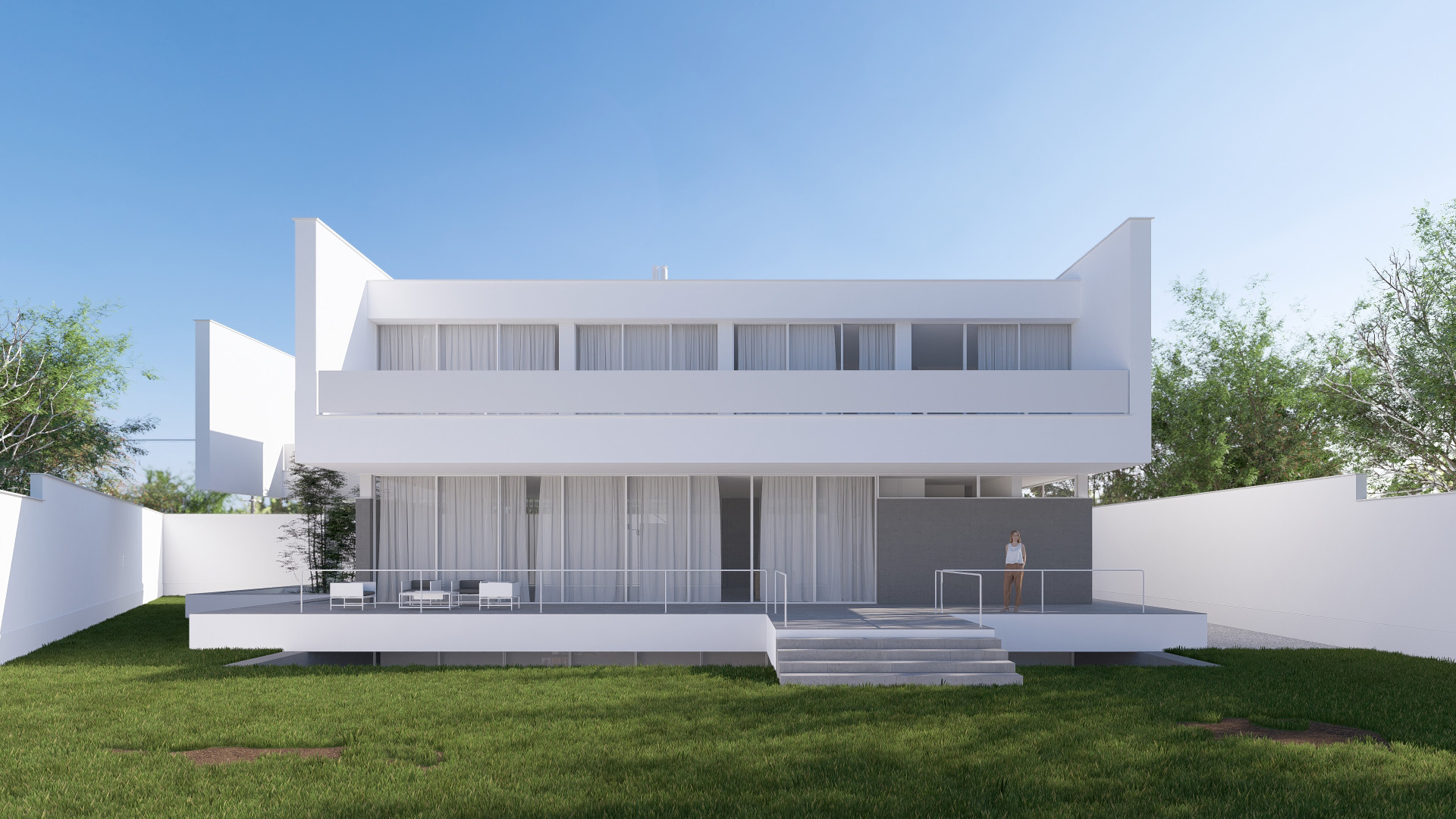
The “Horizontal Aperture House” emerges at the intersection of two seemingly opposing yet complementary strategies: withdrawal from the immediate context and the redefinition of a controlled relationship with it. Responding to the client’s need to escape the intensity and noise of urban life, the building is conceived as a monolithic, solid volume, deliberately set back from the street edge. This physical distance operates simultaneously as a psychological buffer, establishing a filtered threshold between everyday urban exposure and the quieter rhythm of weekend inhabitation.
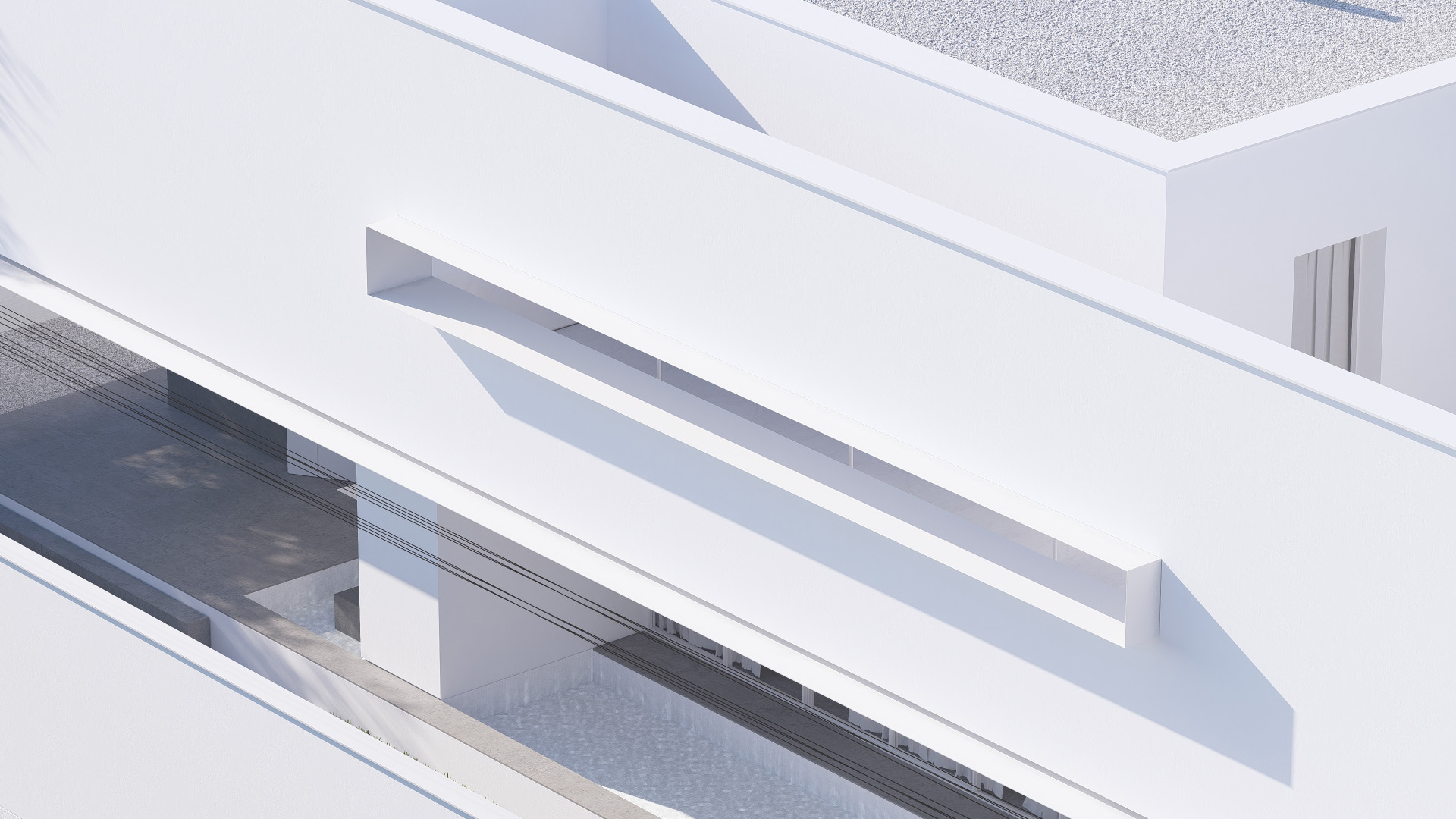
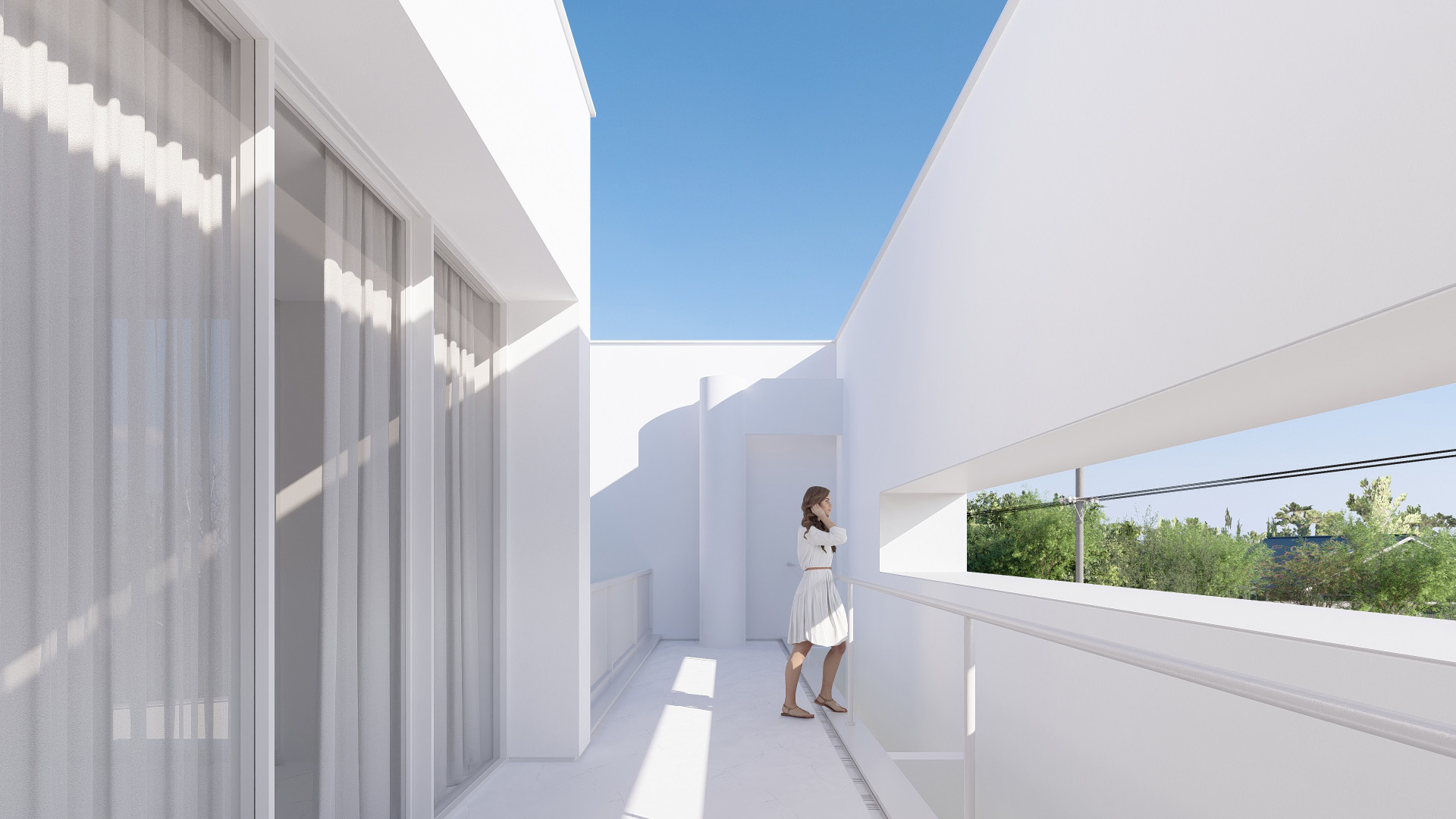
Within this restrained mass, the horizontal aperture acts as the sole meaningful incision less a conventional opening and more an architectural device. Suspended and elongated across the facade, it introduces a layered reading: framing selective views toward the street, modulating daylight, and reinforcing the horizontal datum against the vertical solidity of the volume. It operates as an optical and spatial instrument an architectural lens transforming the act of seeing into a curated, intentional experience rather than a passive exposure.
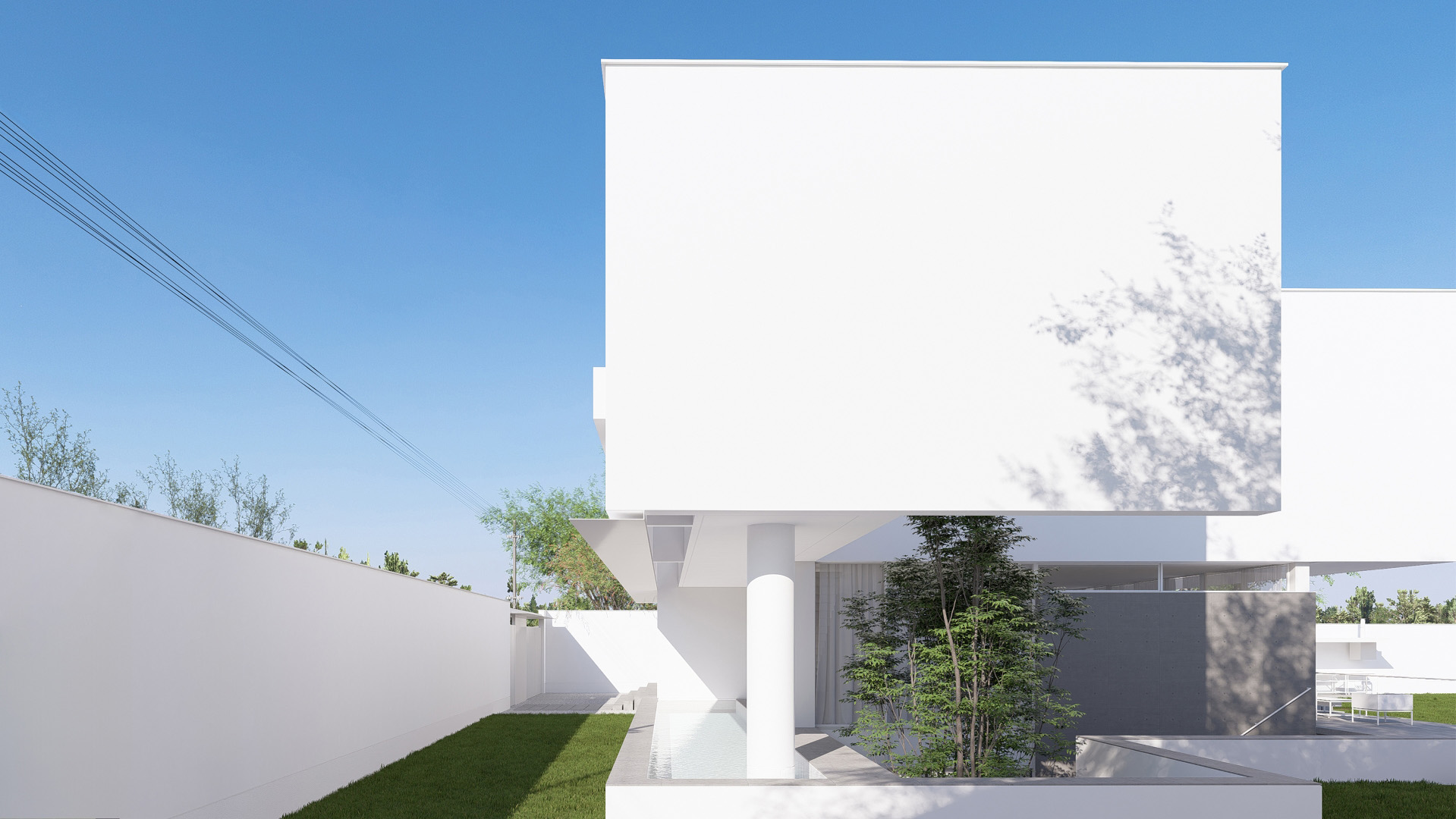
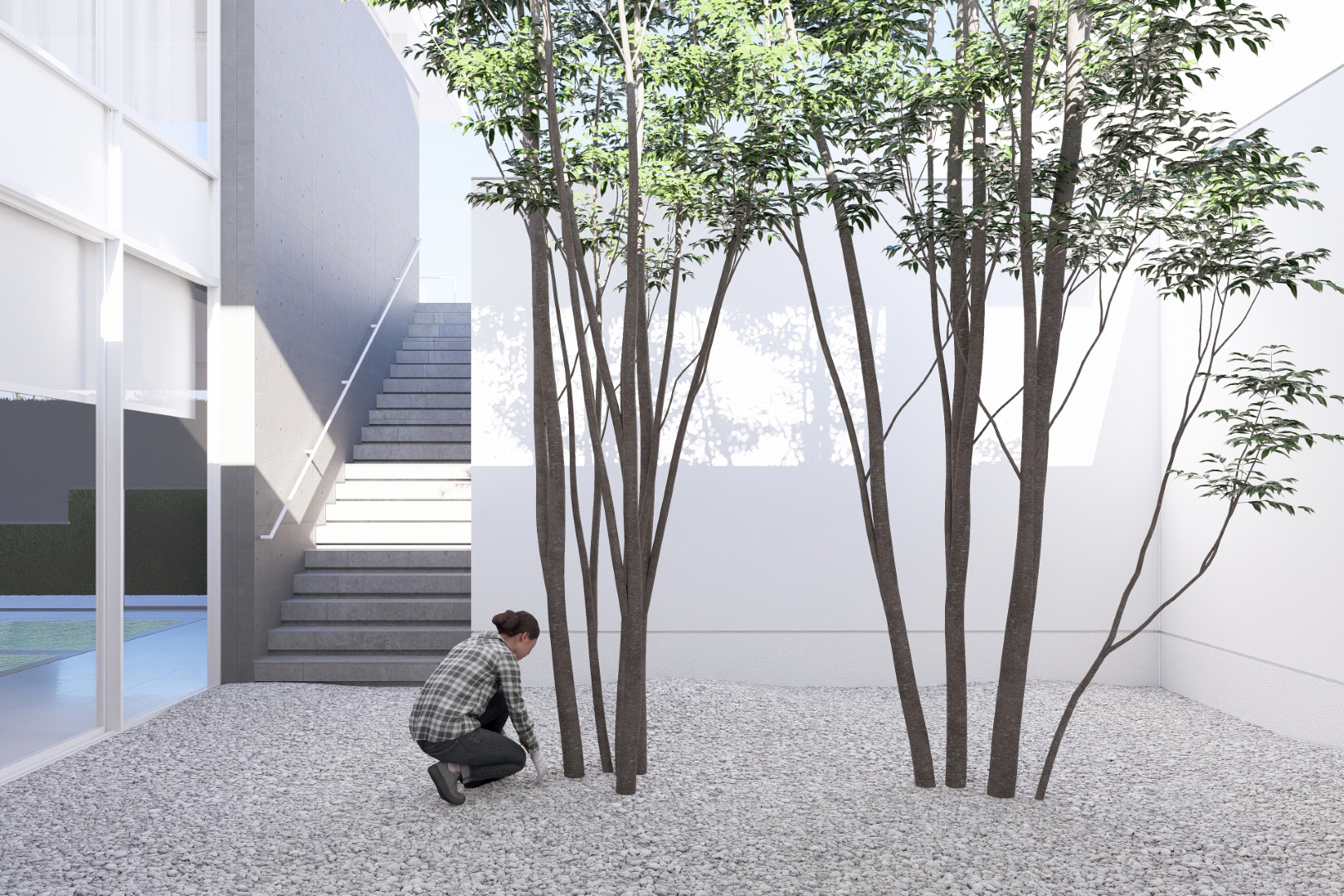
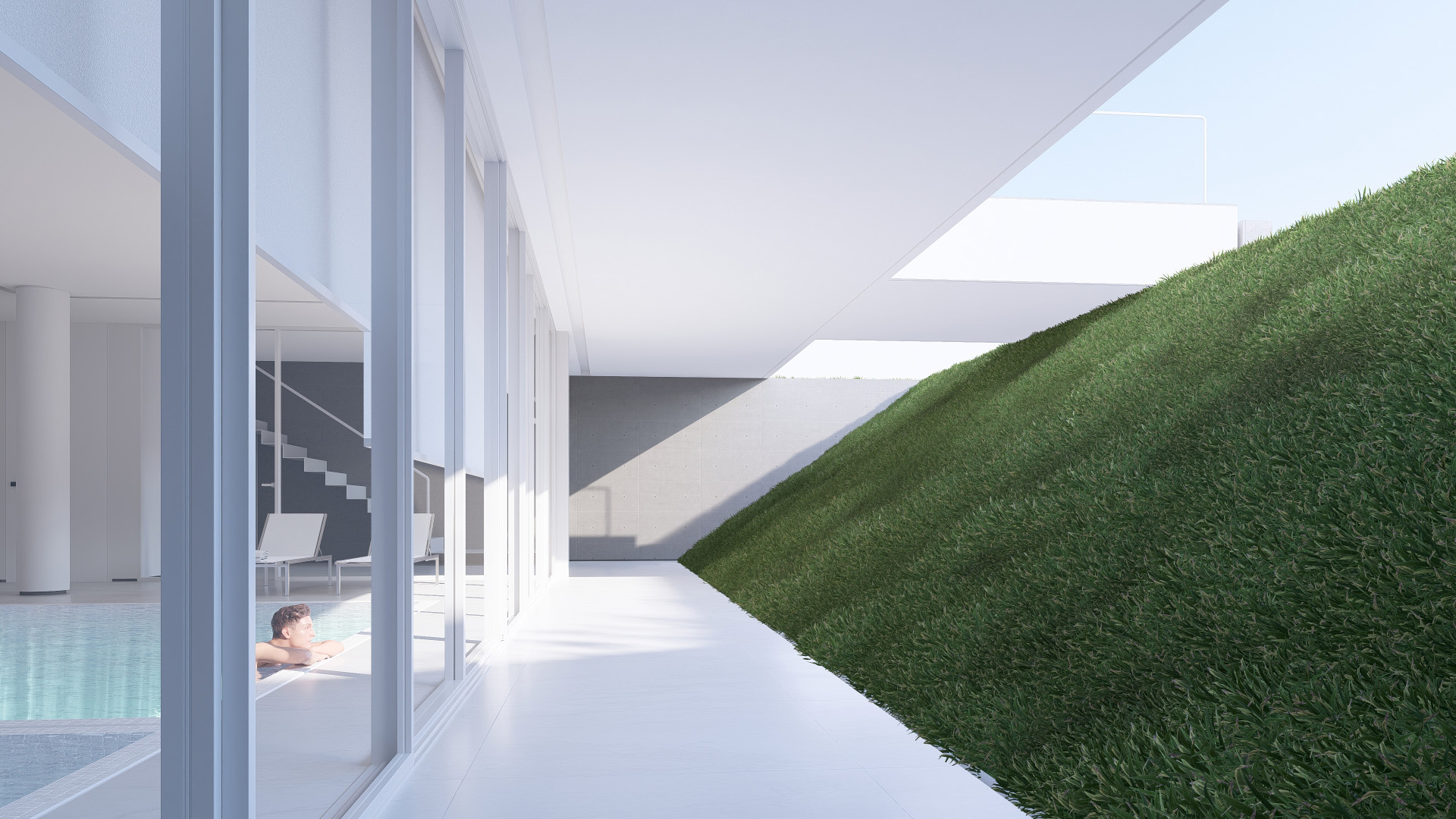
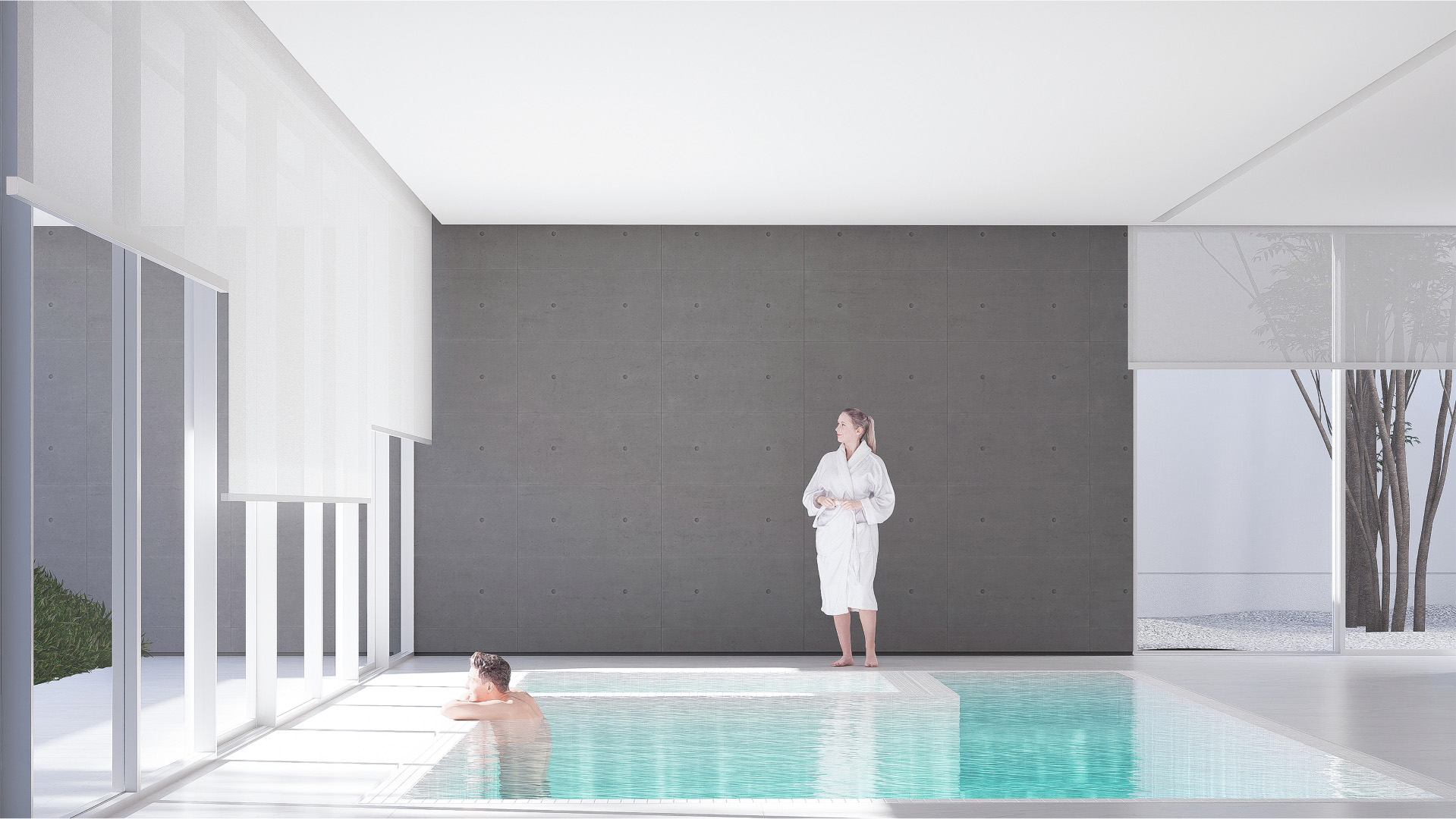
The volumetric organization is structured through a horizontal stratification of space, where levels are not merely stacked but differentiated by degrees of privacy, openness, and atmospheric quality. The basement departs from its typical service-oriented role and is redefined as an active recreational domain. Its direct connection to an eastern sunken garden allows natural light, ventilation, and landscape to penetrate the lower level, dissolving the conventional boundary between subterranean and ground conditions. This sunken void performs as a breathing interface, mediating between earth and architecture while introducing temporal qualities of light and shadow into the depth of the plan.
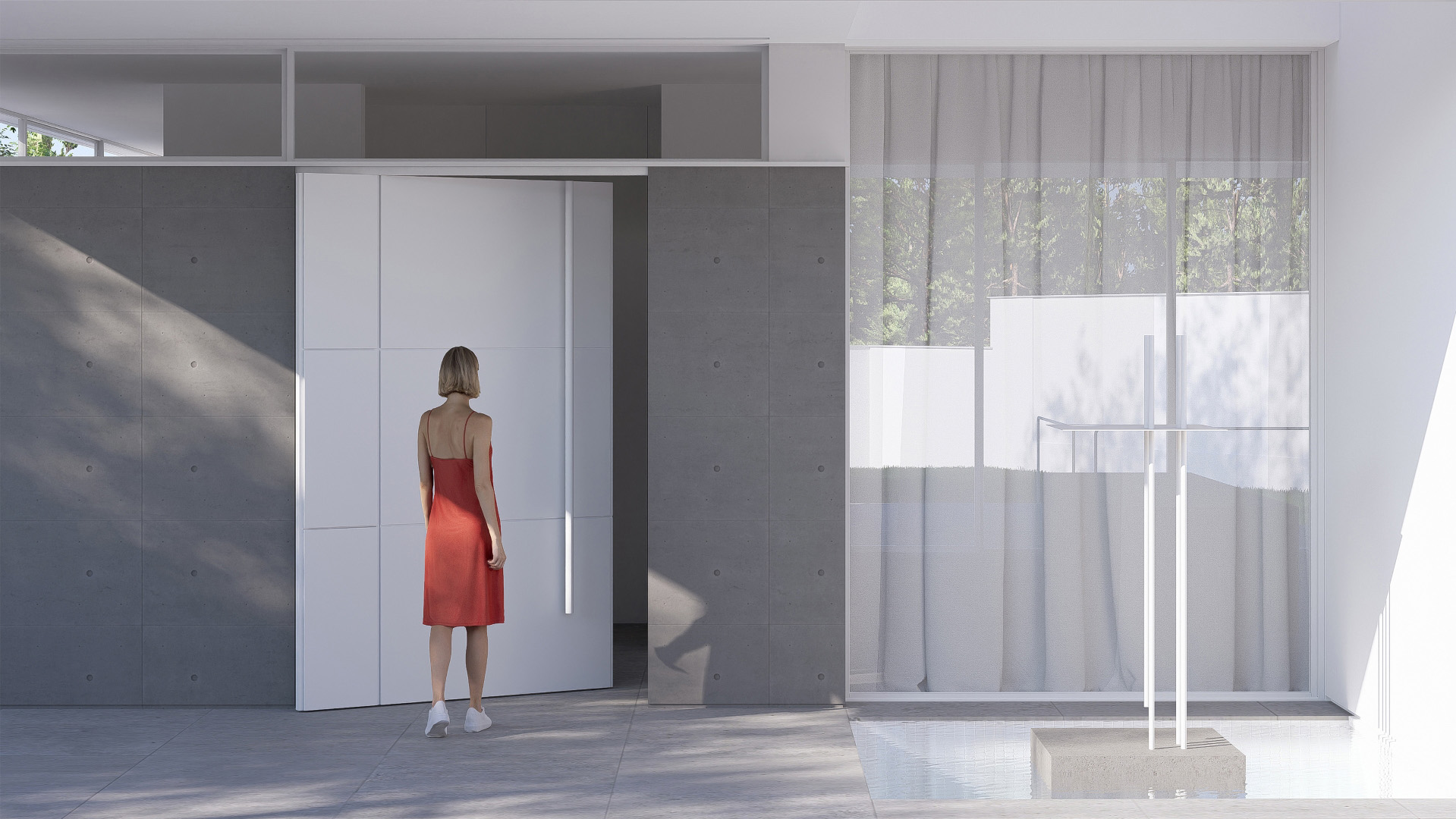
At the ground level, the spatial configuration emphasizes continuity and fluidity. Living and kitchen areas are conceived as an uninterrupted spatial field, where programmatic boundaries are softened to encourage social interaction and adaptability. Controlled openings extend this domain toward the exterior, allowing the interior life to expand without compromising the overall sense of enclosure. This level operates as the social core of the house, mediating between the active basement and the more secluded upper floor.
The first floor accommodates the private realm, articulated through a more introverted spatial logic. Openings are reduced and carefully positioned, views become selective, and proportions are calibrated toward calmness and retreat. Here, the architecture shifts from openness to introspection, supporting rest, privacy, and individual withdrawal.
The “Horizontal Aperture House” is an exploration of the threshold between isolation and connection. Through minimal formal gestures and precise spatial interventions, the project constructs a layered mode of living one in which tranquility is not achieved through complete detachment, but through the careful calibration of exposure, view, and spatial continuity.