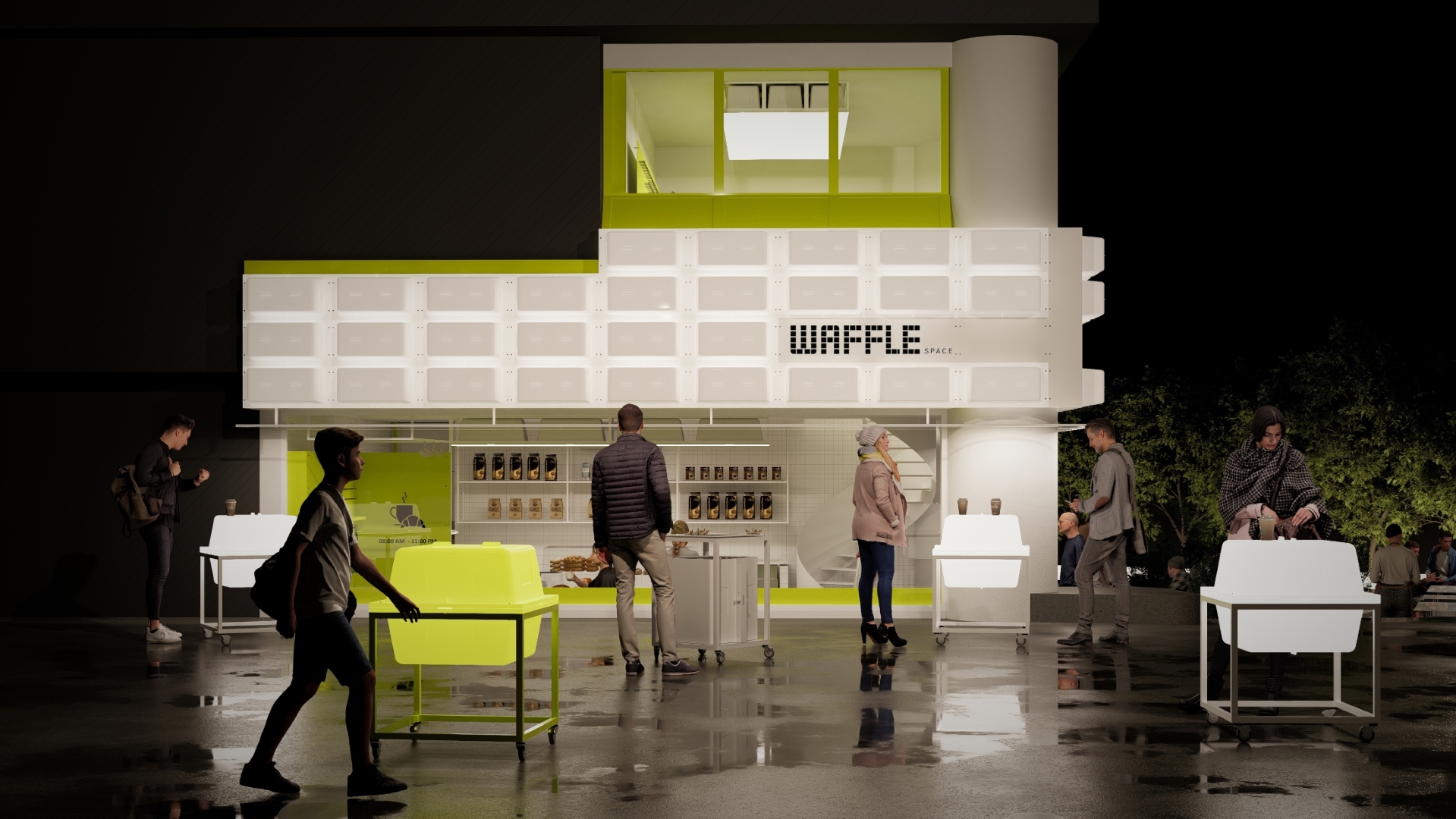

WAFFLE SPACE
Urban Micro-Topography and Modular Logic: Reactivating a Neglected Corner through Low-Tech Design
Waffle Space occupies a corner of Aftab Tower that had become virtually inactive prior to intervention. Located at the tower’s southwest edge, the site had gradually fallen out of use due to limited visibility, an adjacent blank wall, level differences, and the accumulation of deteriorated additions. While the northern, eastern, and western edges of the tower remained integrated within the daily flow of urban life, this southwestern corner persisted as a dormant and underutilized fragment an area traversed by urban movement yet rarely occupied. Identifying this behavioral gap through systematic behavior mapping became one of the project’s primary design foundations.
A fundamental challenge stemmed from the project’s status as a leased property. Consequently, any intervention needed to remain economical, demountable, transferable, and non-structural. This constraint directed the project toward an economic-ecological strategy that privileged circular economy principles, minimal resource consumption, and low waste production over demolition and heavy construction. The element capable of synthesizing these ambitions was the industrial waffle formwork, which became the project’s shared DNA.
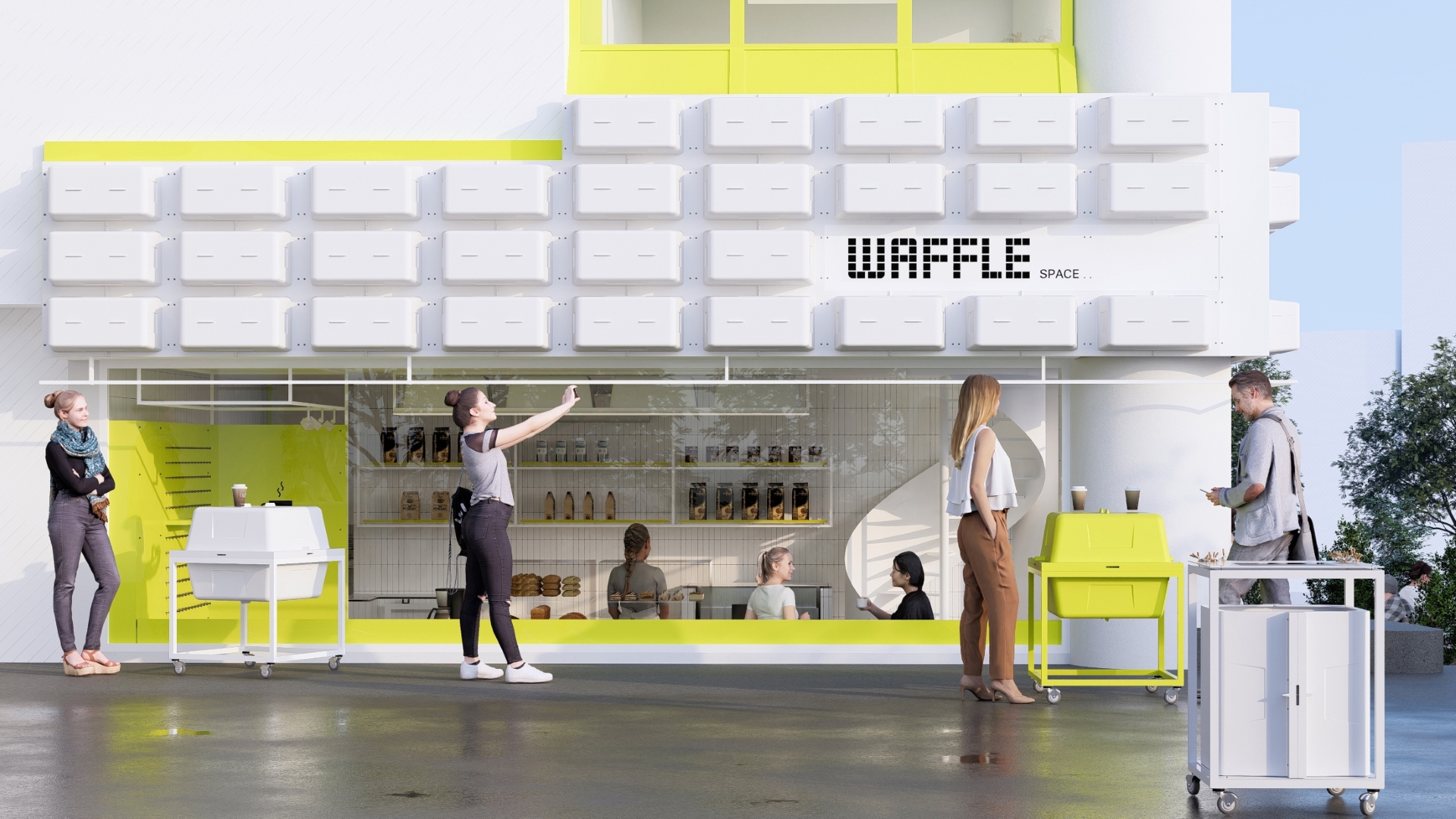
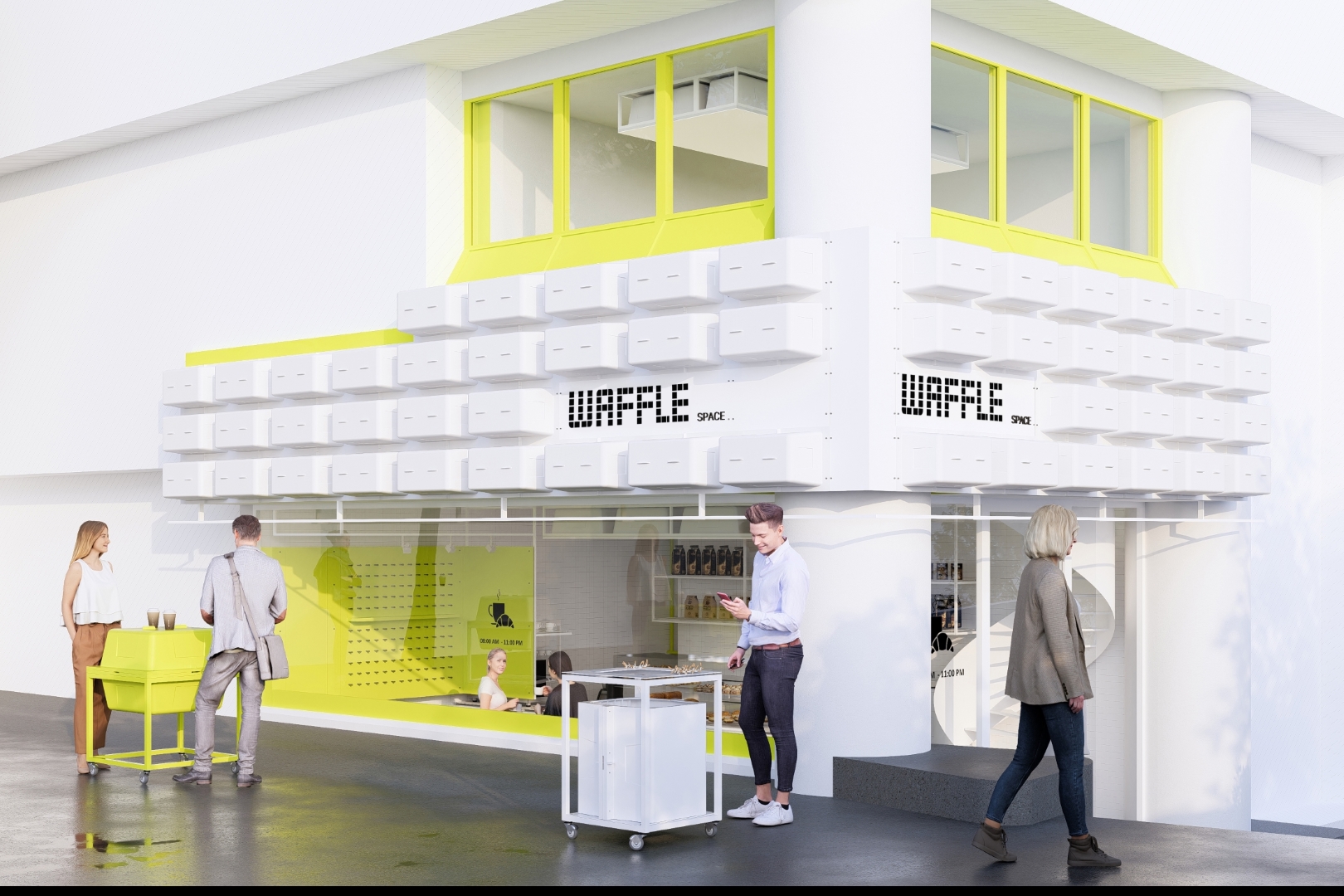
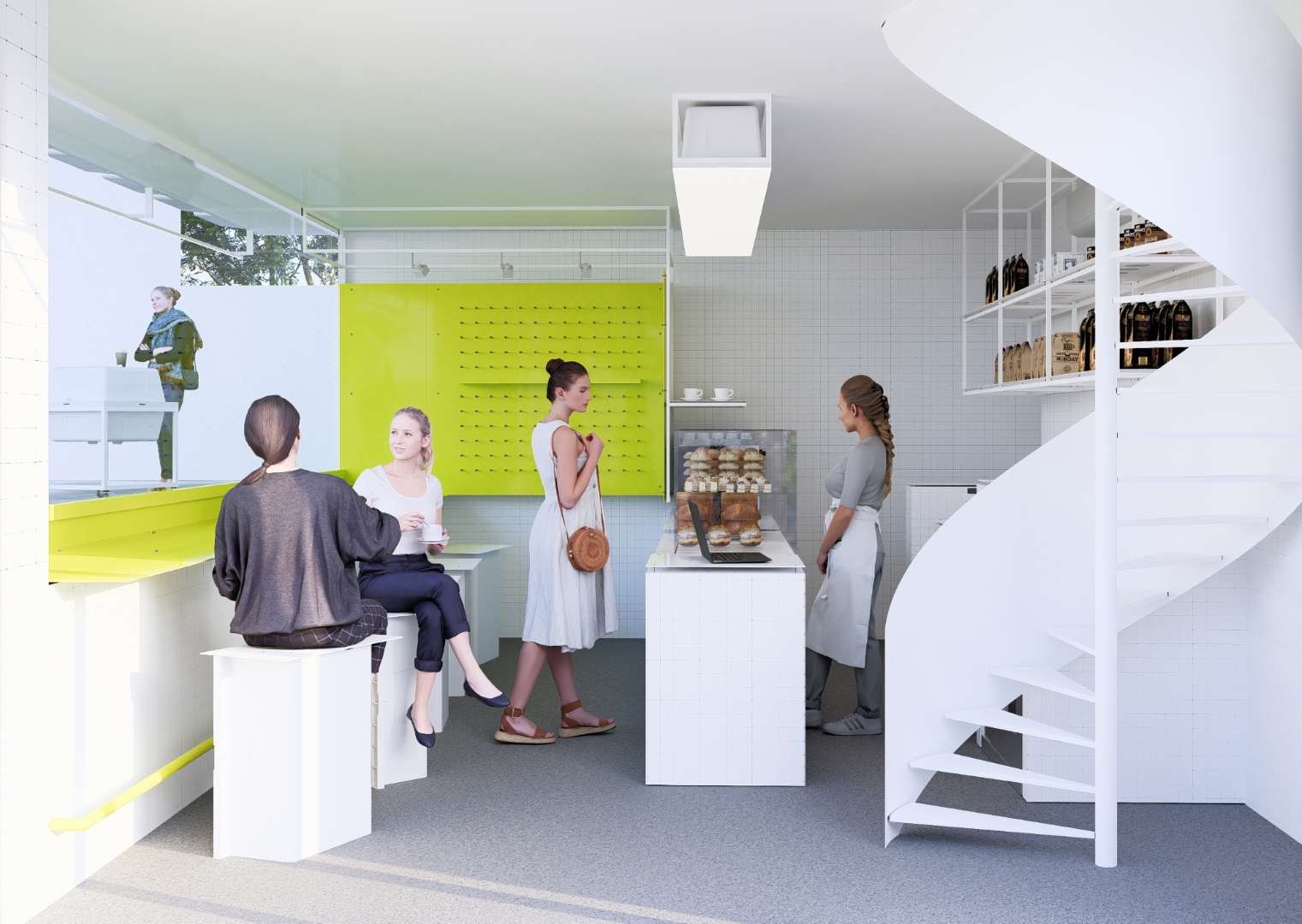
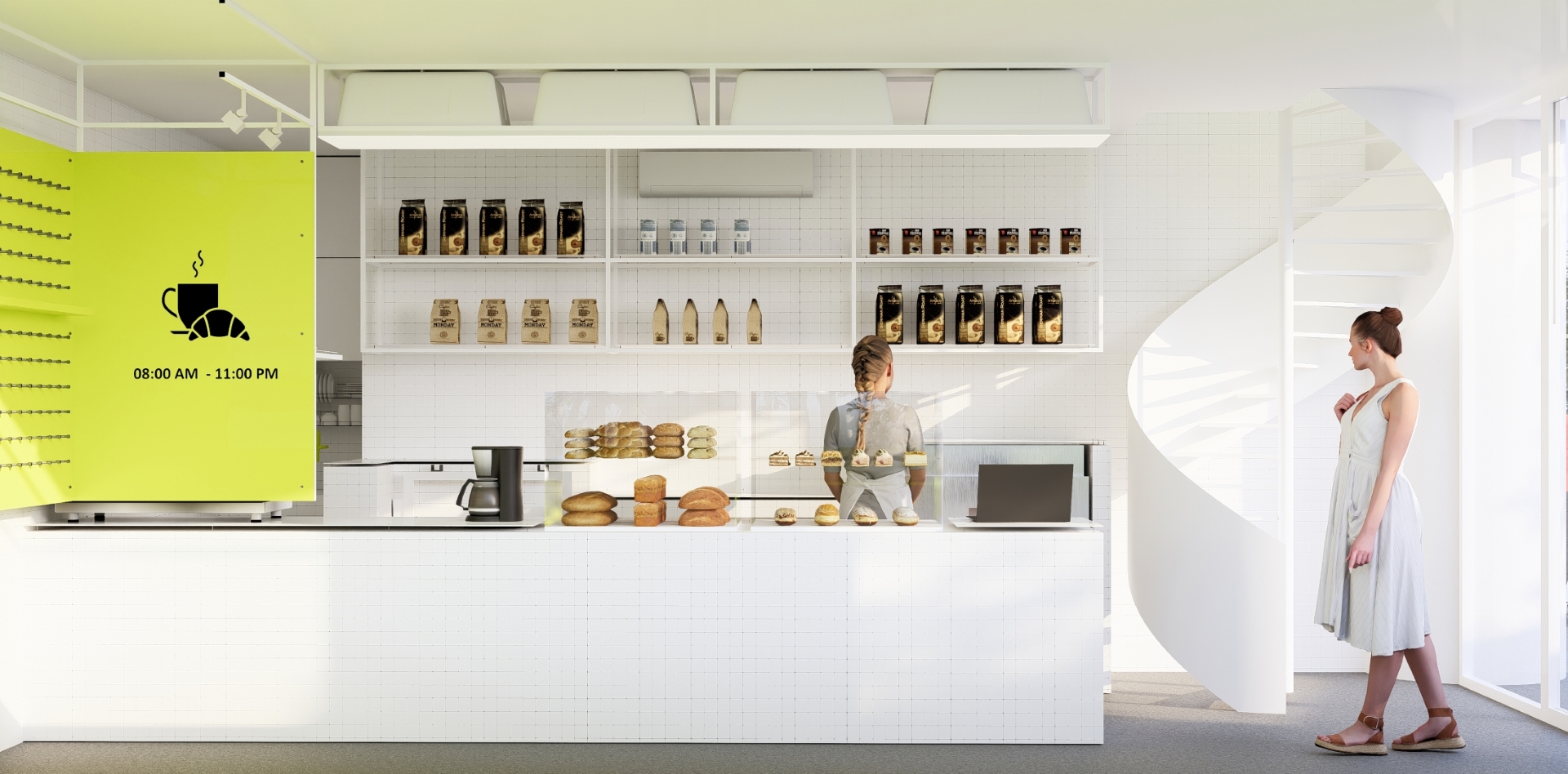
Originally developed for concrete construction and often treated as a semi-disposable industrial byproduct, the waffle module was reinterpreted through an architectural upcycling process. A low-cost, prefabricated industrial component typically discarded after use was transformed into the primary material for façade elements, spatial screens, urban furniture, planter boxes, and light boxes. This decision established a coherent design logic spanning from the smallest detail to the urban scale, creating a unified structural language throughout the project.
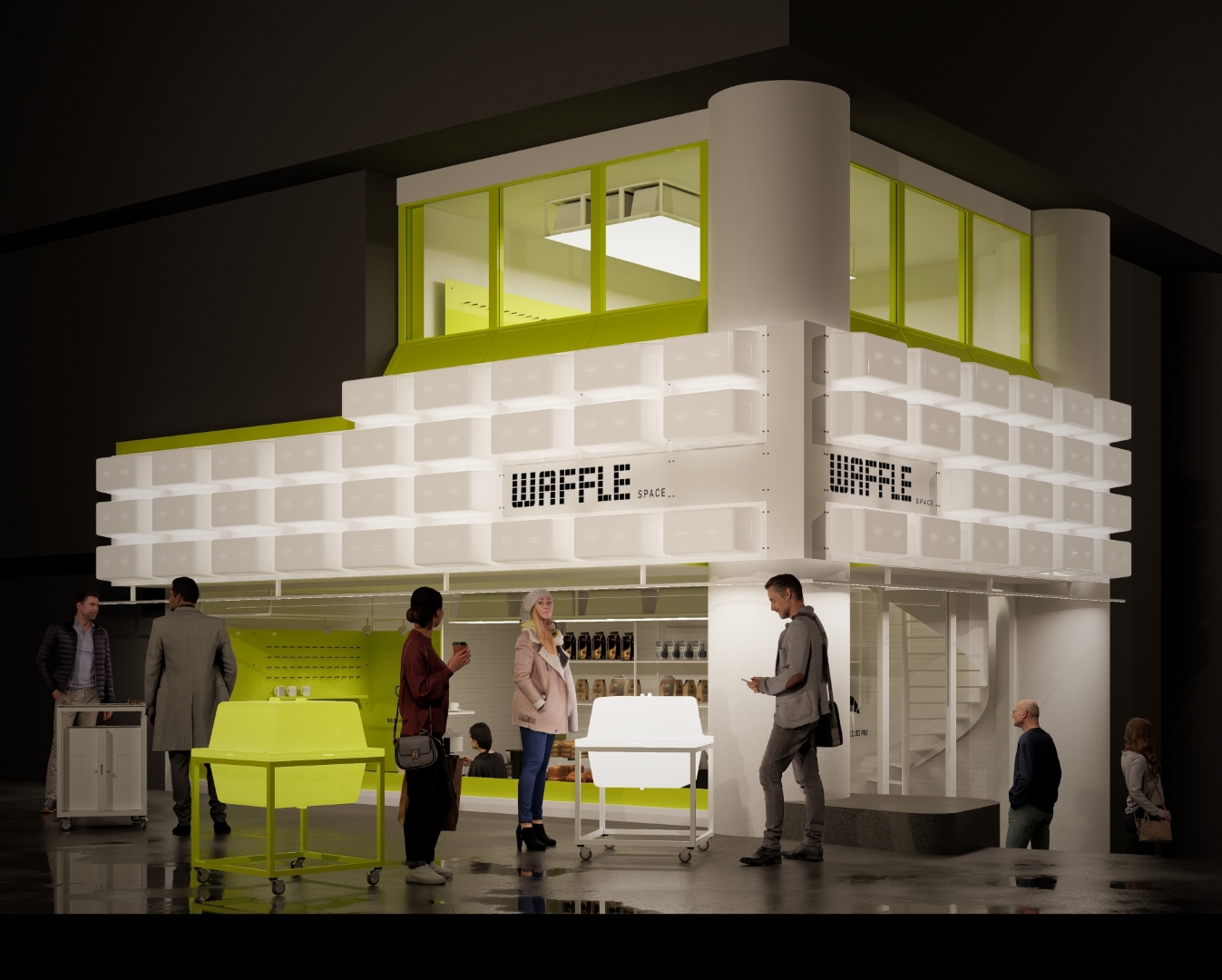
At the urban scale, the waffle modules generated a new envelope for the tower’s façade an architectural skin functioning as an urban interface between the building and its surroundings. This intervention compensated for existing architectural deficiencies while introducing a clear and legible order against the visual disorder of the context. Through its repetitive rhythm, the system enters the pedestrian field of vision, establishing a renewed identity for the entrance sequence. The integration of light within the waffle grid creates a sense of urban lightness that softens the tower’s heavy mass and fosters a more nuanced relationship between interior and exterior.
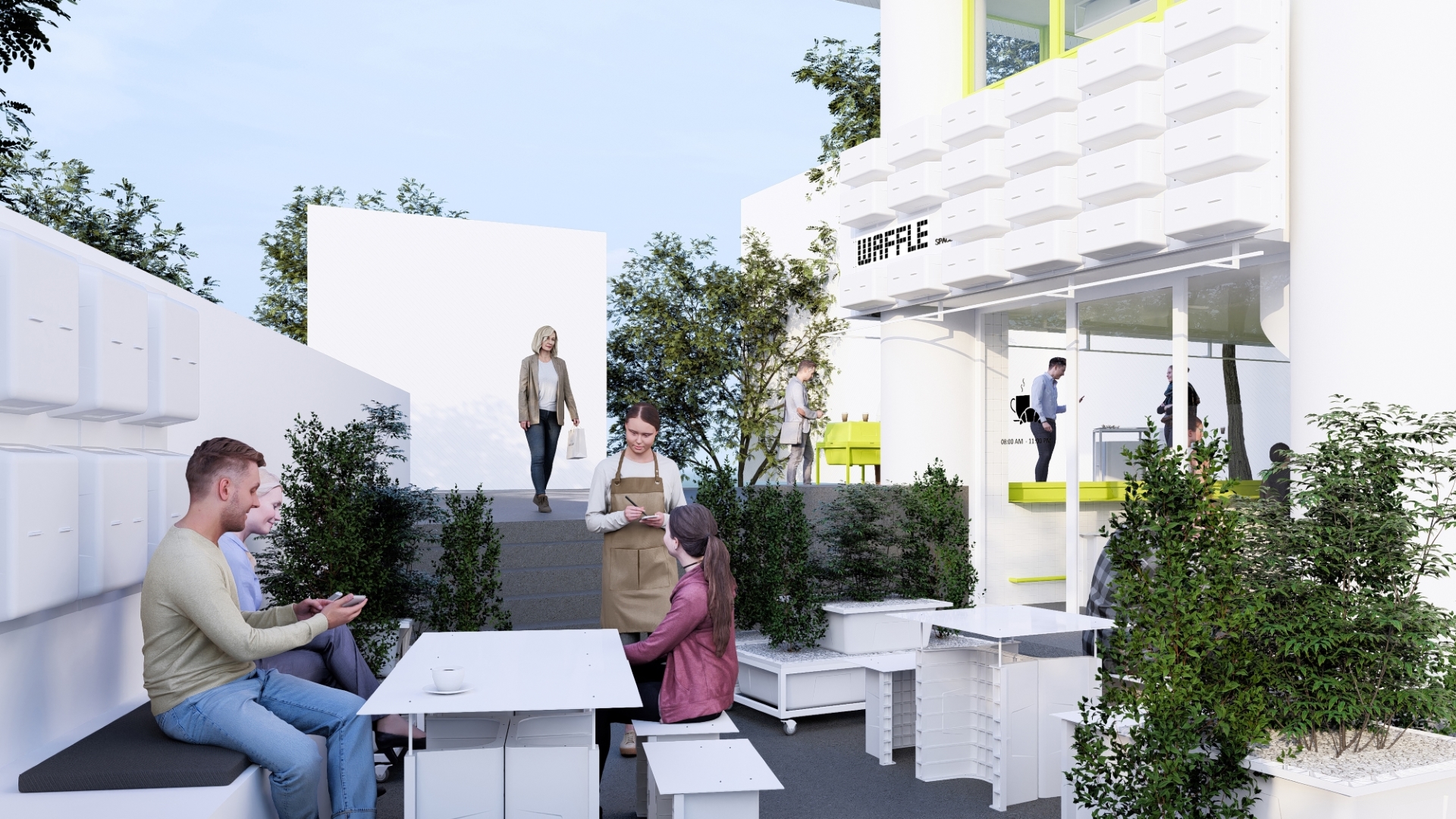
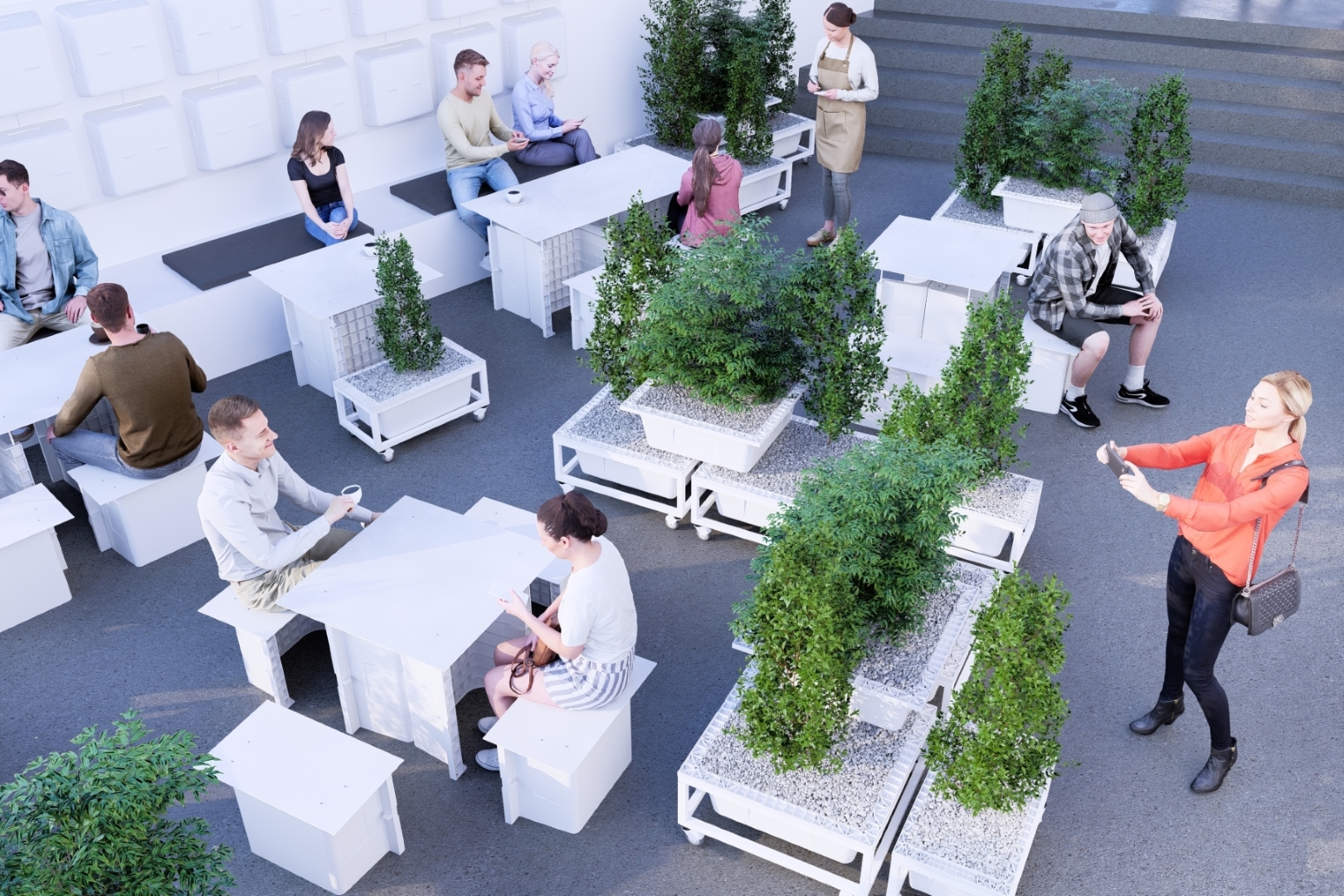
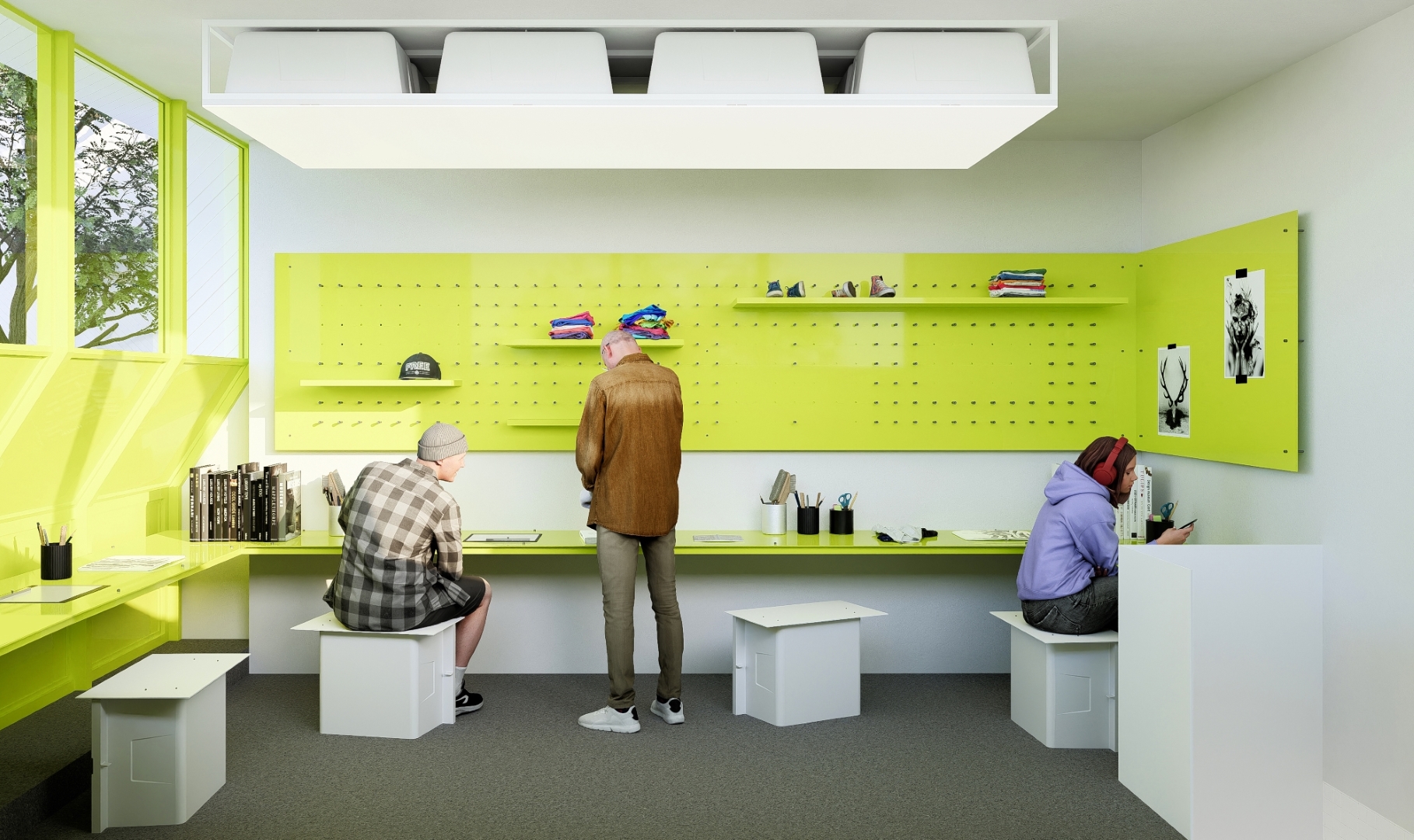
Functionally, all exterior components from tables and benches to planter boxes were conceived as part of an adaptive urban furniture system. This modular framework allows continuous relocation, reconfiguration, and customization. Operating almost as a micro-factory, the system consists of components sharing a common genetic code that can be repeatedly assembled, disassembled, and rearranged in response to changing events and everyday needs. Such flexibility emerges from the principles of reversible architecture, where permanence is replaced by adaptability and transformation without destruction.
The activation of the southwest corner was achieved through this very logic. Modular elements and vegetation transformed a neglected residual space into an urban micro-topography a constructed landscape that accommodates sitting, pausing, conversation, gathering, and occupation. Though modest in scale, the intervention fundamentally restructured the spatial experience, producing an active micro-landscape with social, environmental, and spatial agency.
This micro-landscape operates through three interconnected layers of impact:
1. Social Layer
A new surface for occupation and pause emerged where no meaningful human activity previously existed. The southwest corner has been transformed into a place for gathering, encounter, interaction, and informal social exchange a small social node that reintroduces life into a previously silent urban fragment.
2. Spatial Layer
The rhythmic order of the waffle modules establishes a new spatial framework in contrast to the visual fragmentation of the surrounding context. This repetitive logic reorganizes the corner, replacing previous disorder with the legibility and coherence of an intentionally designed environment.
3. Ecological Layer
The waffle planters, containing vegetation, soil, and shrubs, function as microclimate moderators within this sun-exposed southern corner. They provide shade, reduce ambient temperature, increase localized humidity, and simultaneously act as visual and acoustic filters. Through simple yet effective means, they significantly improve the environmental quality of the space.
Ultimately, the convergence of rental economics, ecological responsibility, and industrial modularity guided the project toward a model of low-tech ecological design a design approach that relies not on technological complexity but on strategic intelligence. Waffle Space does not employ advanced technologies to achieve social activation; instead, it demonstrates how a low-tech, high-impact intervention can fundamentally transform the performance of an urban environment.
The architecture of this project is not the product of increased expenditure, but rather the result of redefining the relationships between material, behavior, economy, and environment. Through the reinterpretation of the simplest industrial components, the project generates a new spatial quality for a forgotten corner of the city.