
*Project Description
Short text:
RE:COAST— A Simple Intervention to Activate a Micro-Commons
2025 – Iran
Along Iran’s Caspian Sea coastline, a combination of exclusionary policies, fragmented ownership, and the absence of inviting public infrastructure has reduced the shore from a potential public field into a largely inactive and transit boundary. Despite its ecological and social capacity, the coast has gradually disappeared from collective memory and everyday public life.
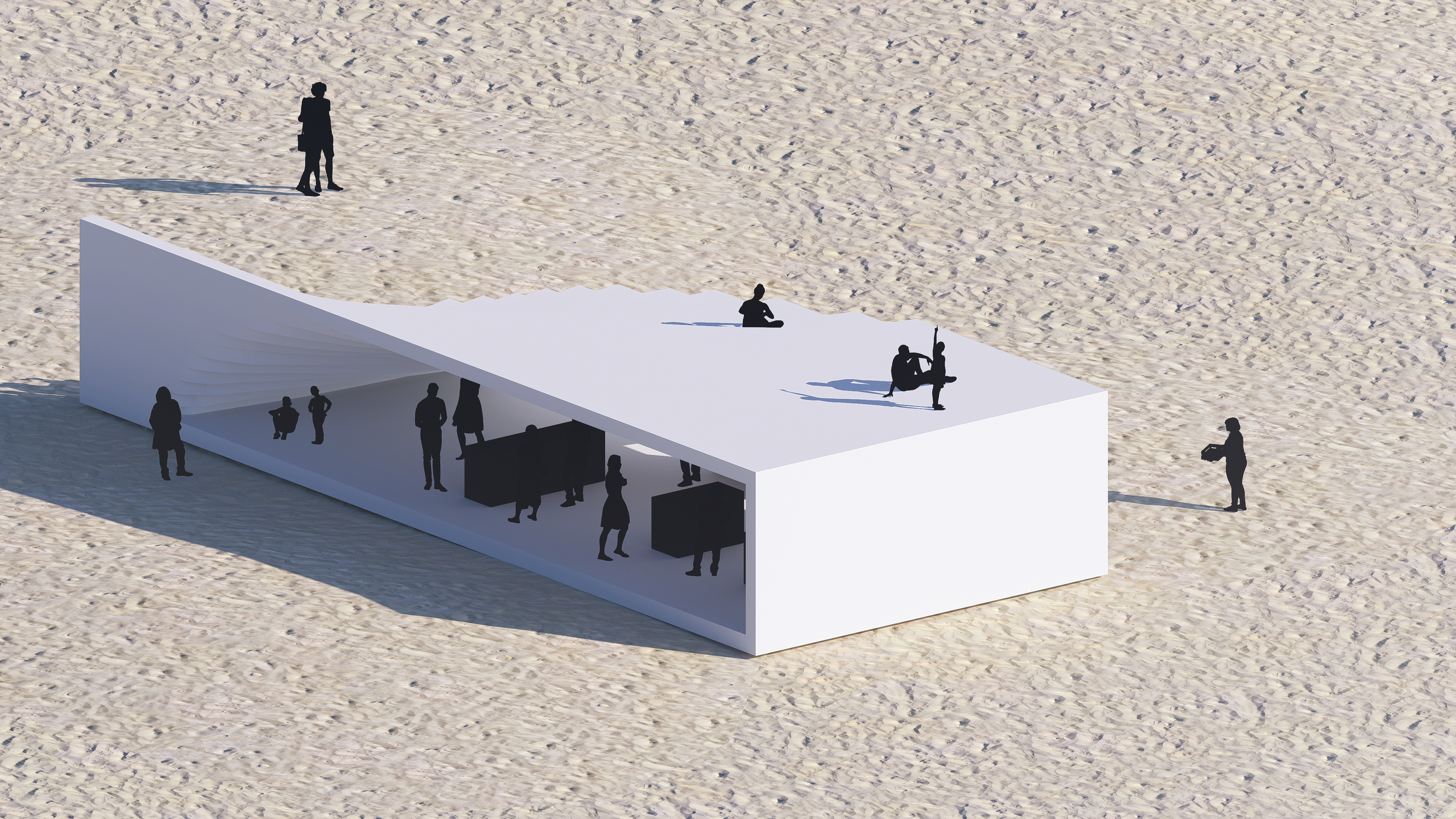
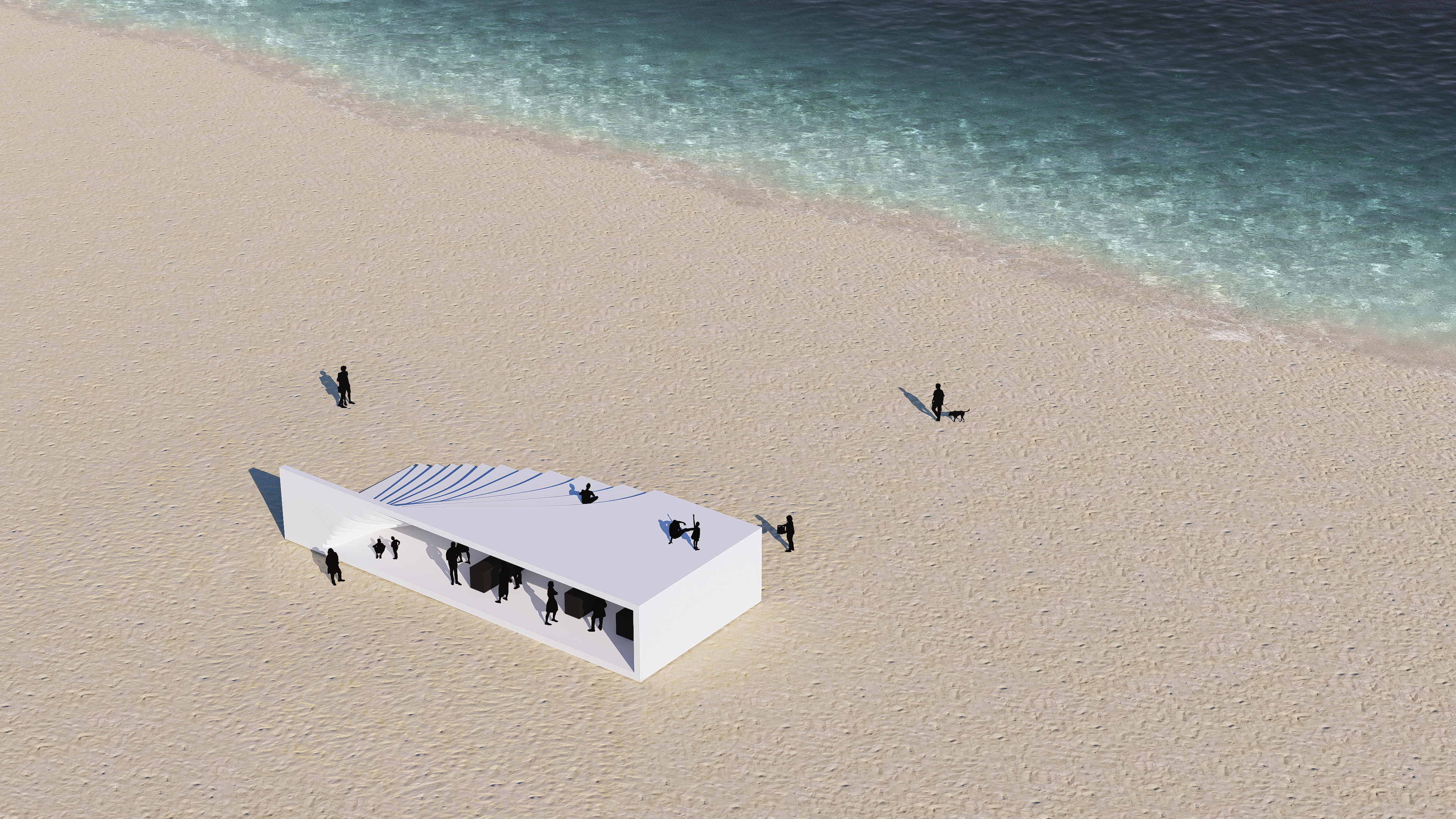
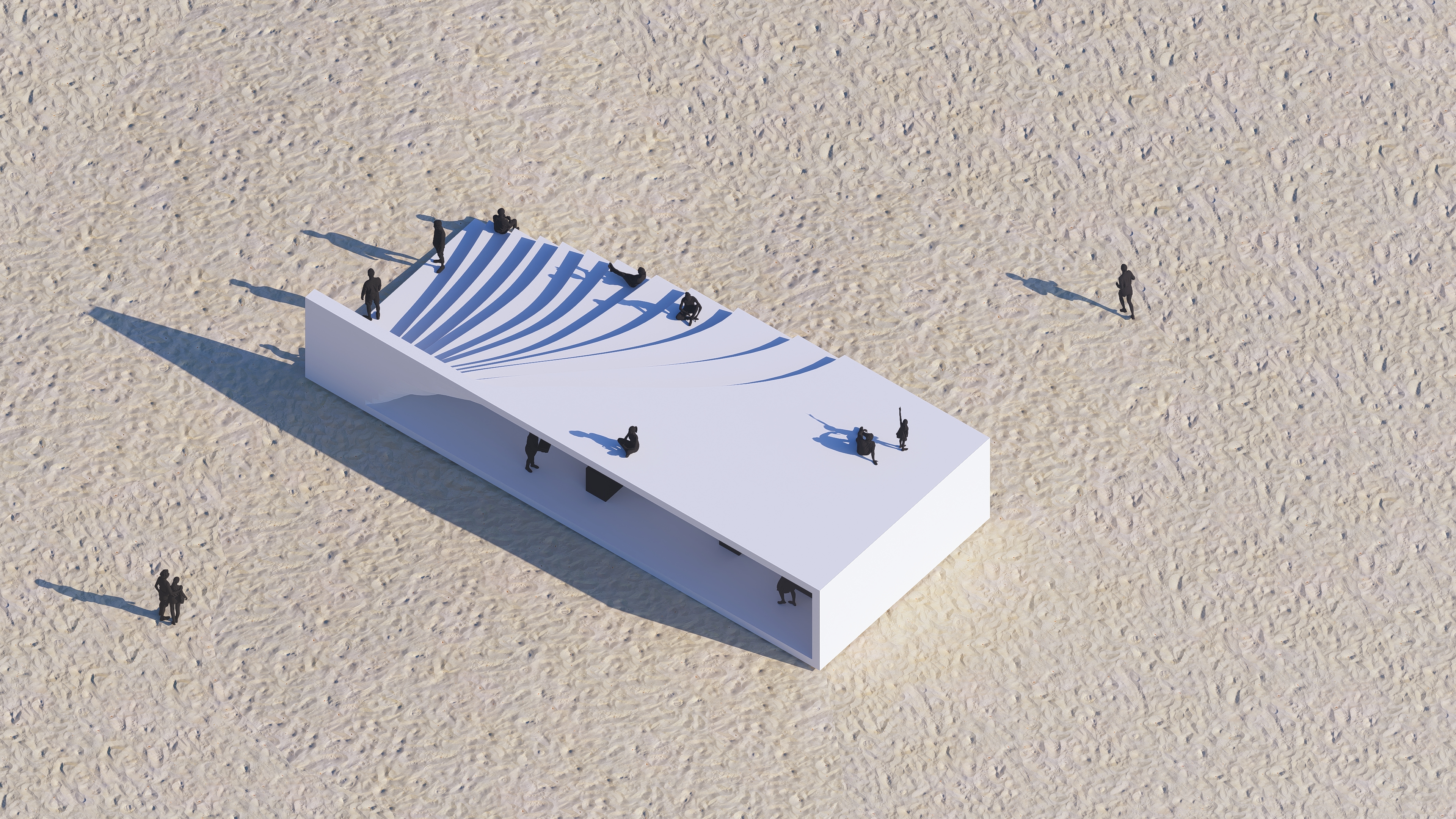
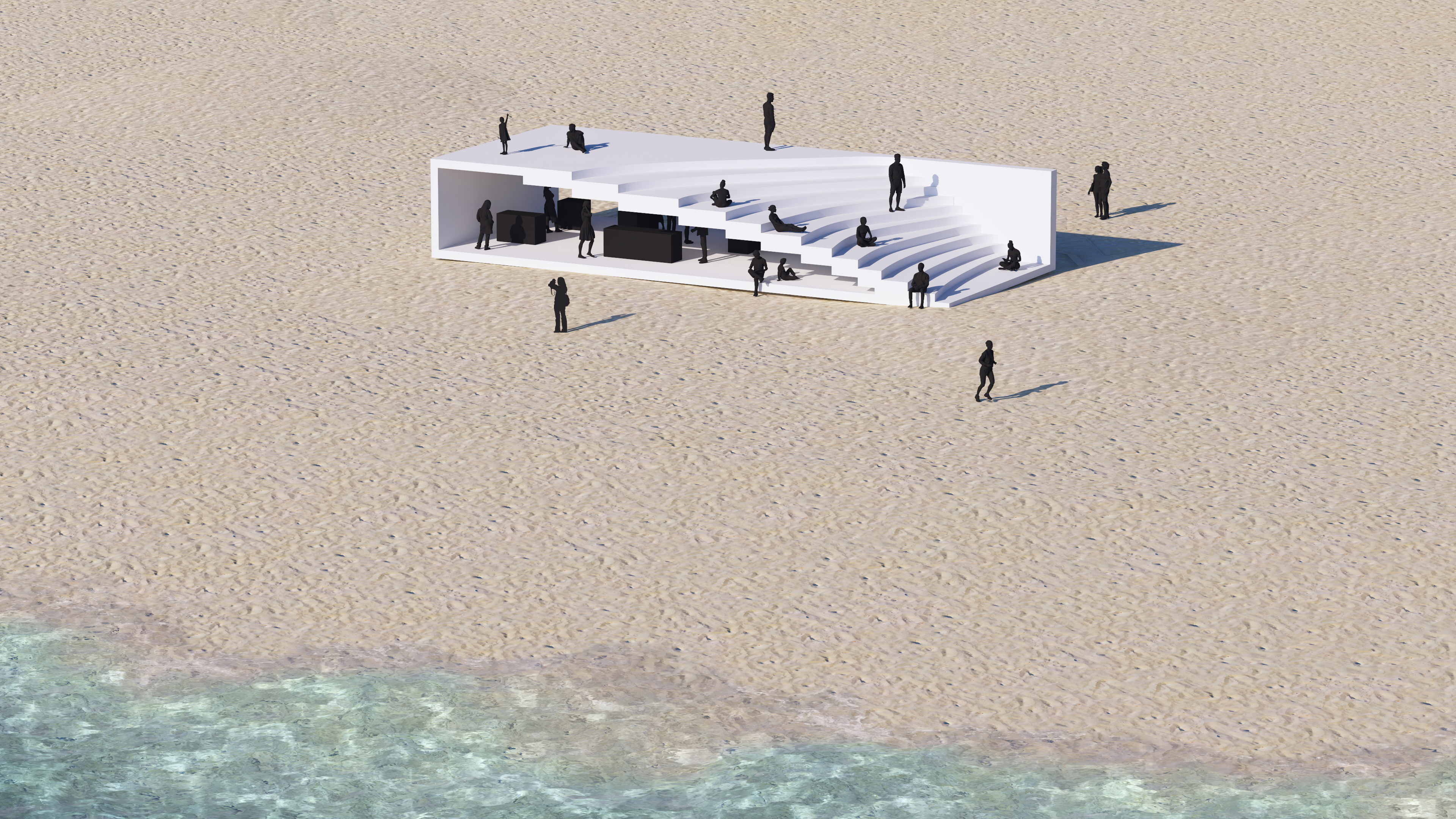
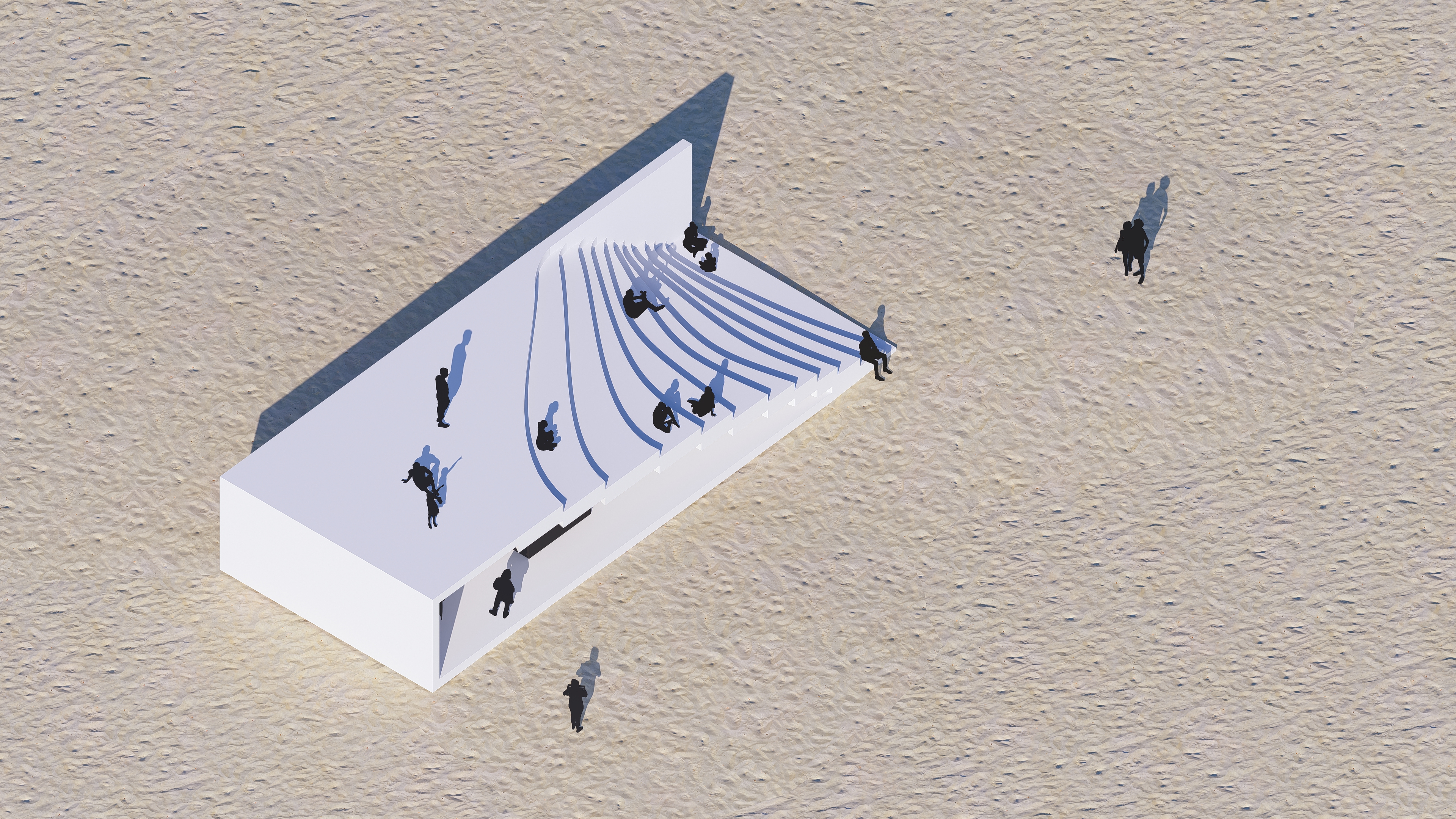
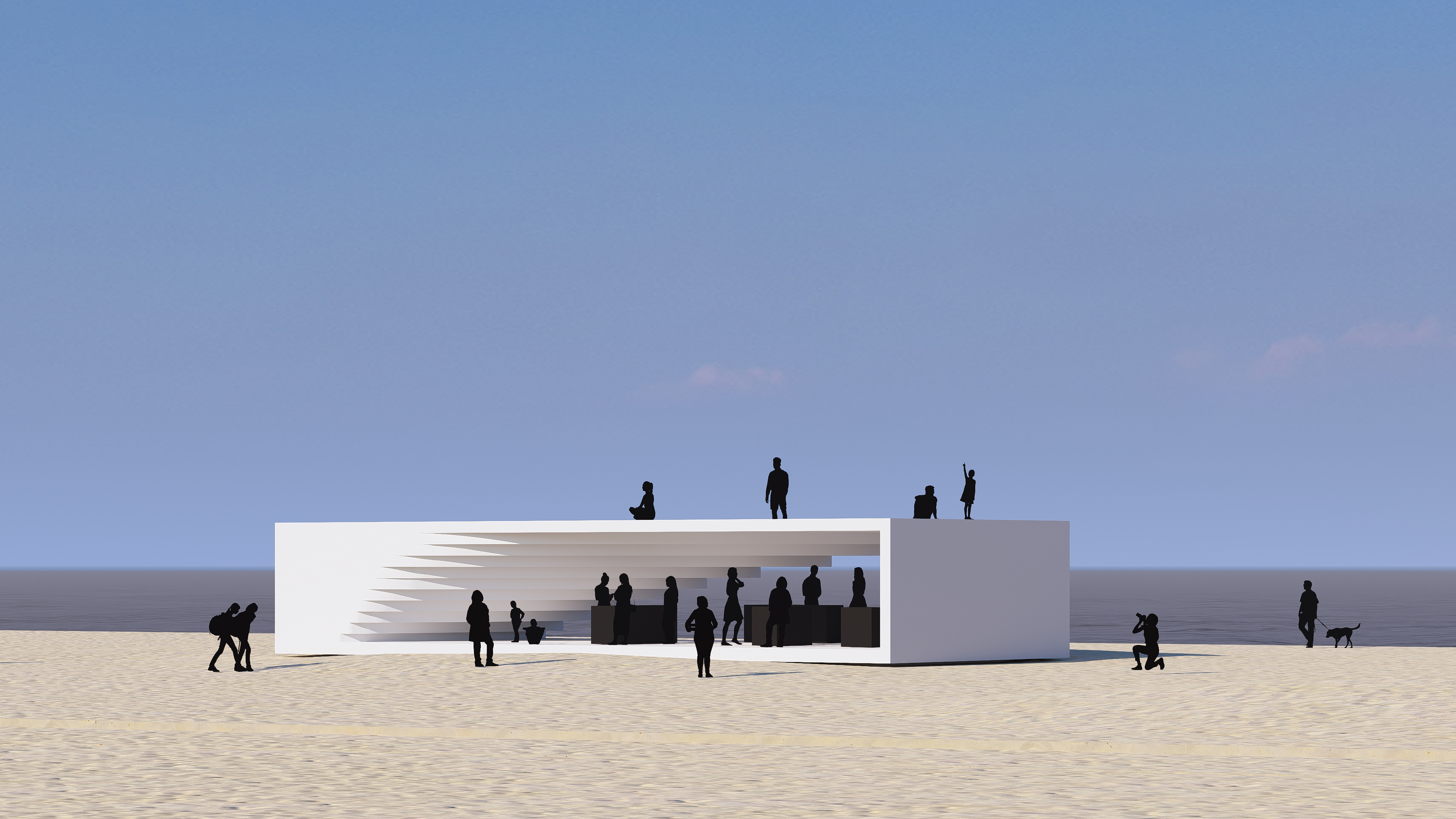
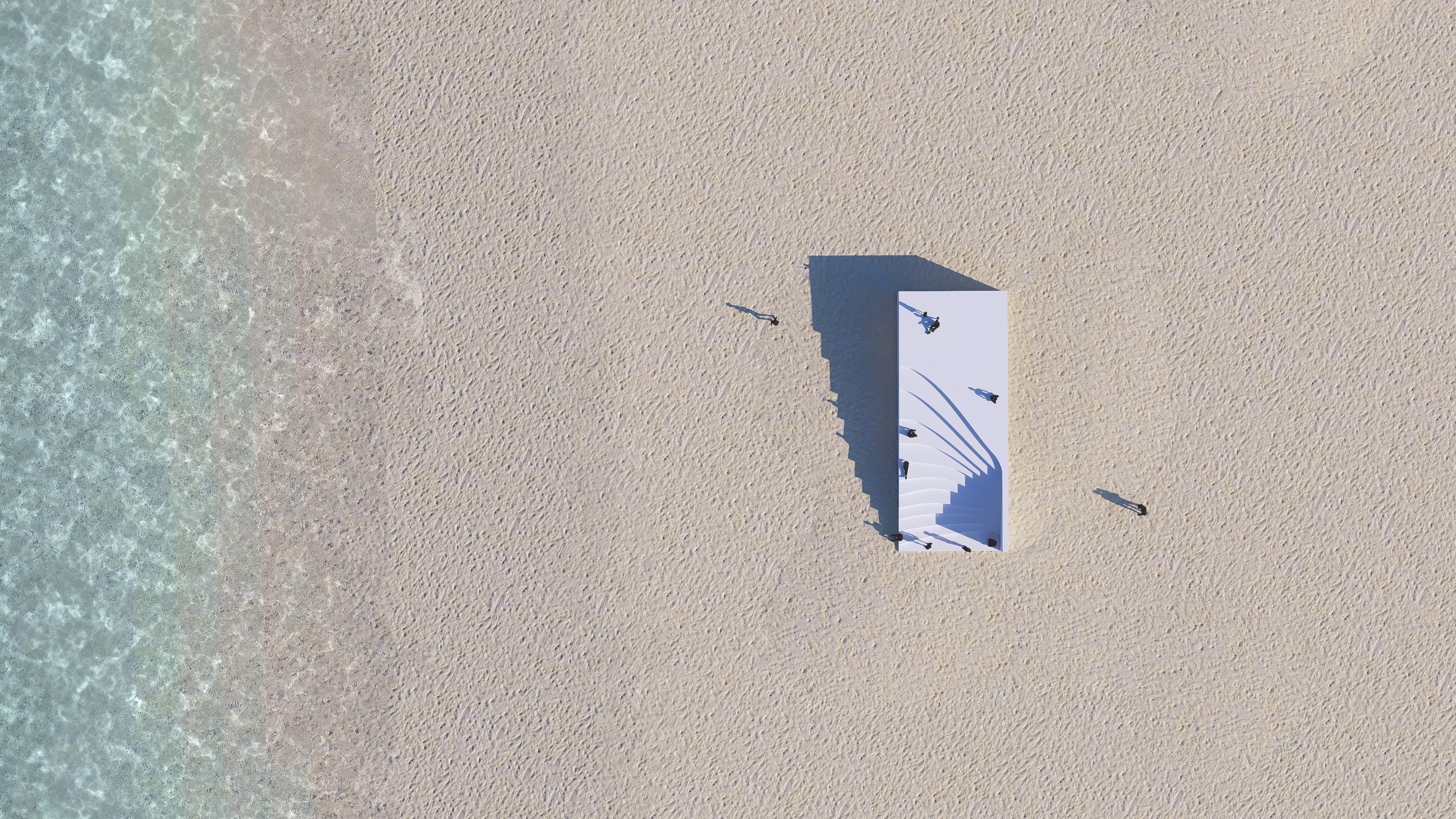
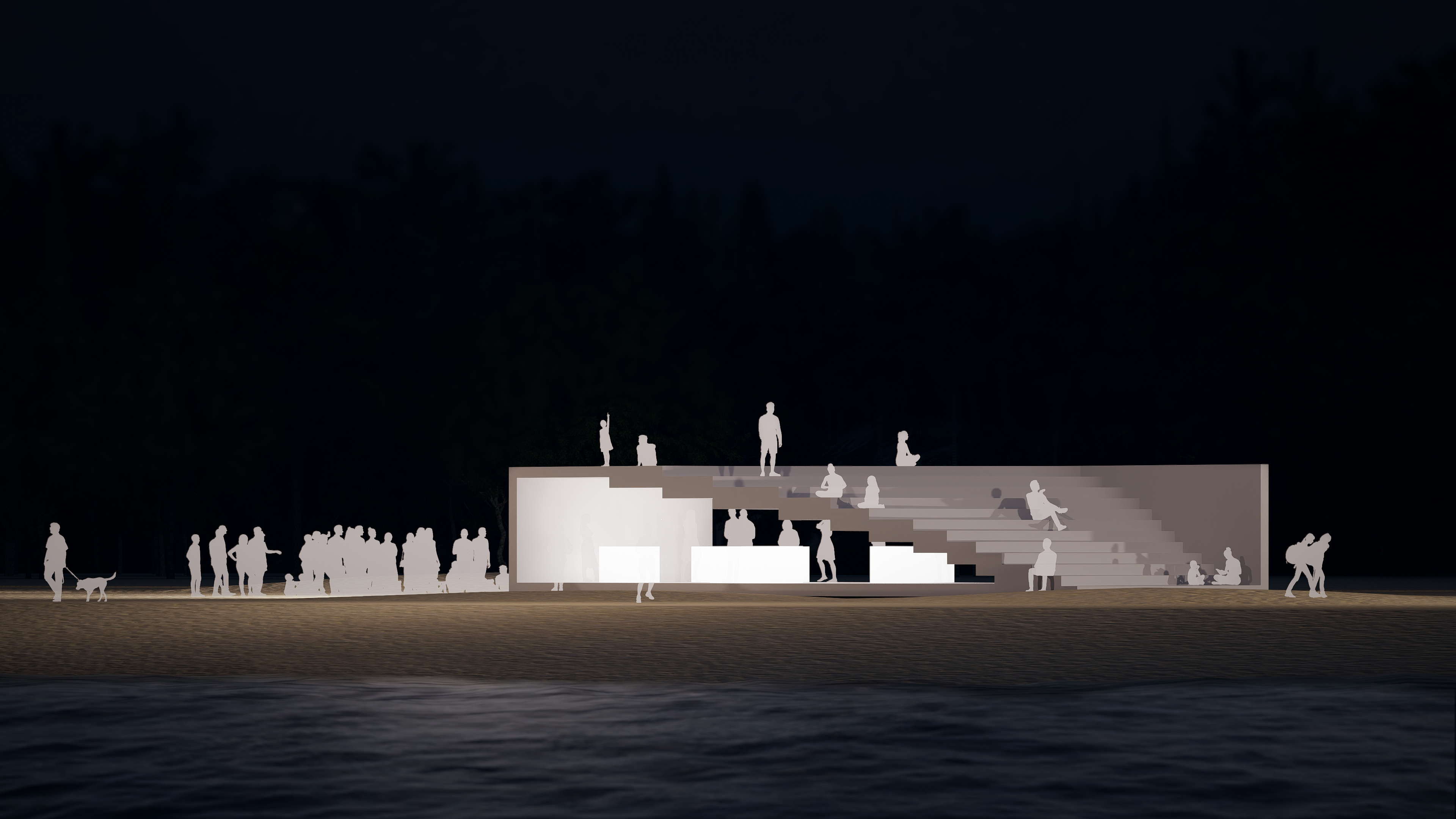
RE:COAST is conceived as a spatial response to this condition, questioning how the boundary between land and sea can be transformed from a passive edge into an active social ground. Rather than introducing an autonomous architectural object, the project operates through controlled subtraction, carving a negative relief from the ground to reinterpret the coast as an inhabitable topography.
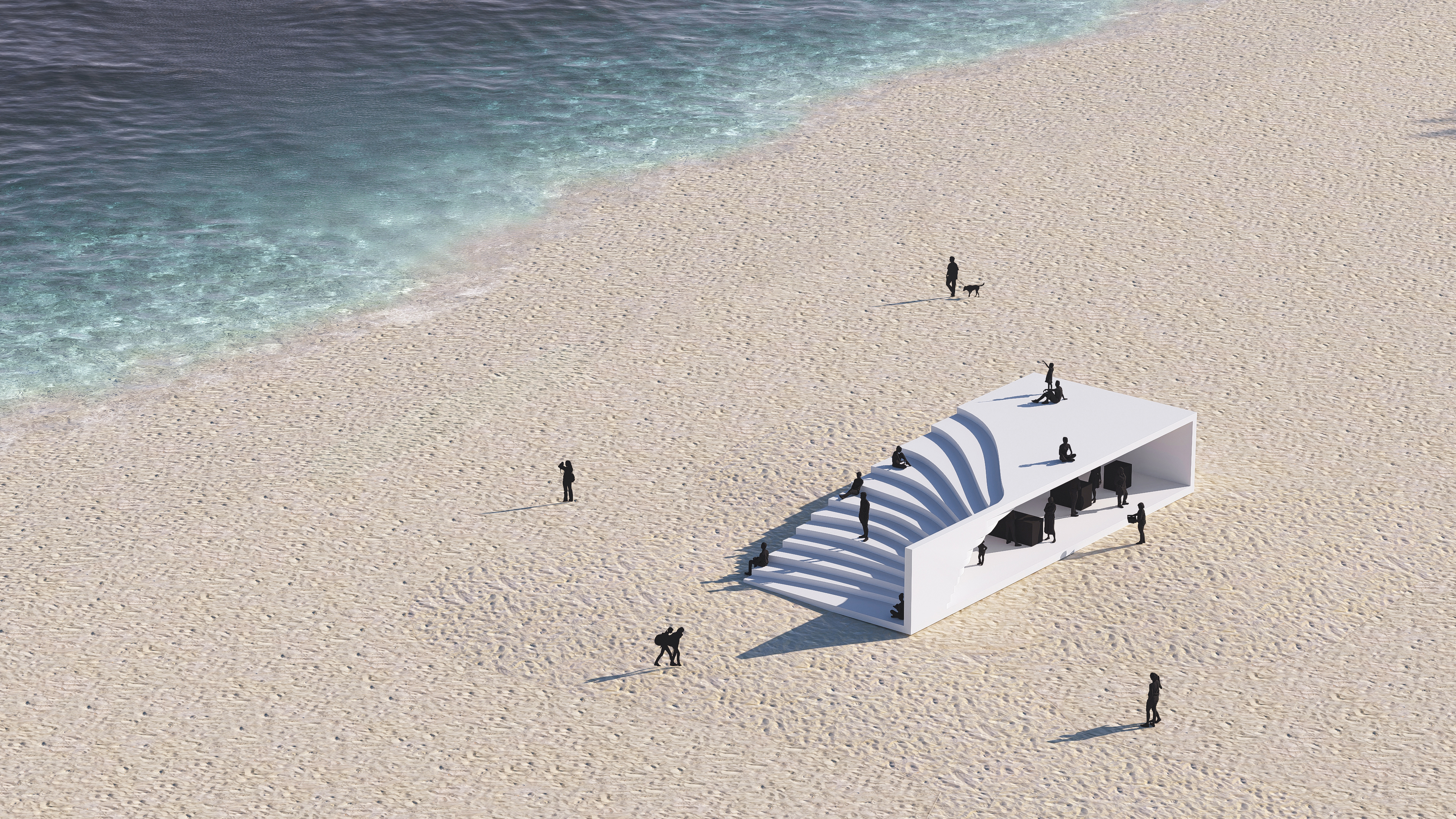
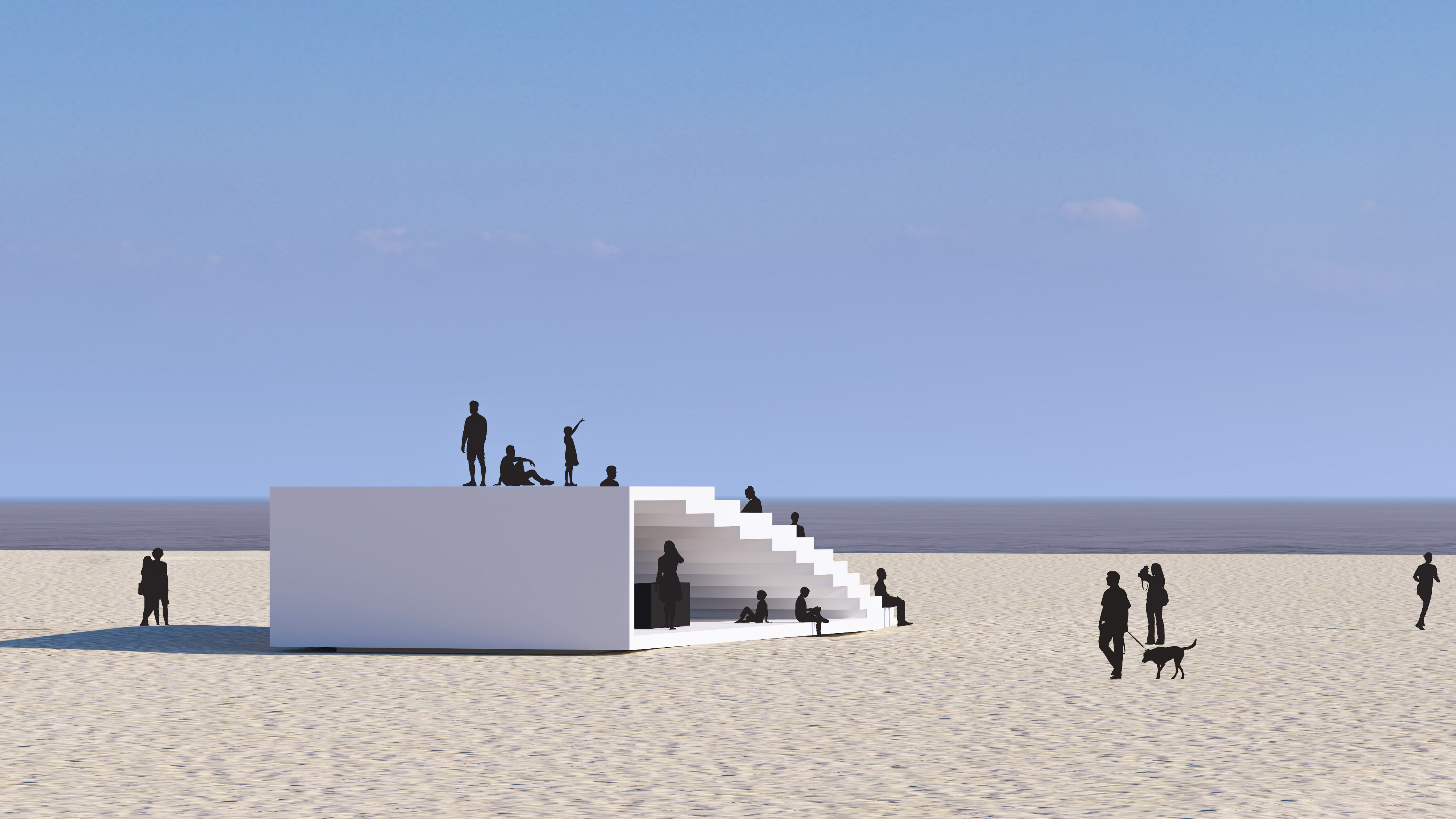
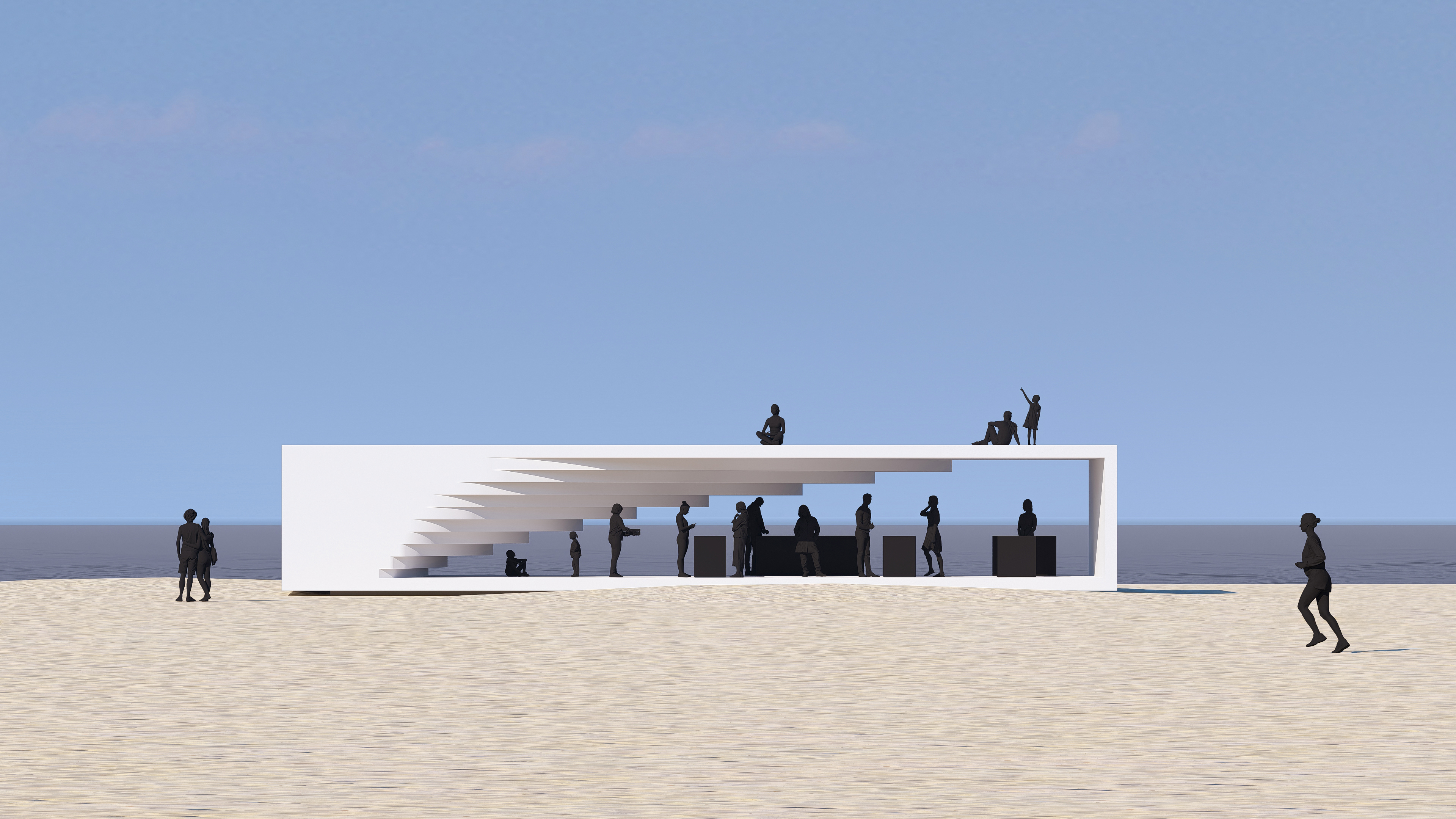
This carved surface forms a stepped platform that functions as a coastal social theatre supporting sitting, watching, informal gatherings, and collective presence oriented toward the horizon. Beneath it, an architectural void emerges as a shaded, semi-enclosed space adaptable to rest, small events, and everyday social use.
Beyond spatial experience, the project enables local micro-retail operated by women from nearby coastal communities, linking public space with tourism-driven micro-economies and social empowerment. In this way, the coast is redefined simultaneously as landscape, shelter, and local economic ground.
Rather than occupying the shoreline, RE:COAST acts as a mediator transforming a silent boundary into a micro-commons where collective presence, memory, and everyday life are reactivated. Architecture here becomes an instrument for reconnecting people with the sea, the horizon, and the shared social memory of Iran’s northern shores.
Full text:
RE:COAST— A Simple Intervention to Activate a Micro-Commons
2025 – Iran
The Caspian Sea coastline in Iran, despite its high potential for shaping open public spaces, spontaneous urban gatherings, and local micro-economies, has in practice been pushed to the margins. A combination of policies of exclusive appropriation, fragmented patterns of ownership, and the absence of inviting public infrastructure and urban furniture has caused this coastal strip, instead of functioning as a linear public field, to be reduced to an inactive and largely transit boundary.
Within this context, the project is conceived as a spatial response to a structural problem: how can the boundary between land and sea be transformed from a peripheral line into an active socio-cultural ground?
This Re-coast platform is defined along the Caspian coastline in Iran where the threshold between land and water, despite its vast ecological and social potential, has gradually been erased from collective memory and removed from public access over recent decades by fencing, uncontrolled construction, and the lack of consciously designed public spaces. The project seeks to reactivate this “forgotten boundary”; a boundary which, in this approach, is understood not as an obstacle, but as a spatial mediator between people and the sea.
Conceptual Approach: From Architectural Object to Aware Ground
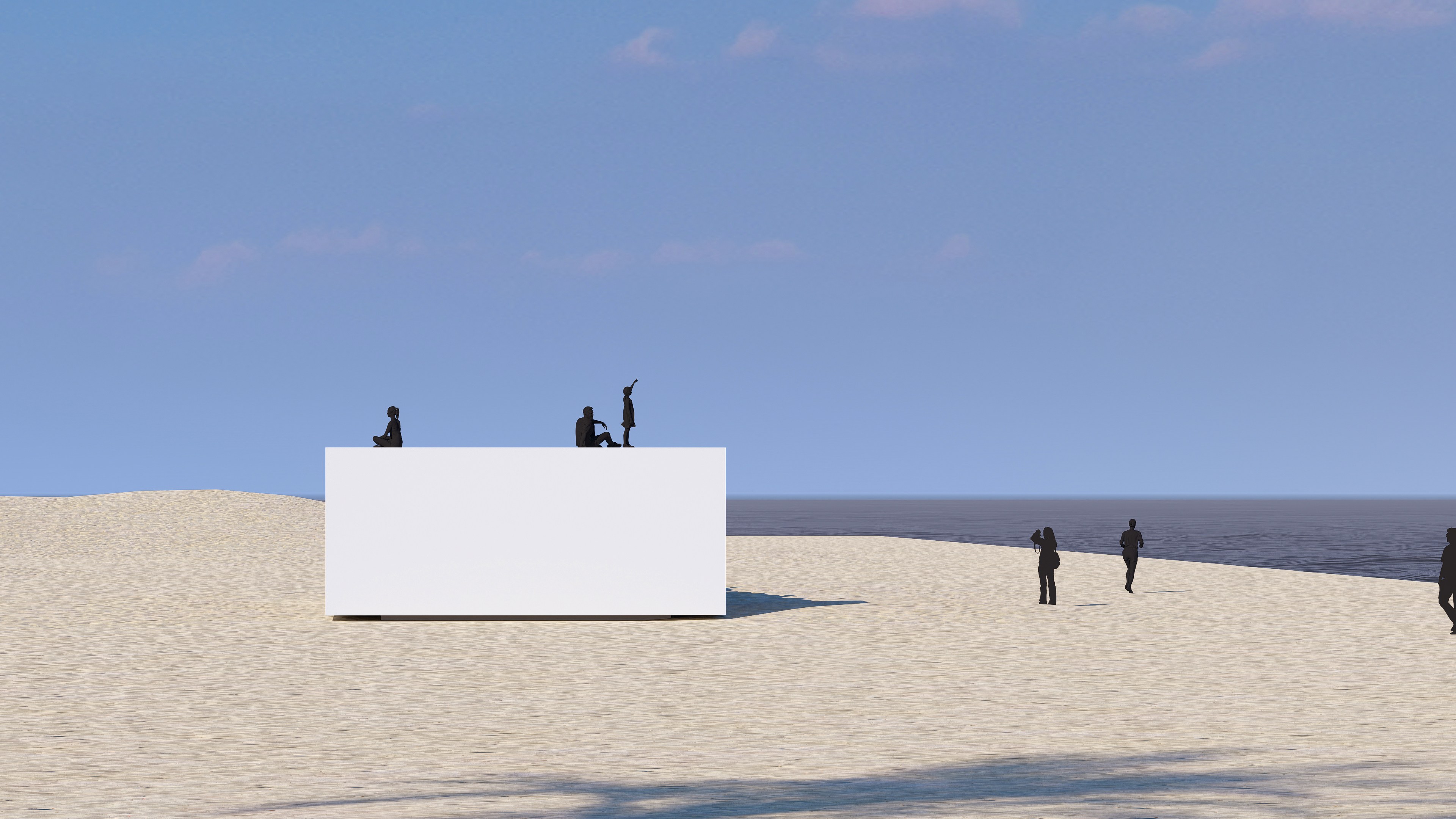
The project’s conceptual framework is grounded in the integration of architecture and coastal topography. Instead of adding an independent volume, the design process begins with a controlled subtraction of mass from a pure prism to generate a negative relief a hollow that is not the result of destruction, but a reinterpretation of the behavior of the ground at the scale of architecture.
In this narrative, architecture is elevated from the status of an autonomous object to a surface of the earth that has become aware a ground which, through design, acquires the capacity to organize the collective and to produce spatial experience.
This perspective situates the project within discourses such as landform architecture, spatial justice, and the right to the sea; that is, architecture operates not merely as form, but as an instrument for negotiating the relationship between body, landscape, local economy, and spatial policies.
Spatial Organization: Coastal Social Theatre and Architectural Void
The stepped, ascending surface of the platform activates a coastal social theatre a space where sitting, watching, small performances, informal learning, and collective presence facing the horizon of the sea become possible. This surface is not merely a vacant place to sit; it functions as a vertical promenade that directs bodily movement toward the horizon and expands the user’s experience beyond pure functionality into perceptual, landscape-oriented, and emotional layers.
Beneath this ascending shell, an Architectural Void is formed: a fluid, semi-enclosed, shaded space capable of accommodating multiple scenarios from resting and sheltering from sun and wind to small gatherings, temporary events, and adaptive programs.
Within this configuration, a key capacity of the project is the possibility of hosting local micro-retail operated by women from each coastal area from regional foods and edible products to handicrafts and souvenirs. In this way, the project goes beyond being merely a “viewing platform” and becomes an infrastructure for tourism-driven micro-economies and the social empowerment of women an infrastructure that forges a link between tourism, local culture, and everyday livelihoods.
This dual spatial organization activates three simultaneous readings of place:
Architecture as a Living Archive of Collective Memory
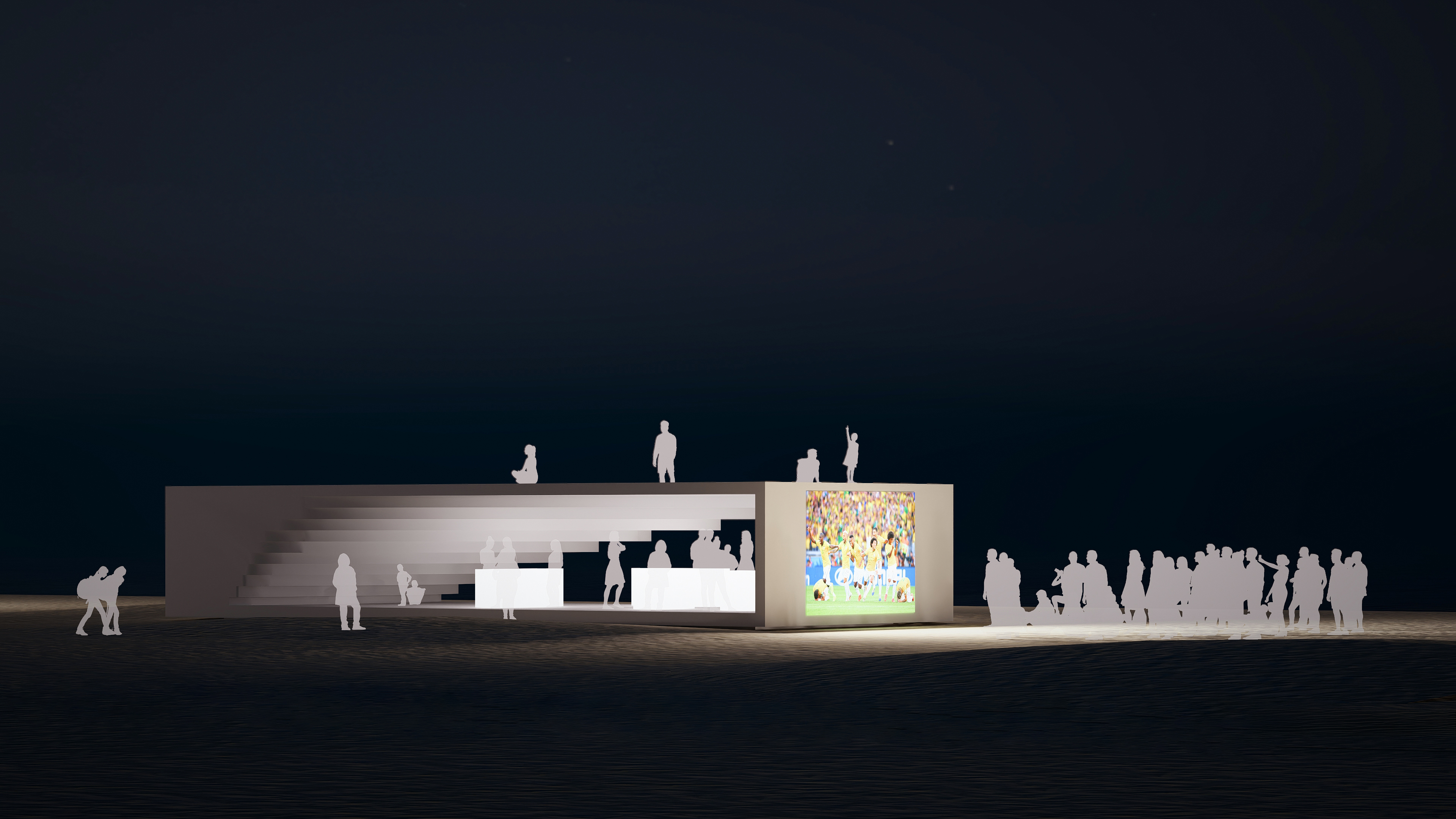
Beyond defining an architectural object, the project operates as a structure for producing and storing collective memory. Everyday presence of users, spontaneous events, small street performances, personal photographs, casual encounters, and even moments of silence on the platform gradually construct a living archive of memory.
In this framework, architecture assumes the role of a social medium a mediator that transforms “having space” into “sharing space.” Ownership shifts from a private and exclusionary logic toward an experiential collective ownership; each individual, through their presence, writes part of the narrative of the place while simultaneously carrying part of it within their personal memory.
Thus, the coast is transformed from a “purely natural landscape” into a stage for the reproduction of social culture, local identity, and collective relations a place where architectural form is not the end of the story, but the beginning of social processes.
From Silent Boundary to Social Infrastructure
This coastal viewing platform, while small in physical scale, becomes a potent instrument at social and urban scales.
The project seeks to:
In this approach, architecture is not a force that occupies the coast, but a mediator that activates interactions between people, nature, and society a platform that reconnects the community with the horizon, the water, and the shared memory of Iran’s shores.