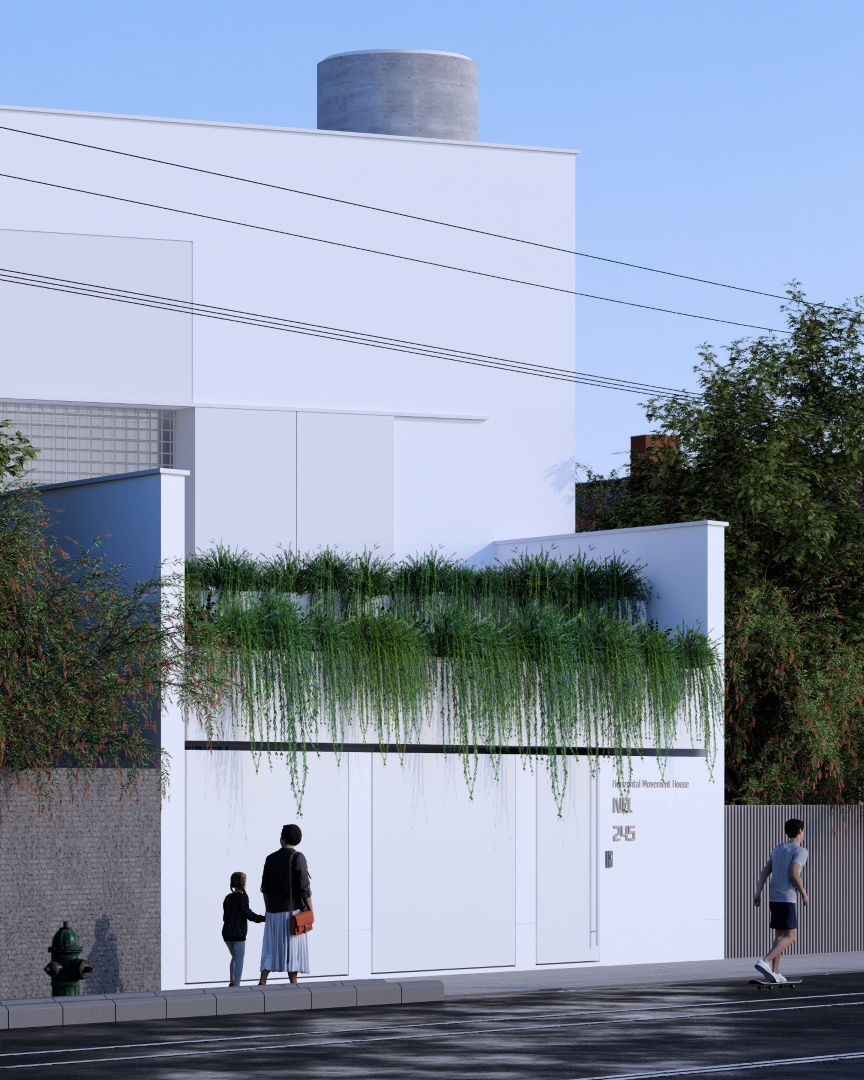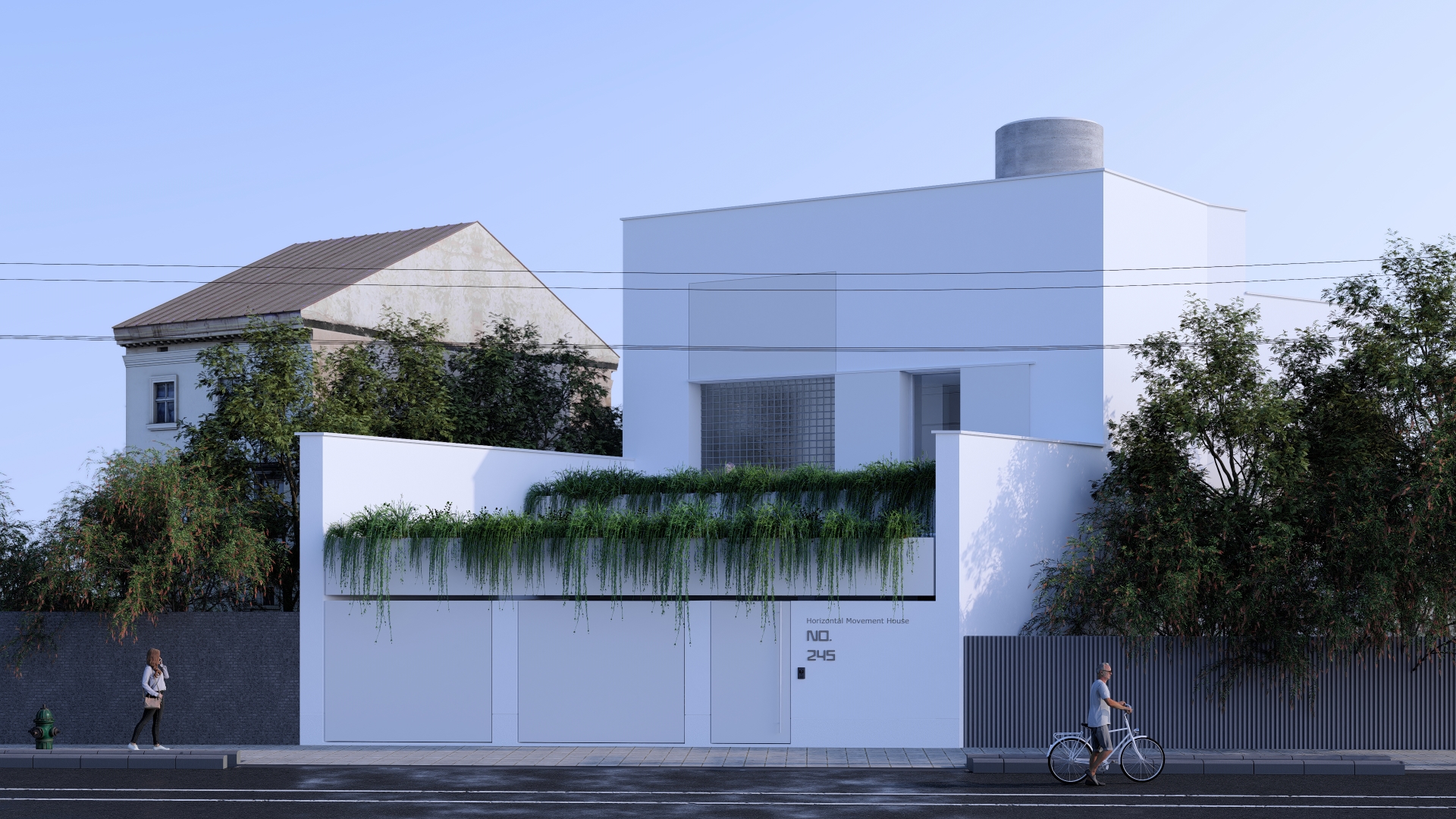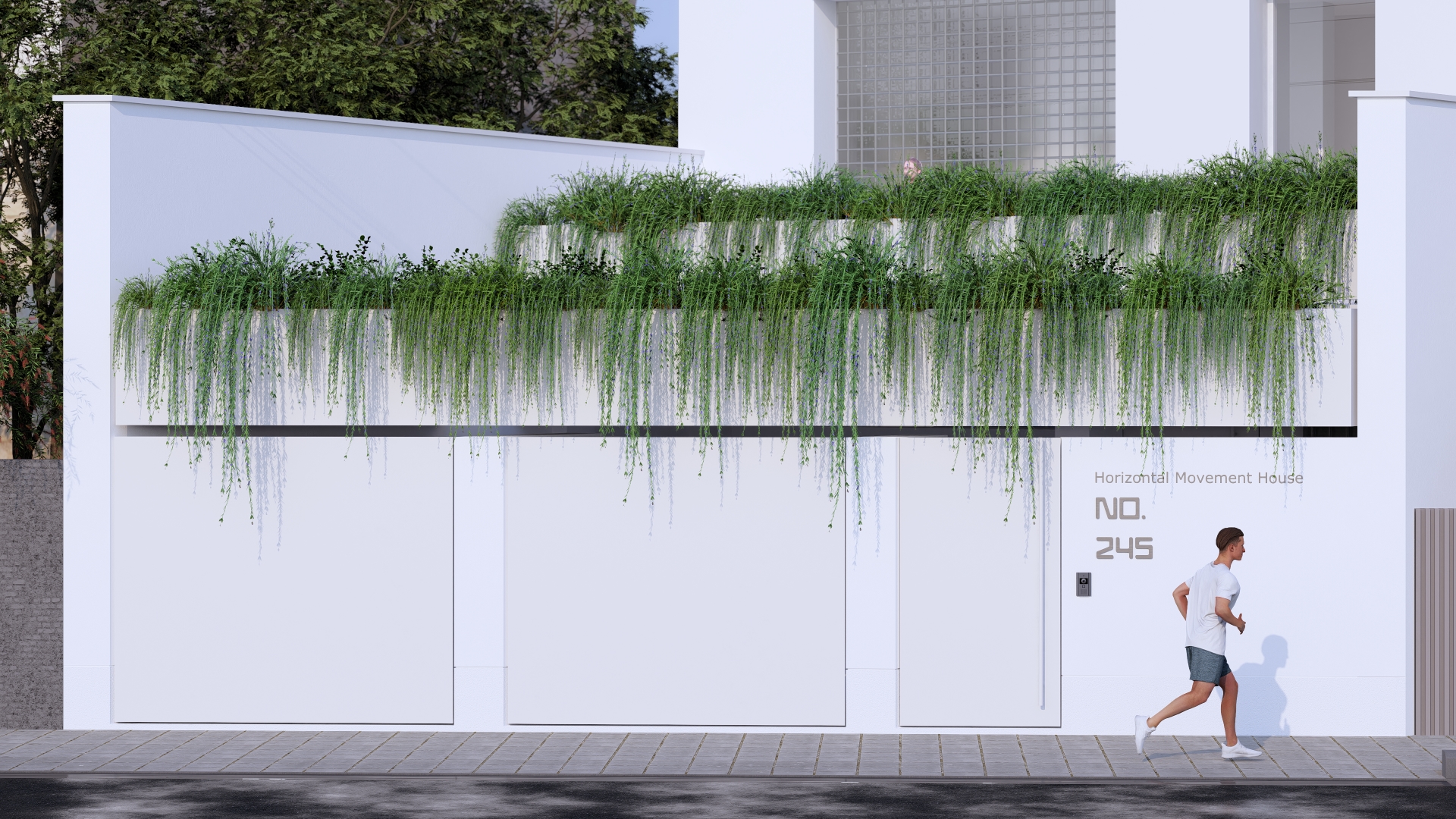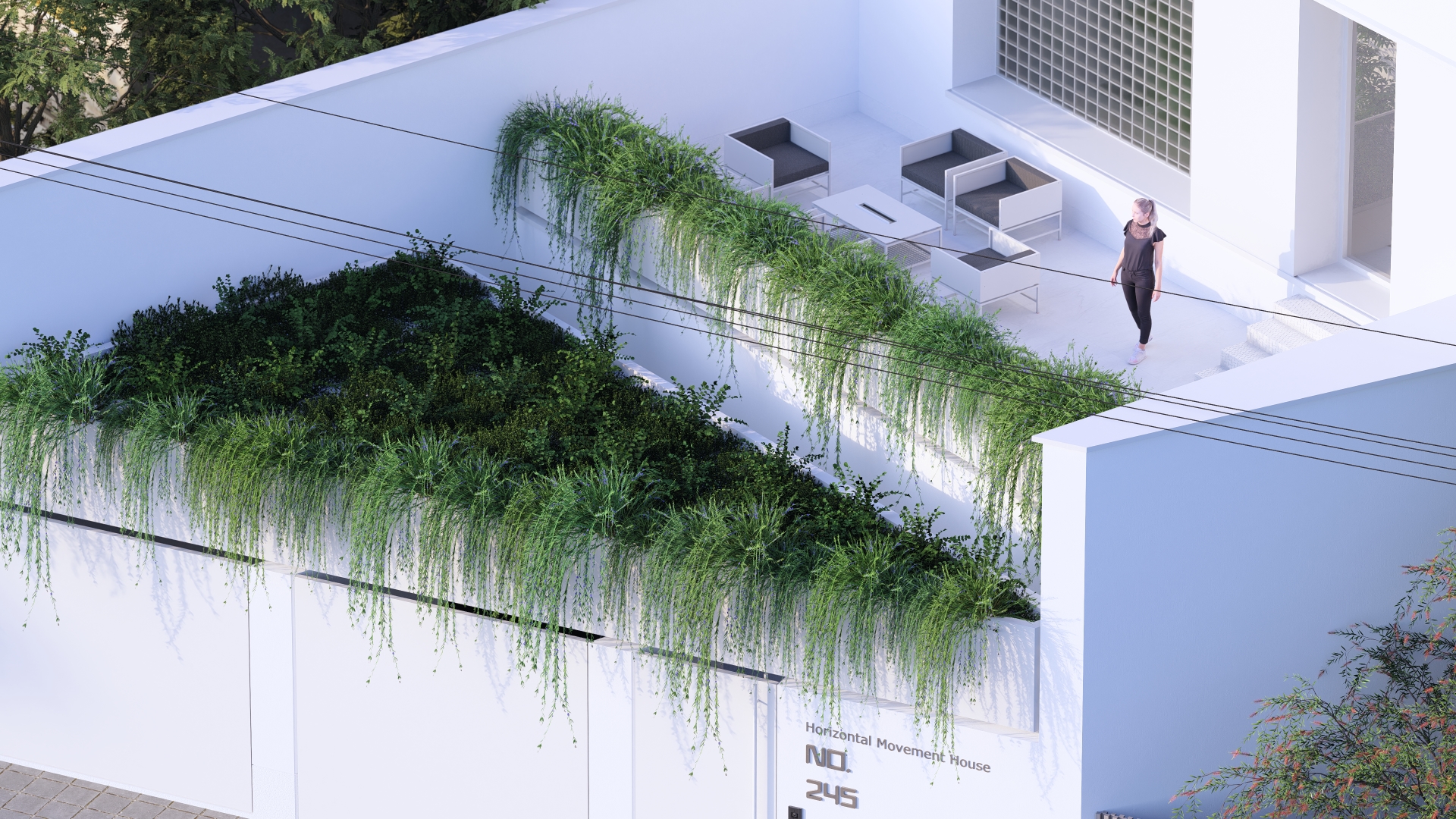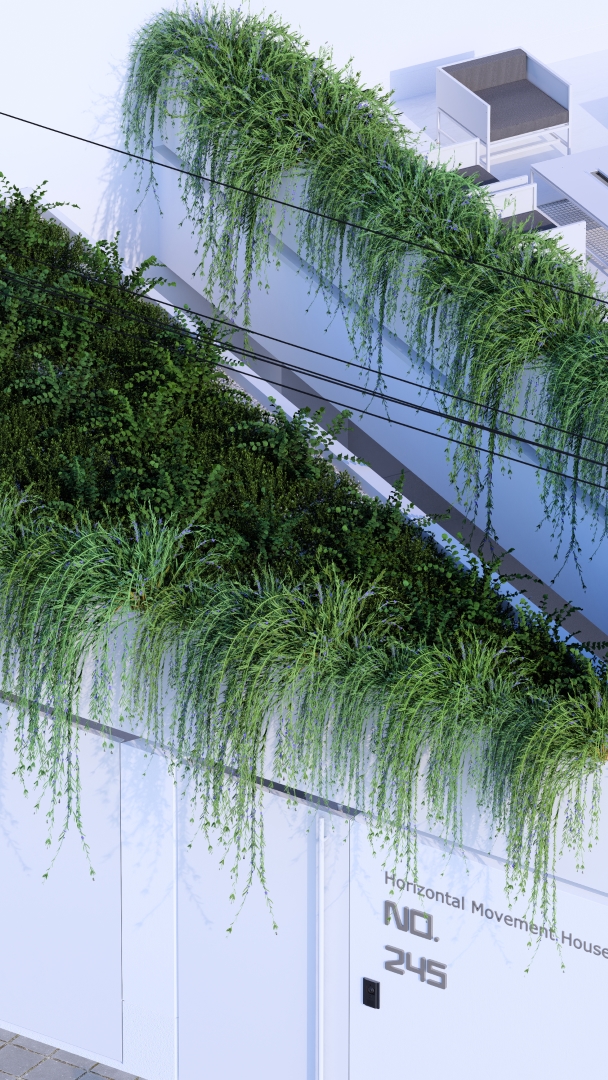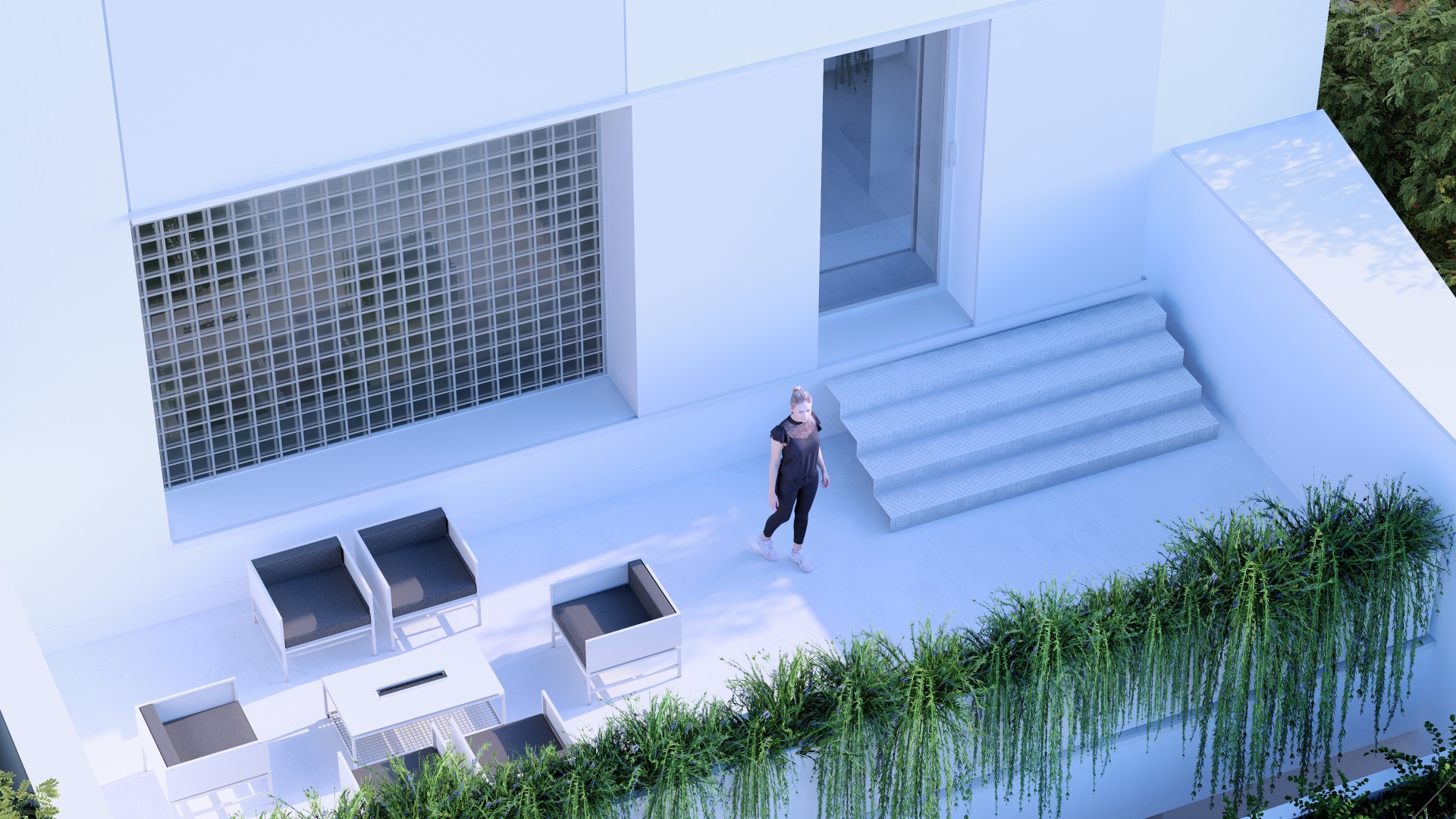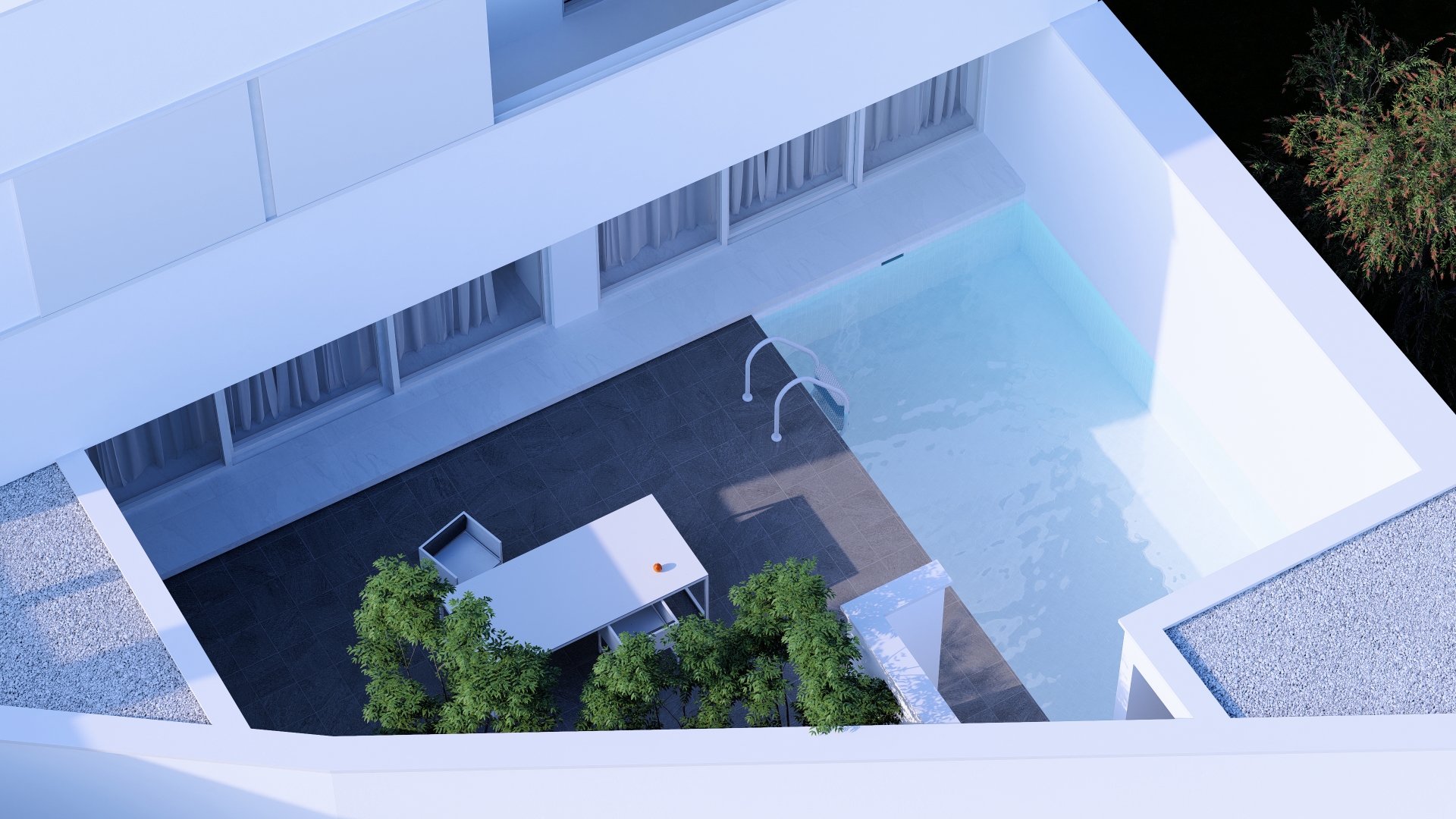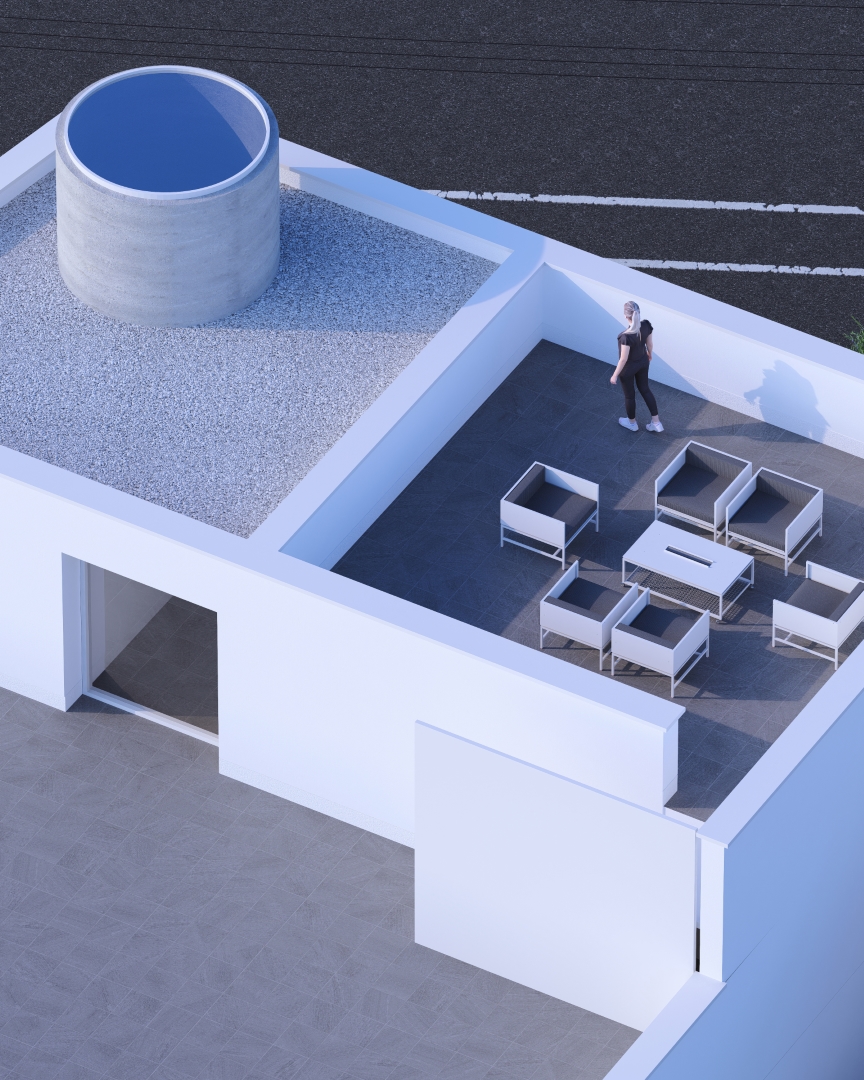

Located near the Caspian coastline in Bandar Anzali, the Horizontal Movement House was conceived as a permanent residence shaped by the environmental and cultural conditions of northern Iran. The project’s primary concern was the negotiation between openness and privacy: how can a house embrace its surrounding landscape while maintaining the sense of protection and intimacy required for everyday living?
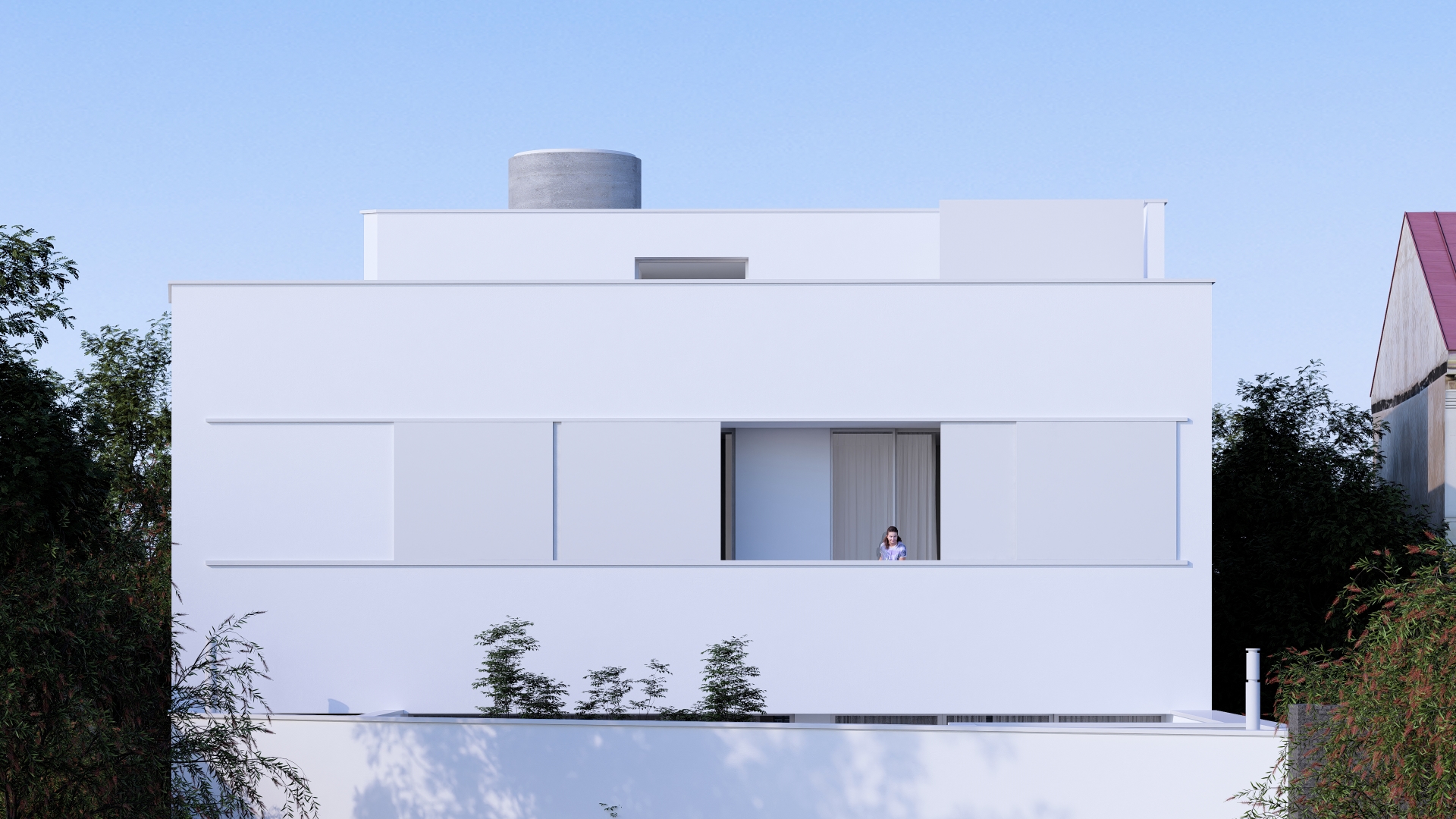
The design process began with a critical examination of the relationship between the dwelling and its context. Rather than treating the façade as a fixed boundary, the project introduces a horizontally moving aluminum screen that operates as an intermediate layer between the interior and the exterior environment. This kinetic element functions simultaneously as a protective envelope, a climatic filter, and a mechanism for regulating visual connections with the surrounding landscape.
The horizontal movement of the screen became the project’s central architectural idea. By shifting along the façade, it continuously adjusts the degree of exposure to the Caspian landscape, allowing the inhabitants to selectively frame views, control sunlight, and preserve privacy. In this way, the house does not establish a static relationship with its surroundings; instead, it creates a dynamic and adaptable dialogue between enclosure and openness.
The spatial organization follows a clear hierarchy of public and private realms. The ground floor accommodates the collective and social functions of the house, including living, dining, and gathering spaces. The first floor contains the bedrooms and private quarters, providing a more protected and intimate environment. The upper level is dedicated to leisure and wellness, incorporating a roof garden and recreational facilities that extend domestic life toward the sky and the surrounding greenery.
Formally, the project is defined by the interaction between permanence and movement. The white monolithic volume establishes a calm and stable architectural presence, while the movable aluminum screen introduces transformation, adaptability, and temporal change. Together, these elements create an architecture that responds to both environmental conditions and the evolving needs of its inhabitants.
Horizontal Movement House ultimately redefines the boundary between inside and outside. Rather than choosing between complete openness or complete isolation, the project proposes a calibrated relationship with the landscape one that allows residents to continuously adjust their connection to light, views, climate, and privacy. Through the controlled movement of its protective envelope, the house transforms dwelling into an active and ever-changing spatial experience.