
A Dialogue Between Silence and Chaos
With the simplest tools, profound answers can be found amidst the complexities of human and urban life.
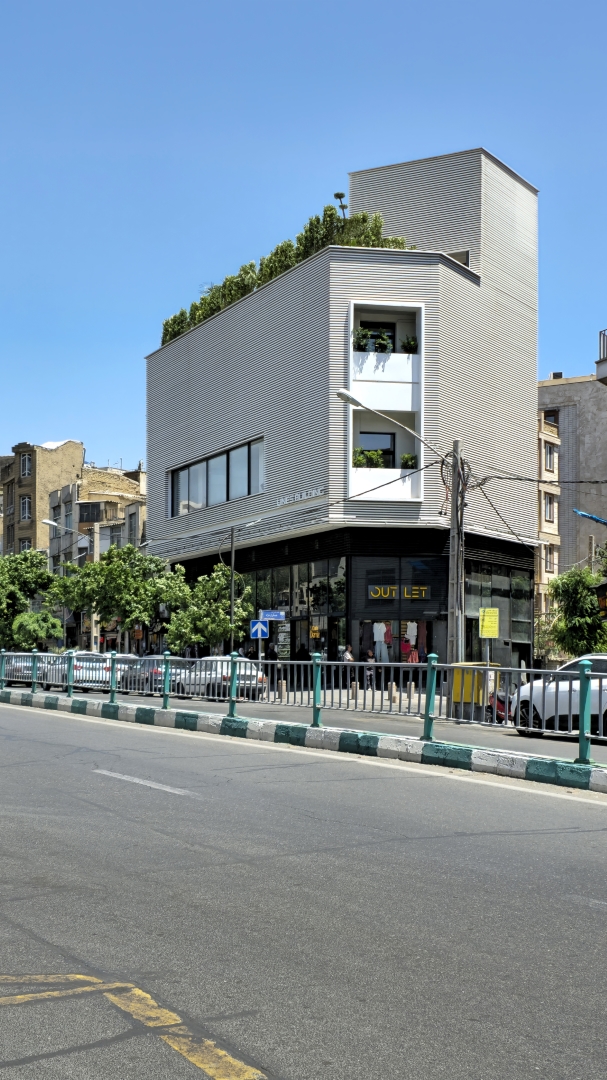
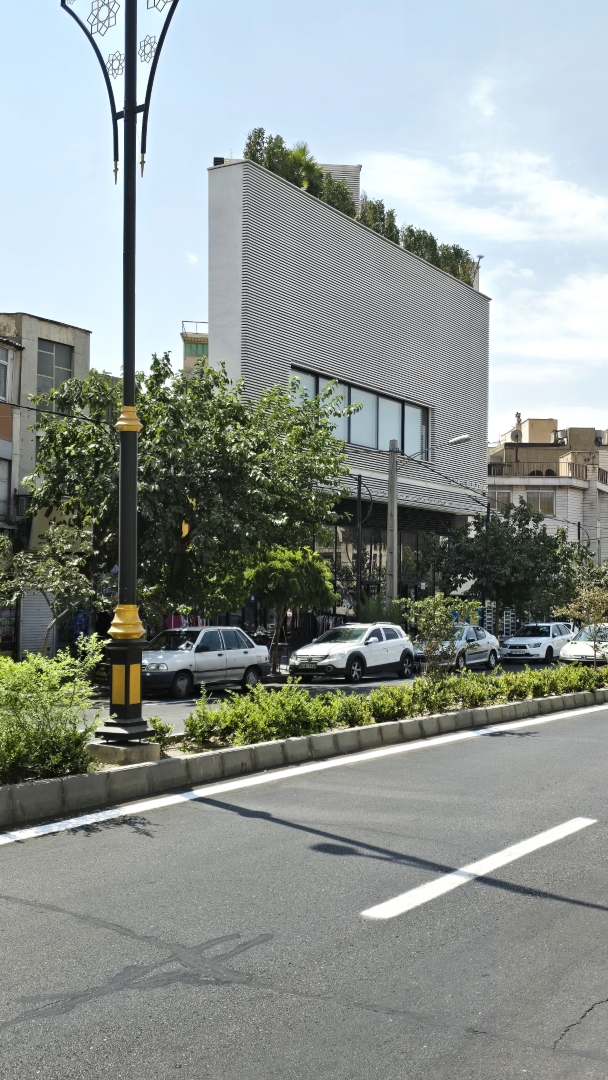
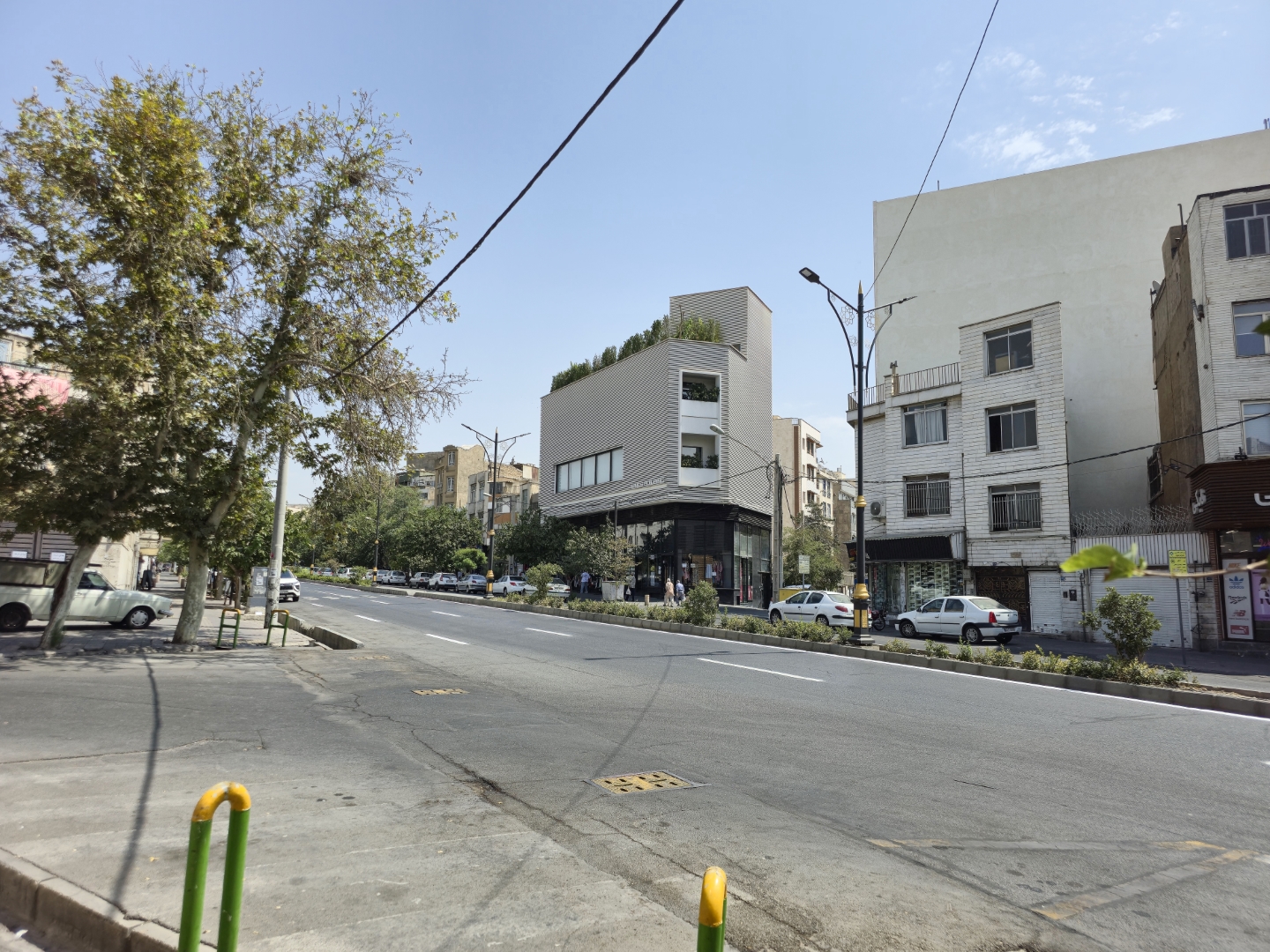
The Lines Building is situated within a bustling urban fabric, along a streetscape characterized by heterogeneous elements, diverse materials, and a lack of cohesion in façade design.
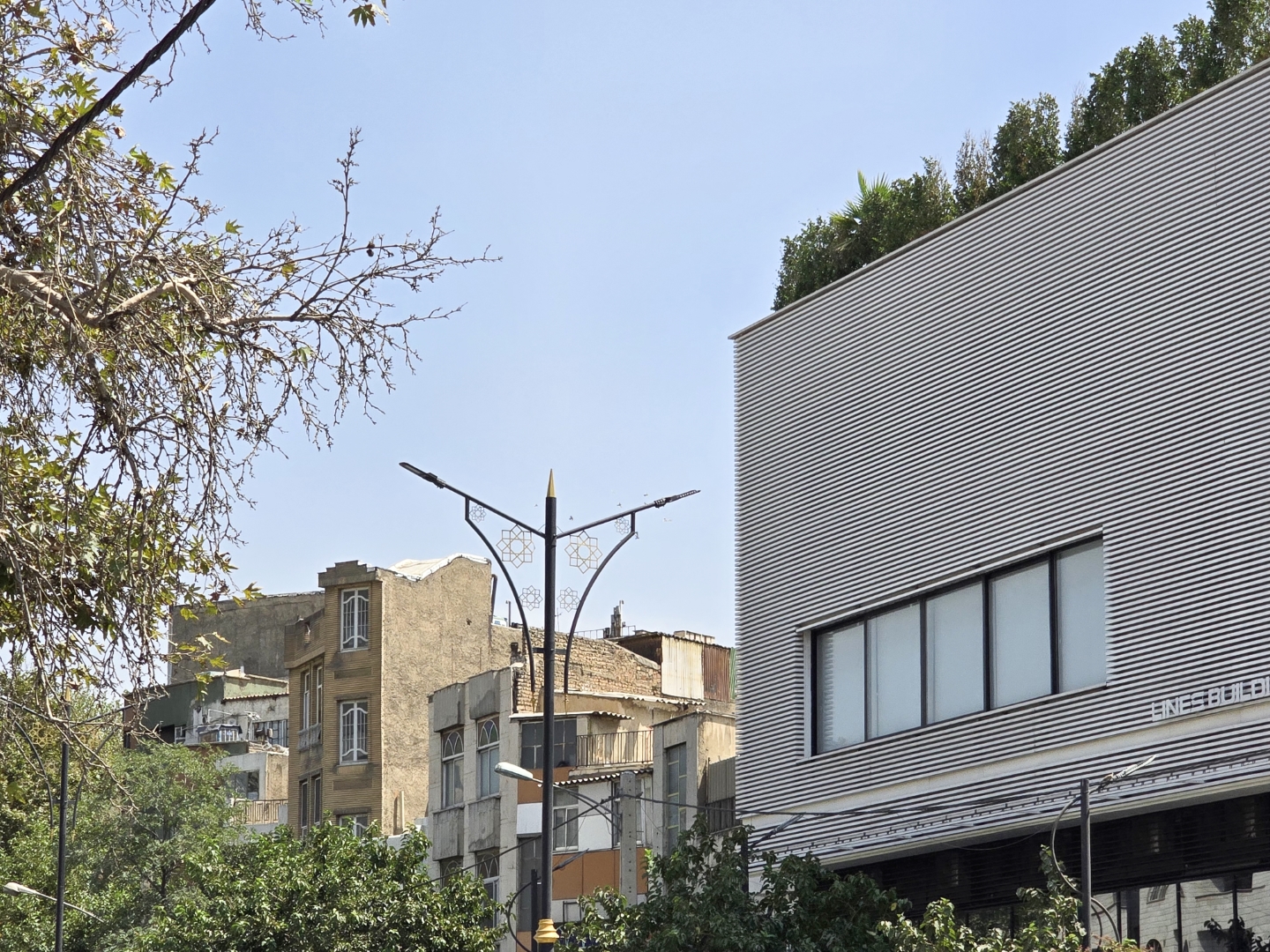
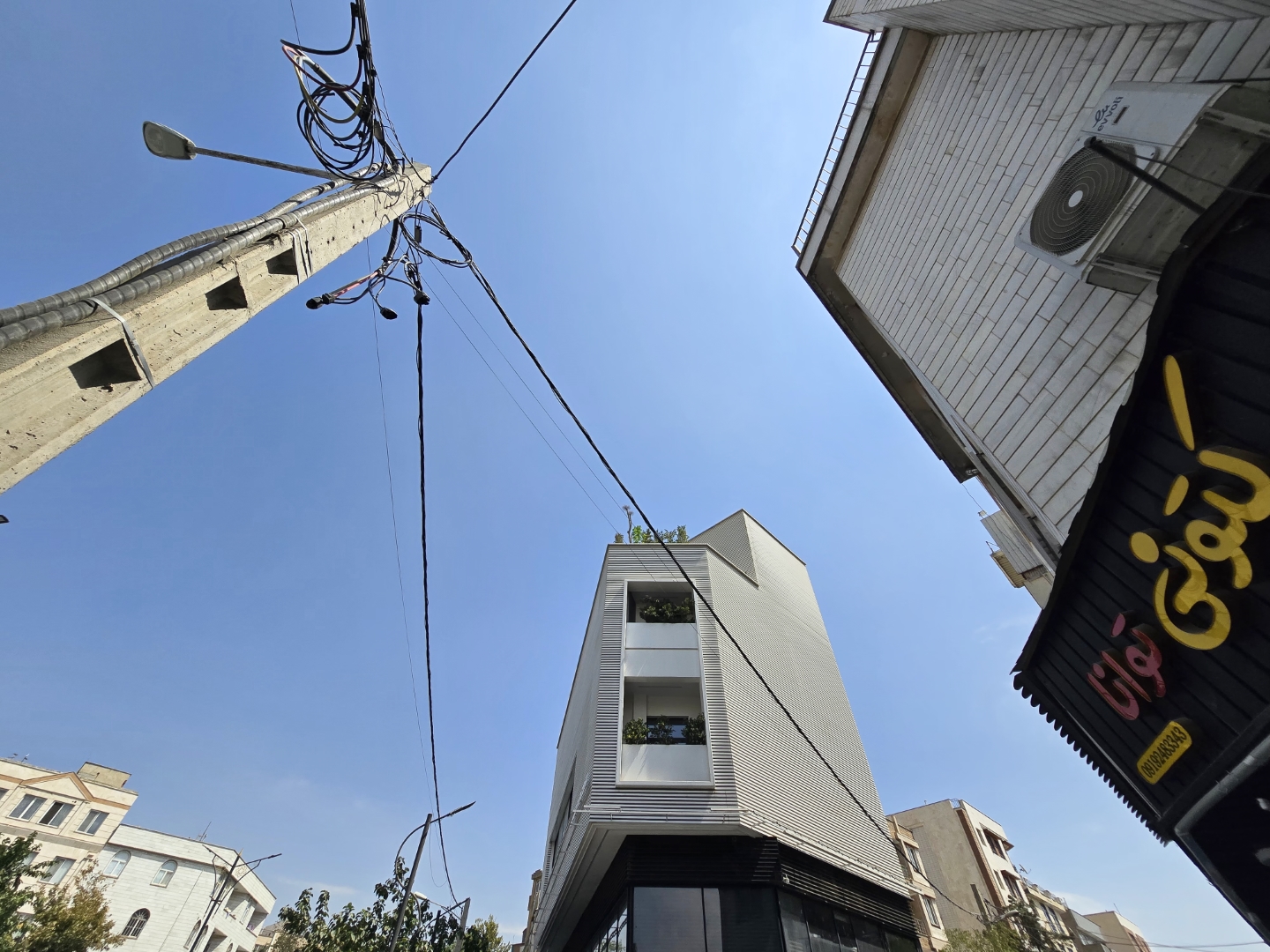
The streetscape of North Madani Street in Tehran reflects the common challenges of visual organization and architectural coherence in dense urban contexts. This façade presents a mix of scattered designs, conflicting formal and chromatic patterns, excessive use of mismatched materials, and a lack of unity in volumetric proportions. The result of this discord is the creation of visual clutter, leading to eye fatigue, diminished urban legibility, and an inability to establish a cohesive identity for this high-traffic thoroughfare.
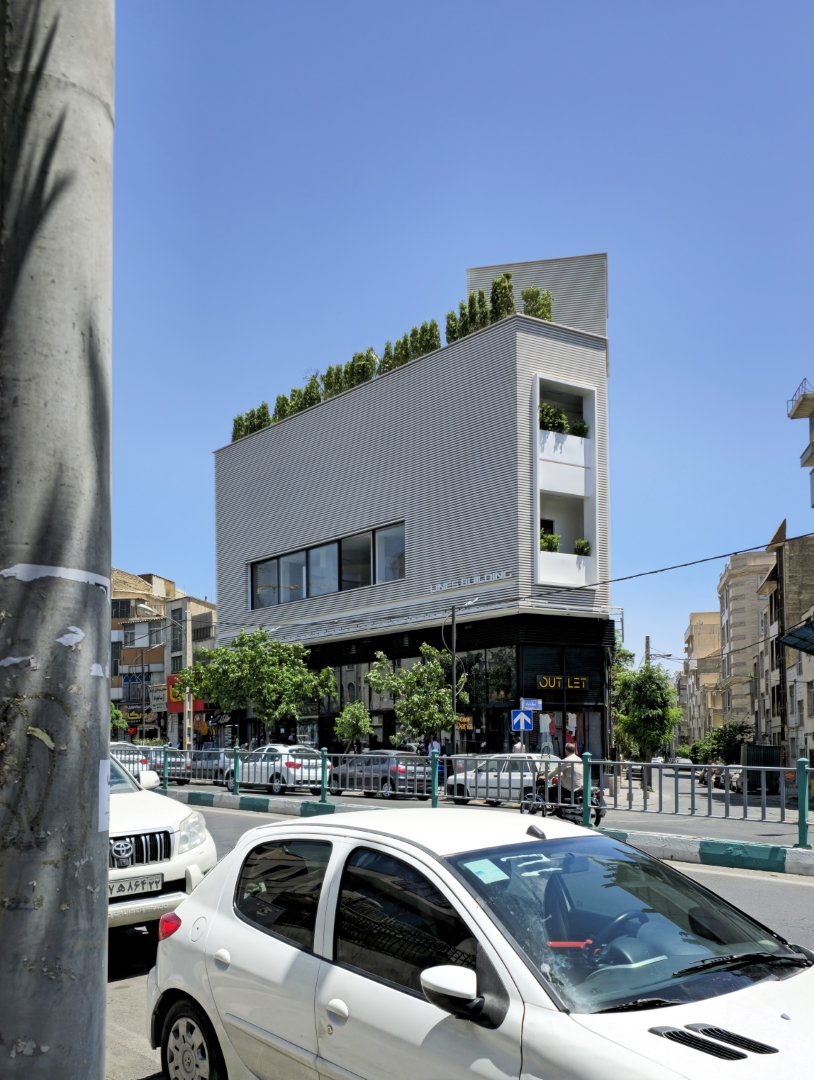
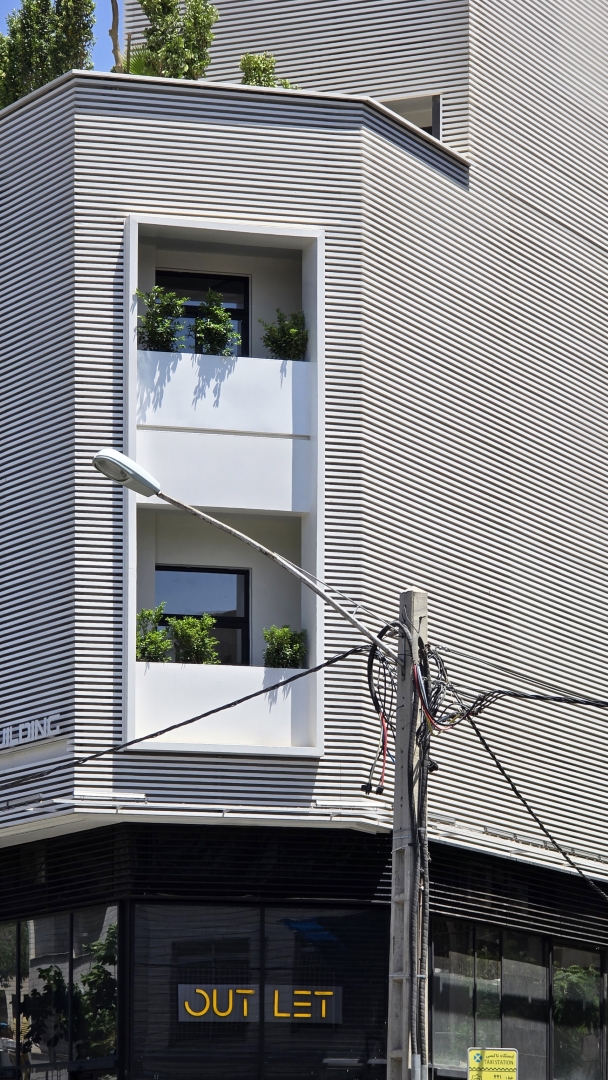
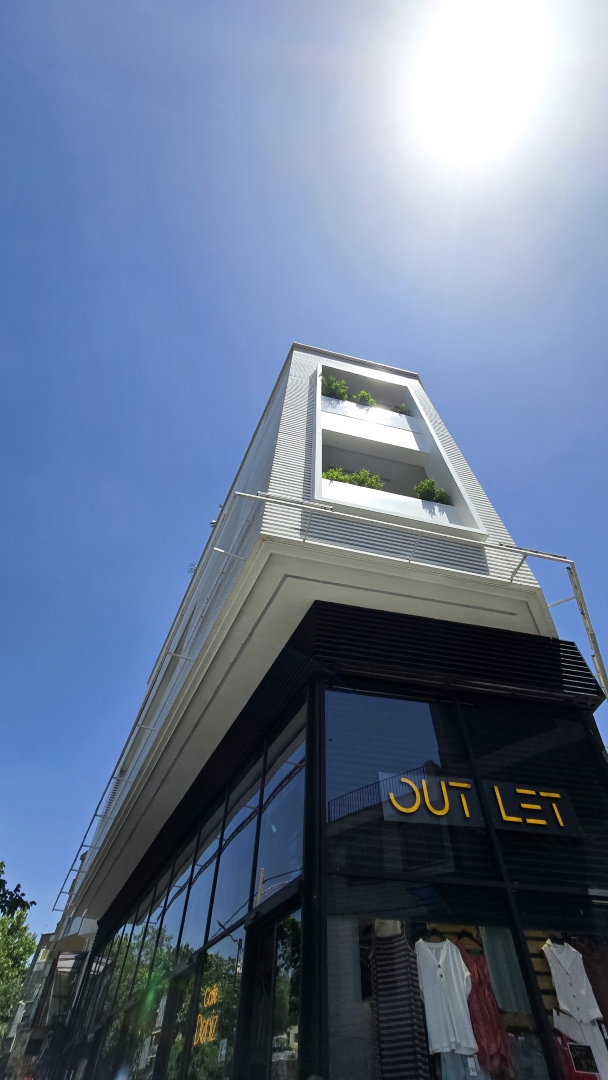
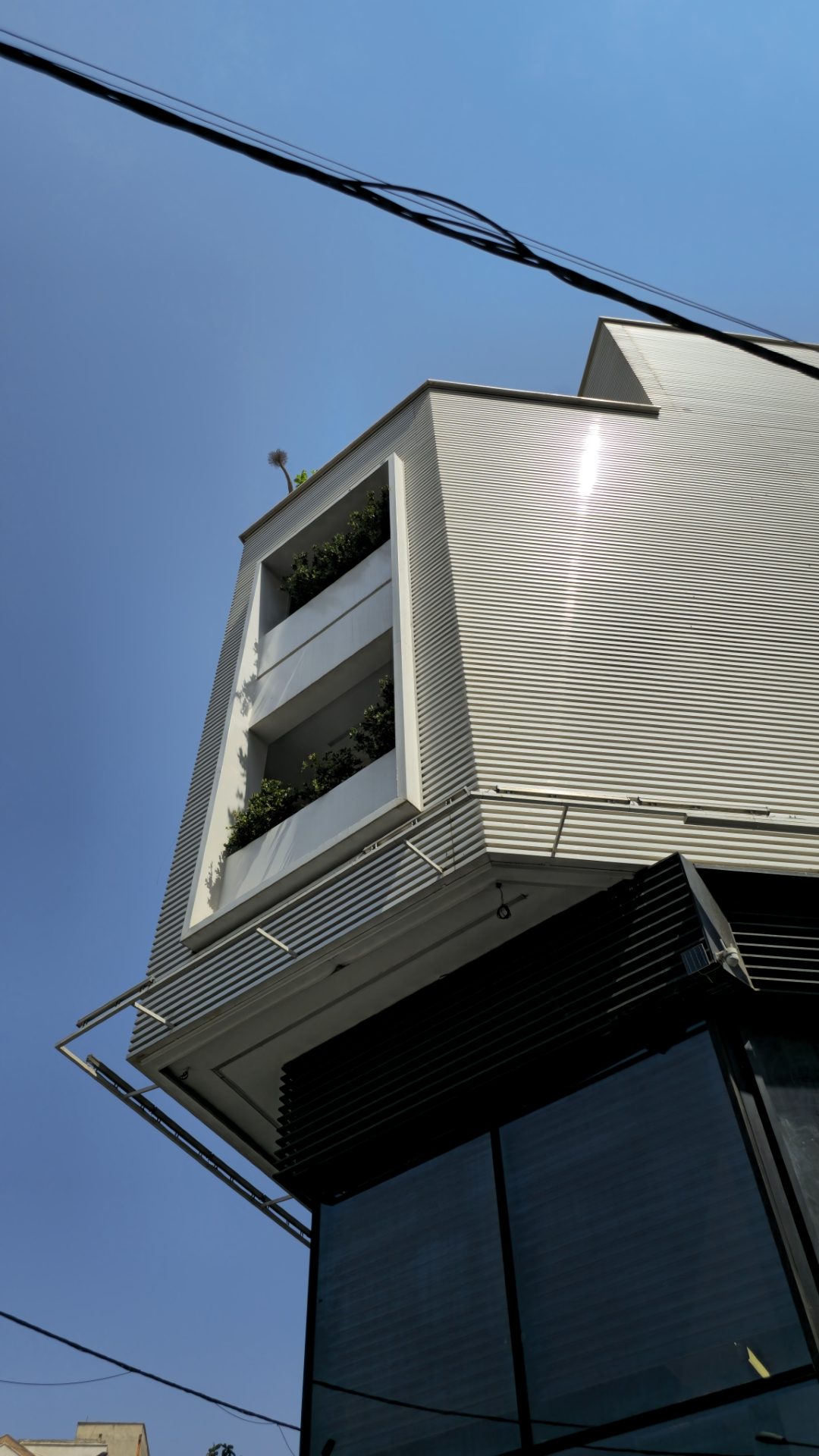
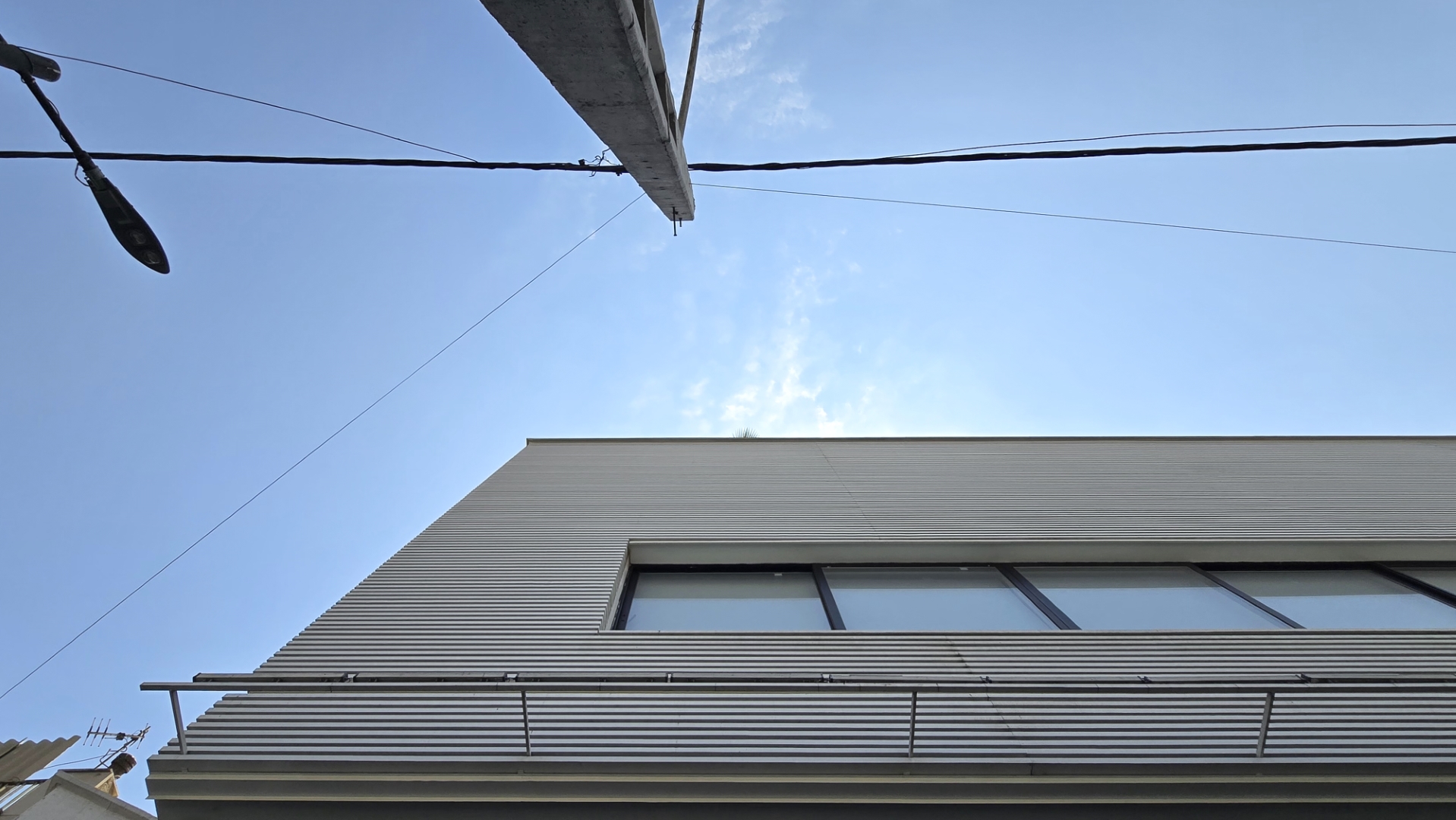
Amid this context, the Lines Building employs a site-specific minimalism and simple geometry, aiming to alleviate the visual burden of the streetscape and create a lasting sense of balance in the street’s aesthetic experience. Its façade, with uniform surfaces and neutral tones, directly contrasts the visual chaos of its surroundings. The metallic cladding, seamlessly integrated with the building’s overall volume, not only introduces a visual silence but also guides the viewer’s gaze horizontally through its structured rhythm. The design consciously avoids exaggeration and unnecessary details, aspiring not to stand out, but rather to function as a calming presence within the environment.
Lines showcases a “contextual minimalism” in its interplay between stillness and chaos. This approach neither seeks to erase the surrounding context nor imitate it, but instead establishes an independent yet harmonious identity, enhancing the streetscape’s visual quality. Simplicity as the foundation of the design has been a pivotal concept in shaping Lines. This principle is evident not only in the choice of materials and façade lines but also in the volumetric organization. This simplicity allows the building to calm its surroundings, offering a consistent rhythm that invites the eye to shift from the street’s disorder to a state of tranquility and cohesion.
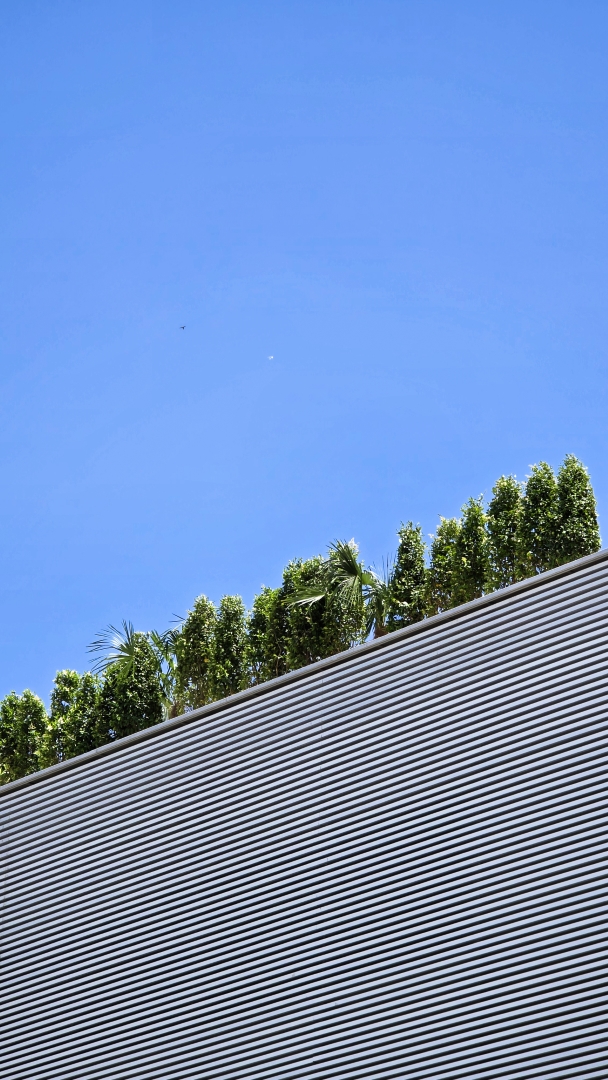
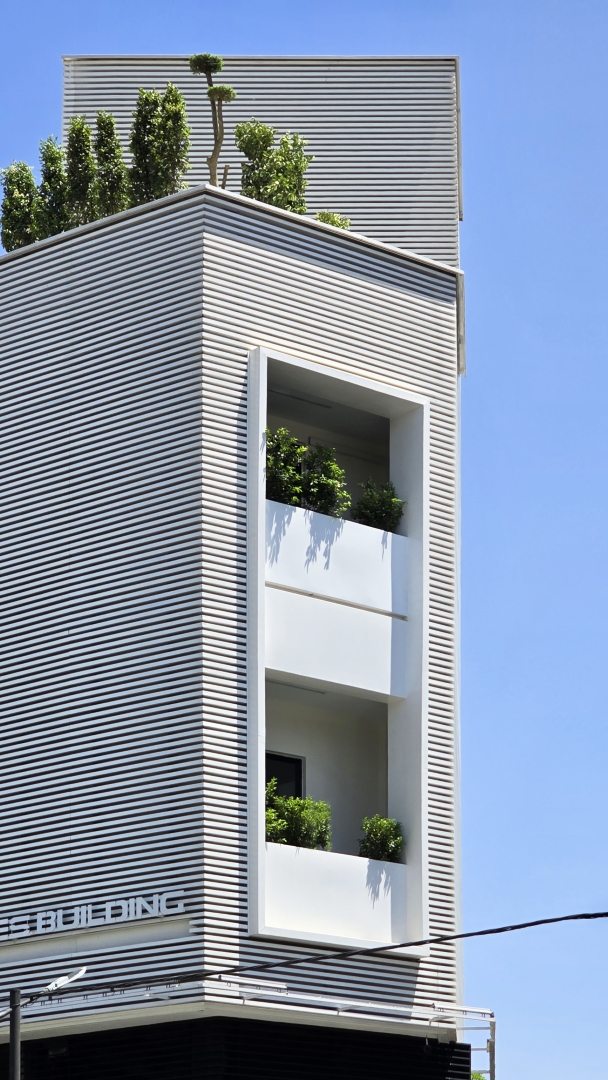
The building’s façade features pure materials such as metallic cladding and glass as its primary elements. These materials evoke a sense of honesty and clarity, focusing attention on geometry and spatial quality while avoiding superfluous ornamentation.
In the design of the Lines Building’s façade, the use of horizontal aluminum louvers represents a thoughtful response to the material composition and dominant lines of North Madani Street’s streetscape. This street, characterized primarily by façades clad in rectangular stone with horizontal patterns, establishes a distinct visual identity within the urban architecture of Tehran. The incorporation of this horizontal motif, while emphasizing visual continuity and cohesion among neighboring elements, has been intelligently reinterpreted in the Lines Building. The louvers, in addition to functioning as a practical element for light and thermal control, instill a rhythmic linearity in the façade, evoking a sense of balance between stillness and movement in the observer’s perception.
This juxtaposition of metallic louvers and adjacent stone façades illustrates a dialogue between modernity and contextualism. Accordingly, the building’s design adopts an interdisciplinary approach to concepts of contextual respect and the reinterpretation of local identity, aiming to reestablish the connection between architecture and the urban fabric. The choice of aluminum as a pure and sustainable material, combined with horizontal lines harmonizing with the surrounding environment, not only enhances the visual legibility of the streetscape but also reflects the interplay between modern simplicity and the historical complexities of the area.
The lines of the Building, much like the paintings of Piet Mondrian, strive to achieve equilibrium and silence amidst a backdrop of intense colors and irregular lines. By employing sheer simplicity and precise geometry, it establishes a space of balance and quietude. Mondrian’s work reminds us that the deepest emotions can reside in the simplest forms. Similarly, the design of Lines seeks to create a sense of stillness and harmony at the heart of urban chaos through minimalist lines and pure materials.